Where the Waters Meet
Written by Paula Gomez Villalba with photos by Hannah Hofsink, Ross River Dena Council territory | June 26, 2026
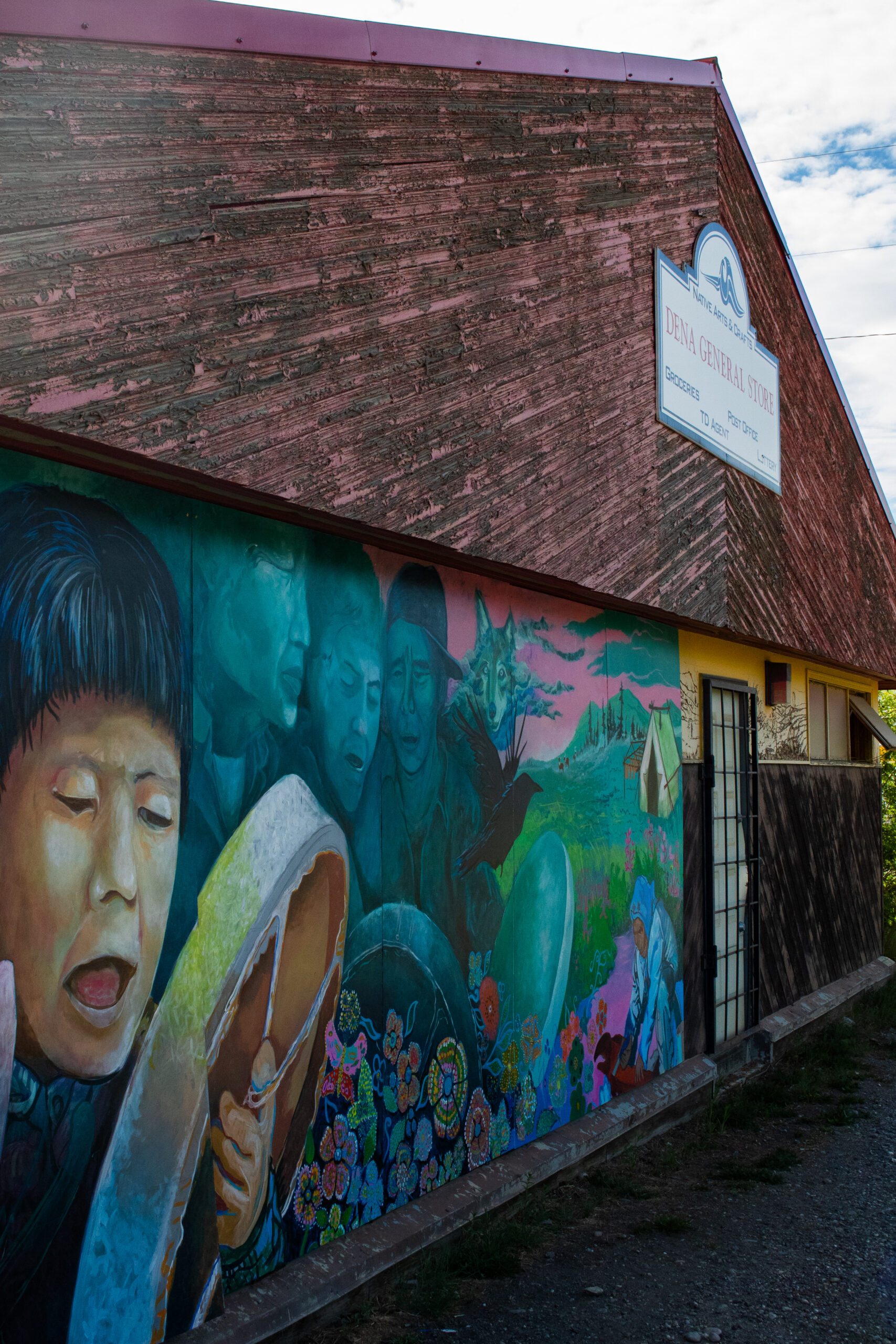
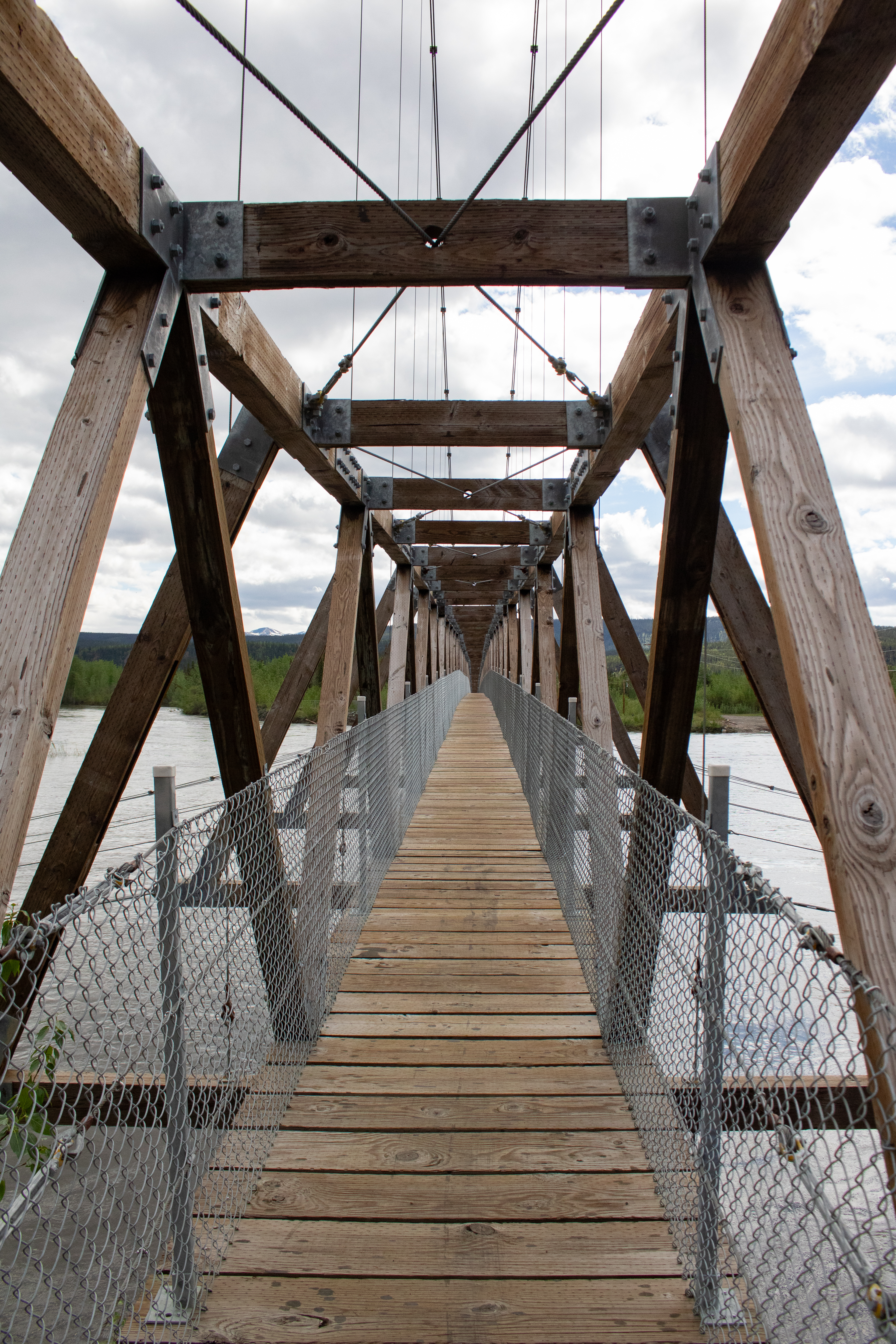
June in Tu Łidlini (Ross River) is marked by willows, broods of ducks rafting on ponds, and the smell of fresh poplar leaves. Sitting at the confluence of two important rivers, the Ross River and Tu DesDes (Pelly River), Tu Łidlini translates to “Where the Waters Meet.”
You can still see snow on most peaks, feeding lakes and rivers on Ross River Dena Council territory as it melts. These waters support so much growth: Moss that blankets the forest floor soaks up moisture like a sponge. Pike eggs hatch near the shore. Birds return in waves, filling the land with sound.
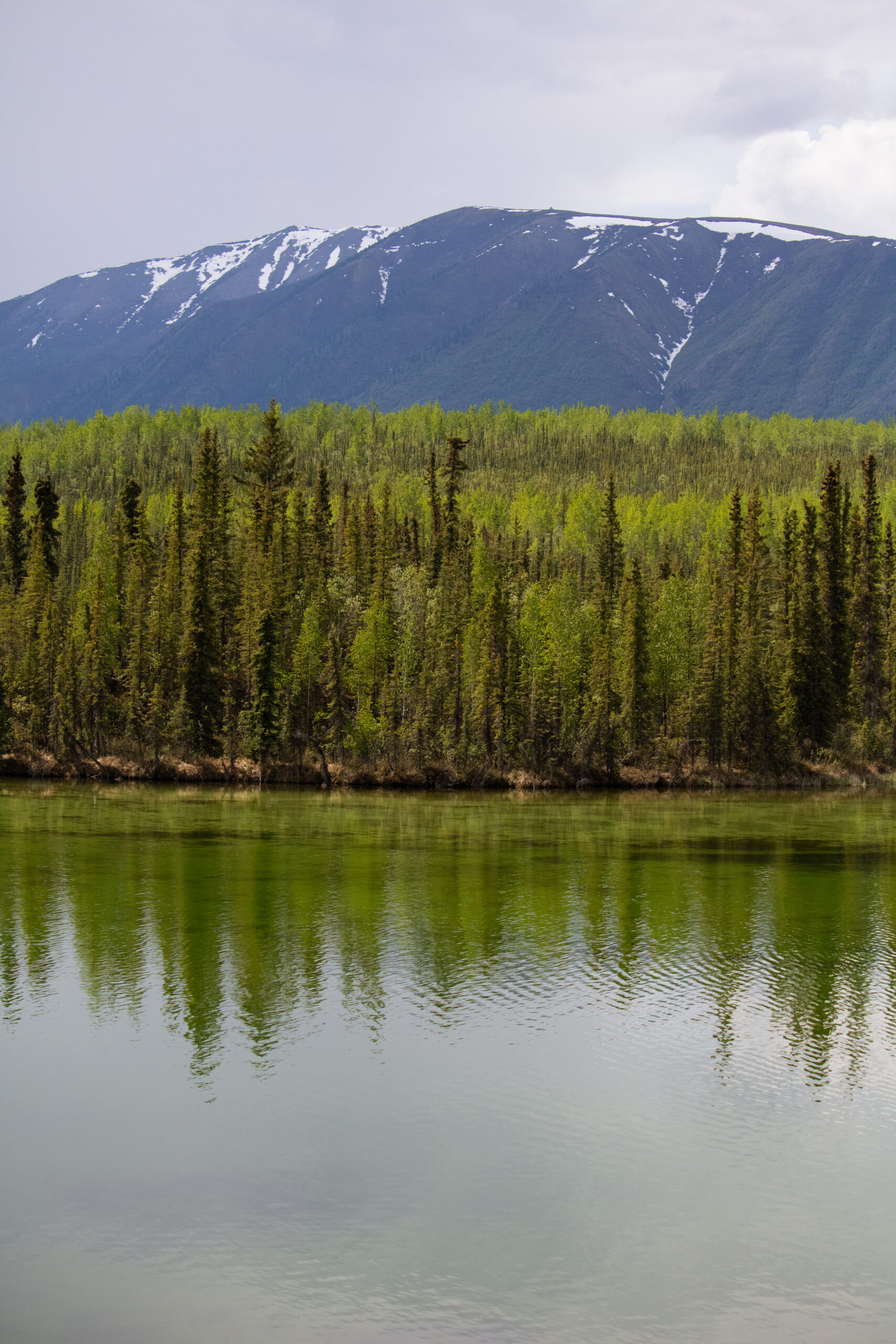
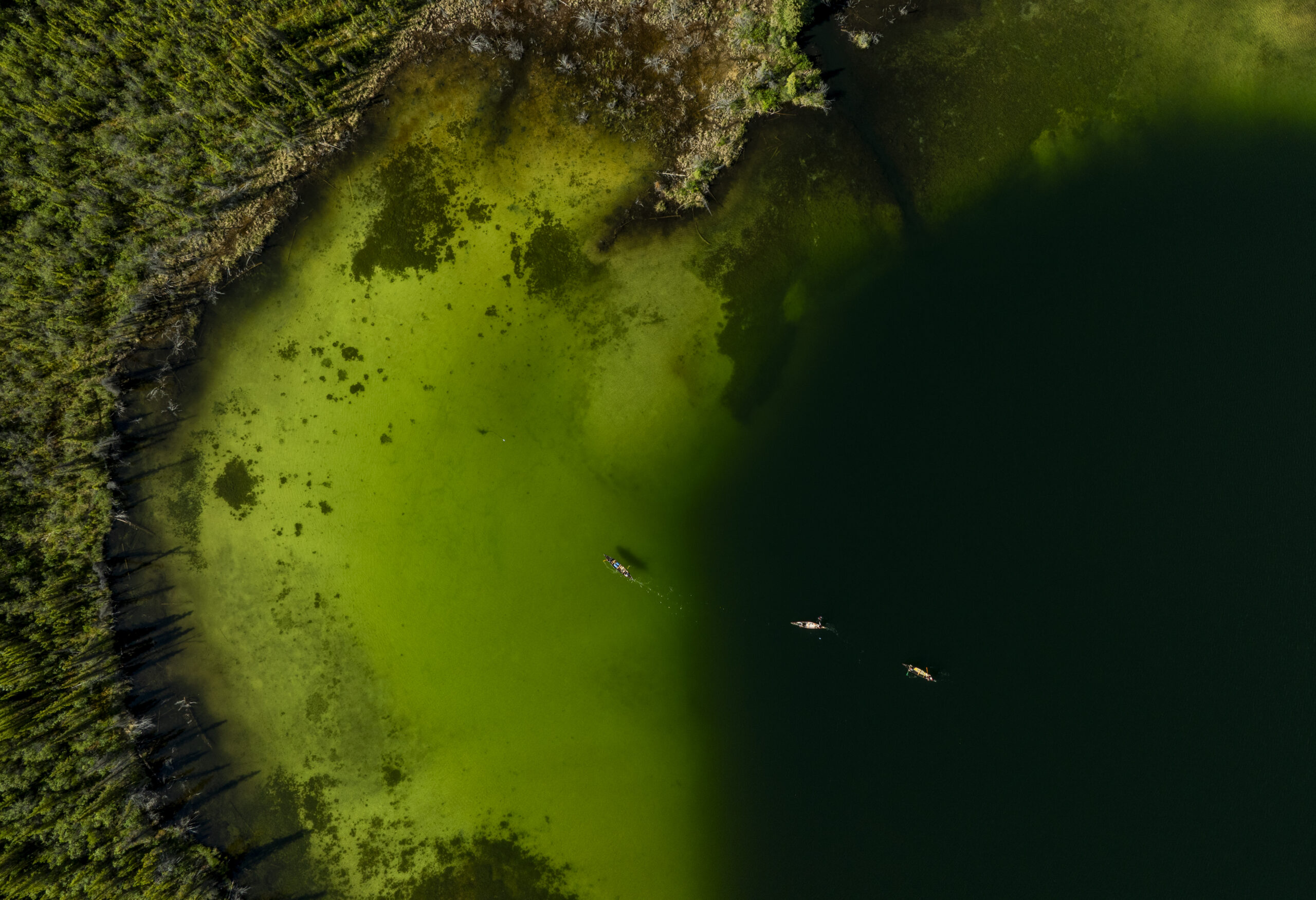
Greeted enthusiastically by two pups as we pull in, our CPAWS team meets at the Ross River School. With canoes in tow, we make our way to one of these waterbodies: Jackfish Lake.
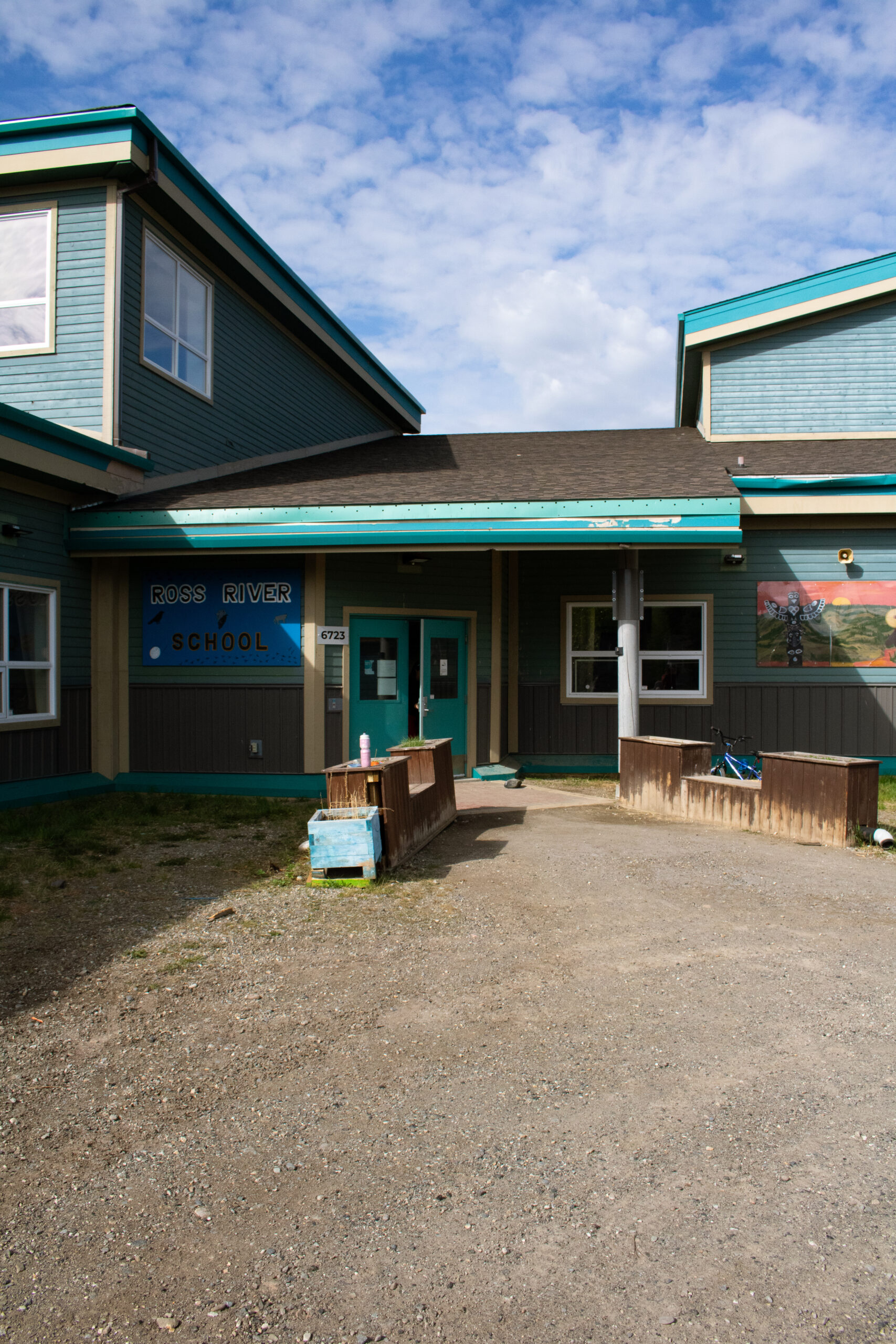
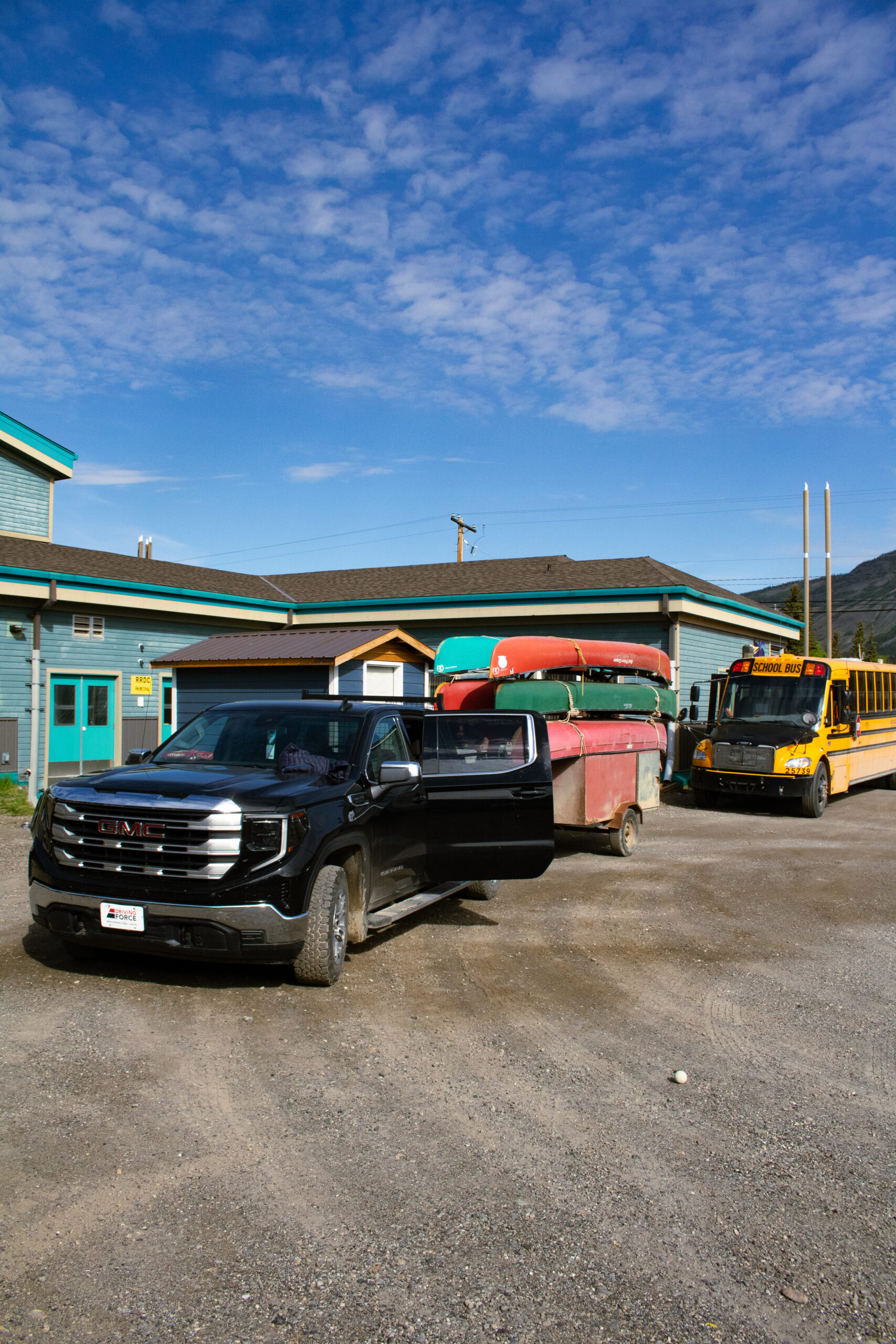
We’re supporting flatwater canoe training with the Ross River School, teaching alongside Principal Cox and schoolteacher Kennedy Pepin-Harmatiuk. A group of Grade 6/7 enthusiastic students is ready to learn.
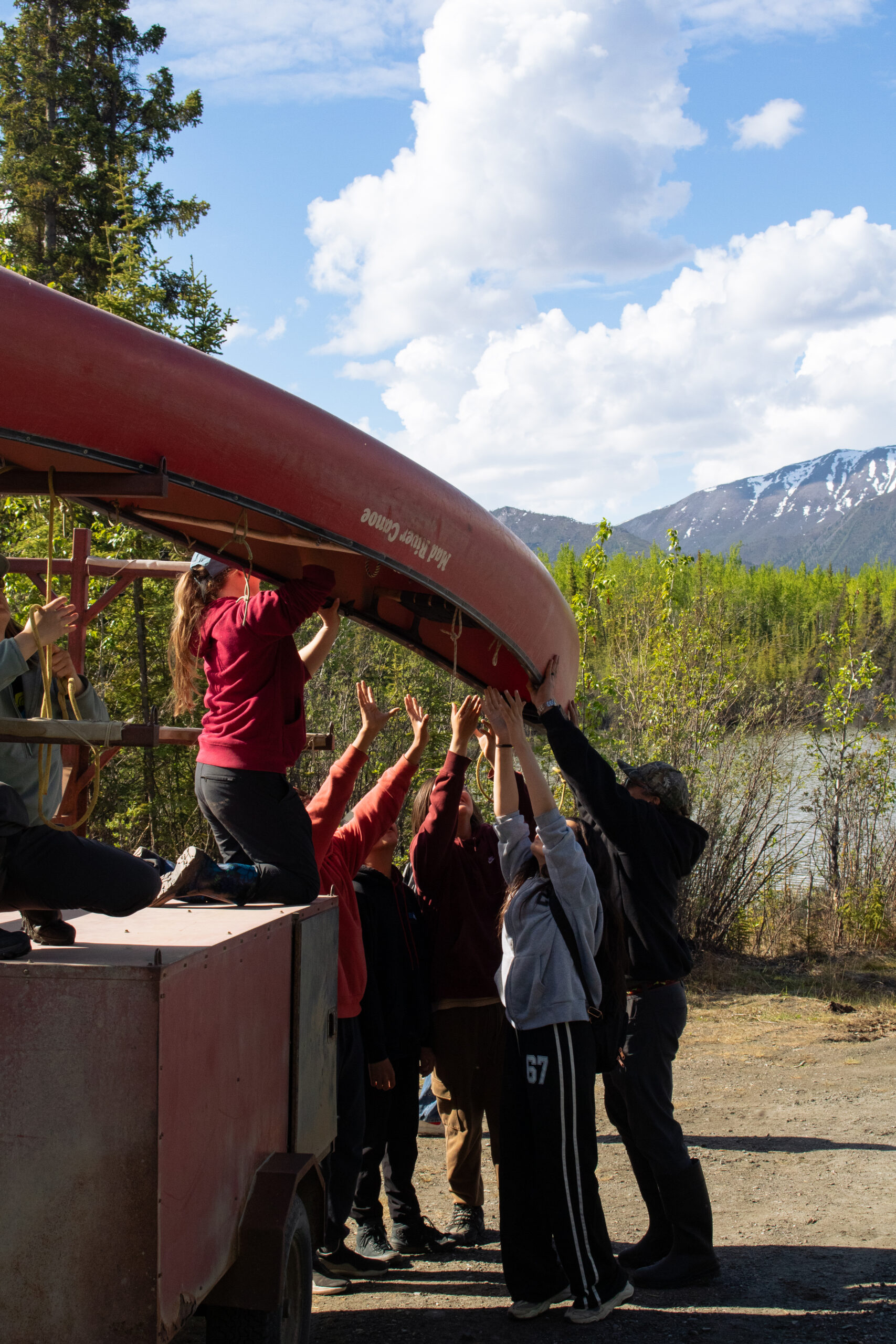
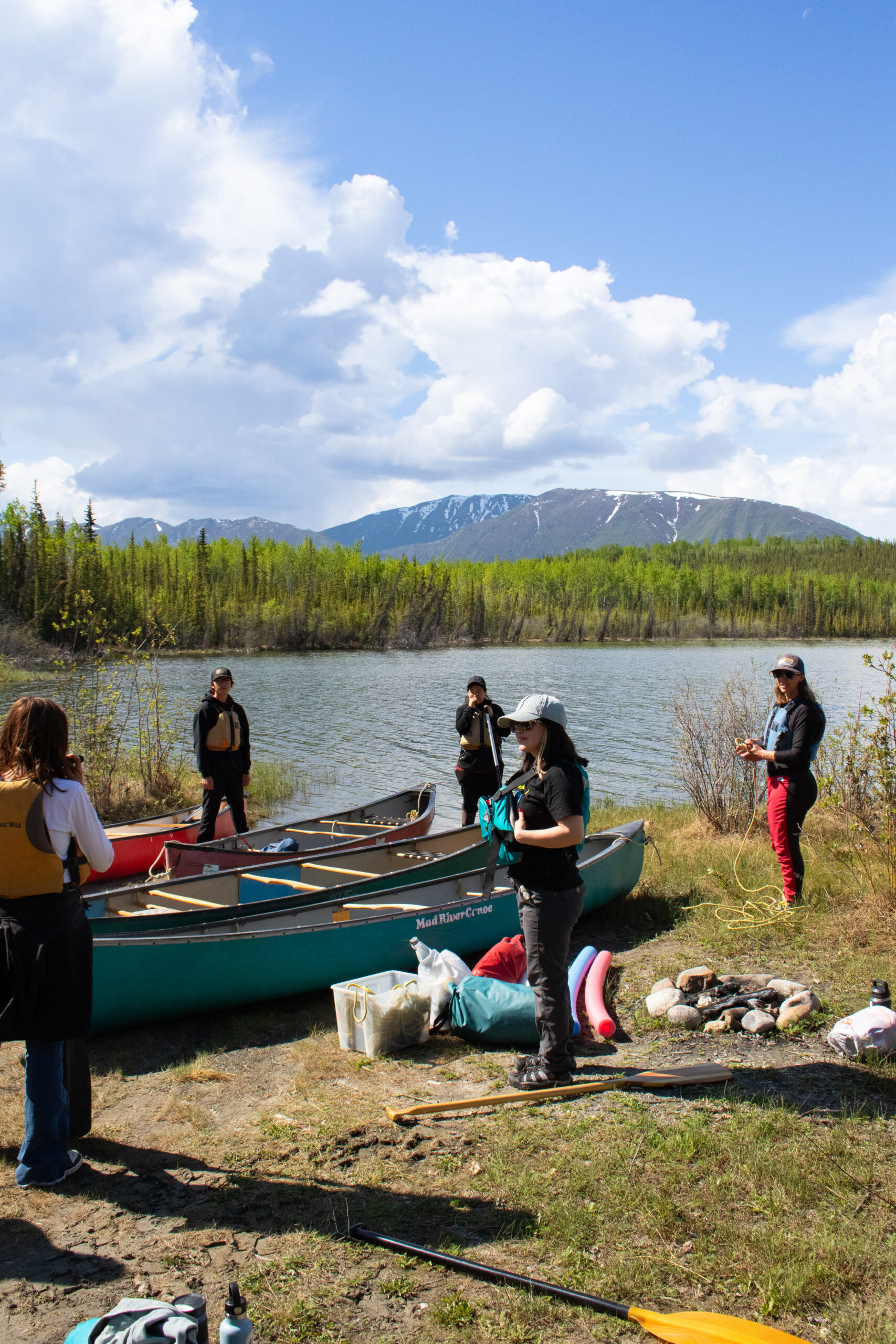
River guide and First Nation of Na-Cho Nyäk Dun citizen, Kadrienne Hummel, leads a few safety demonstrations and basic paddle stroke lessons from the shore. The group then pushes out onto the water to loop around an island in the lake.
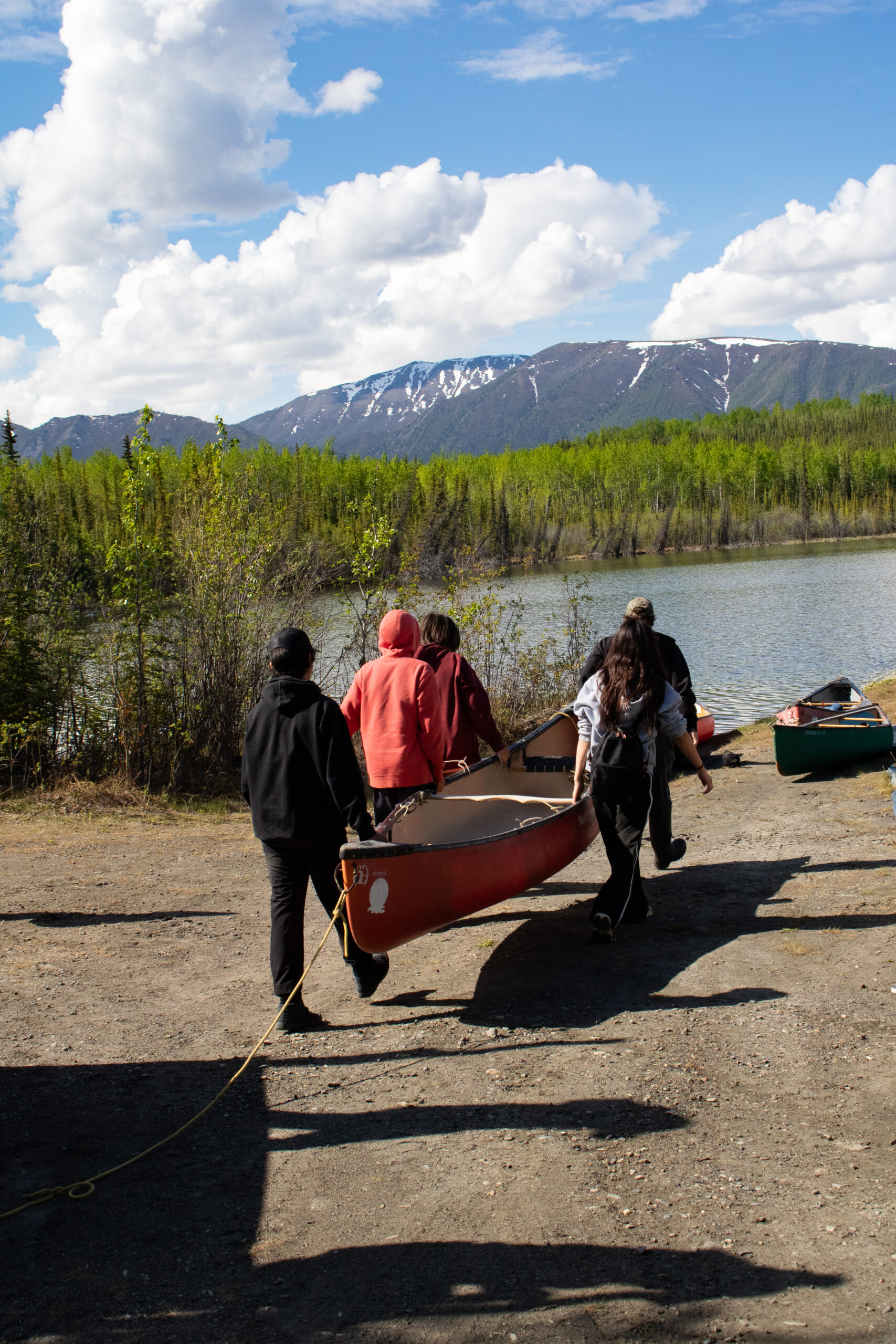
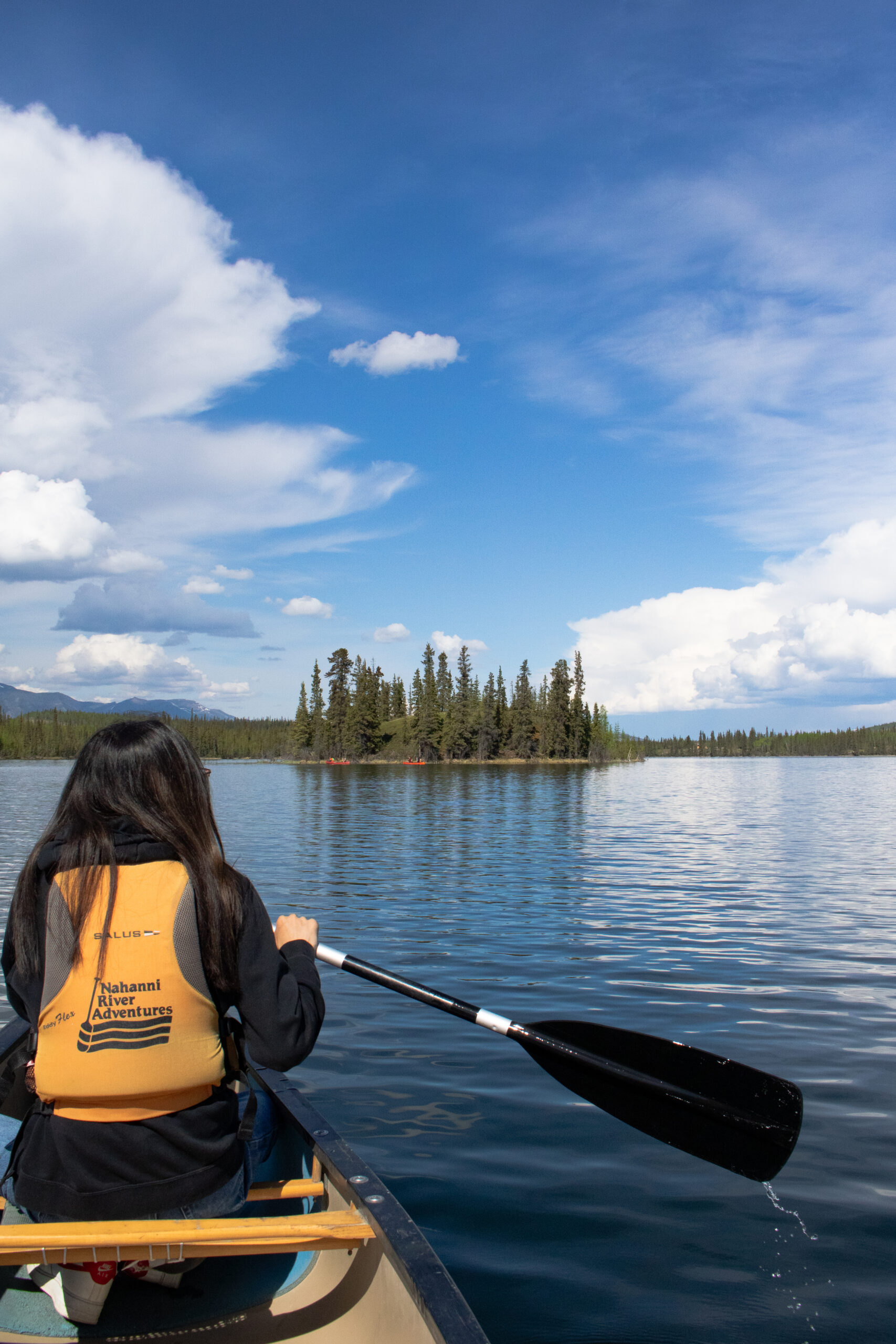
Kaneda, a Ross River Youth who paddled with us on Tu DesDes (Pelly River) last summer, is especially keen to share skills and support others in the canoe. He sits in the stern, directing the boat with confidence.
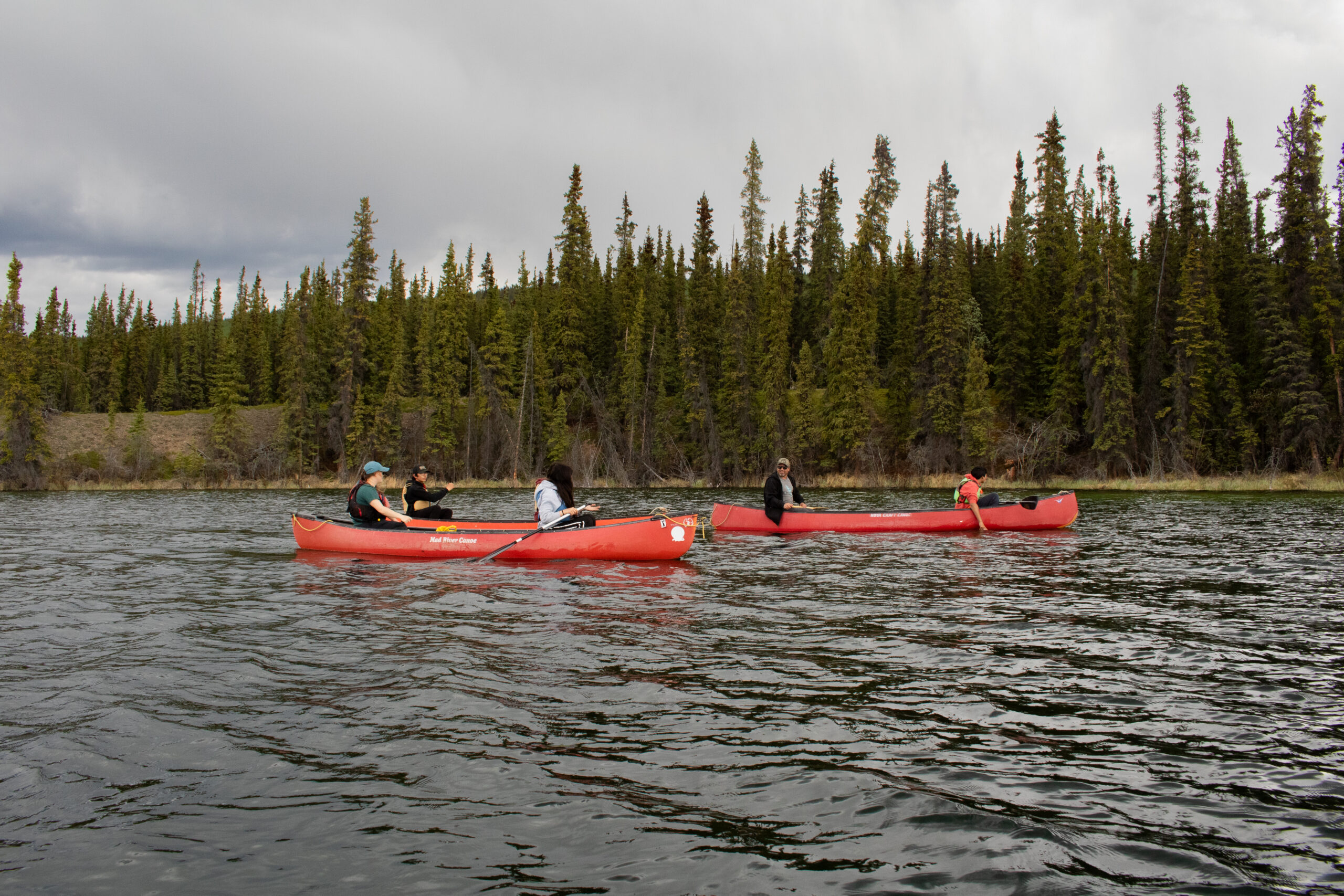
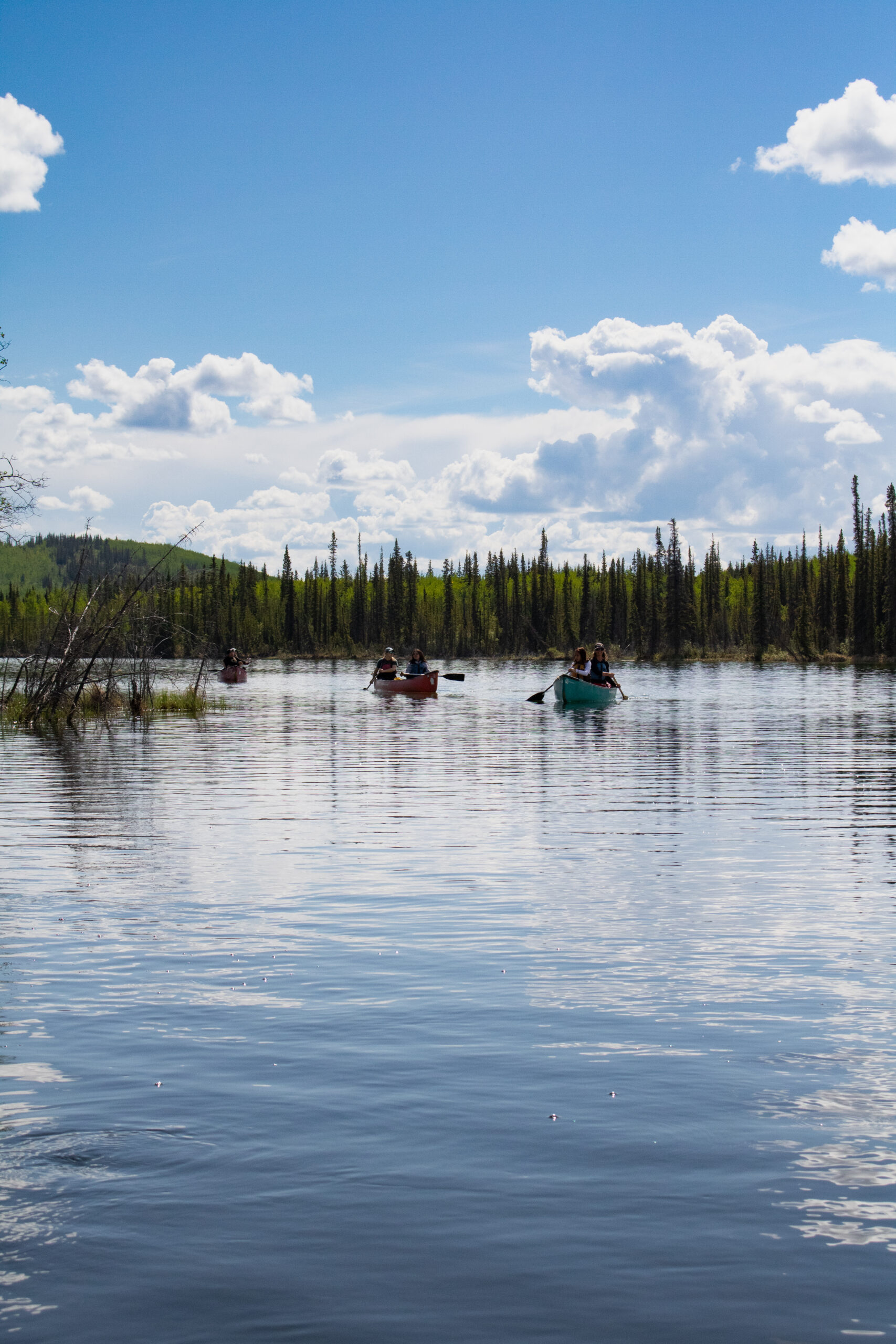
As the afternoon progresses, youth find rhythm in their paddles, growing stronger in their synchrony.
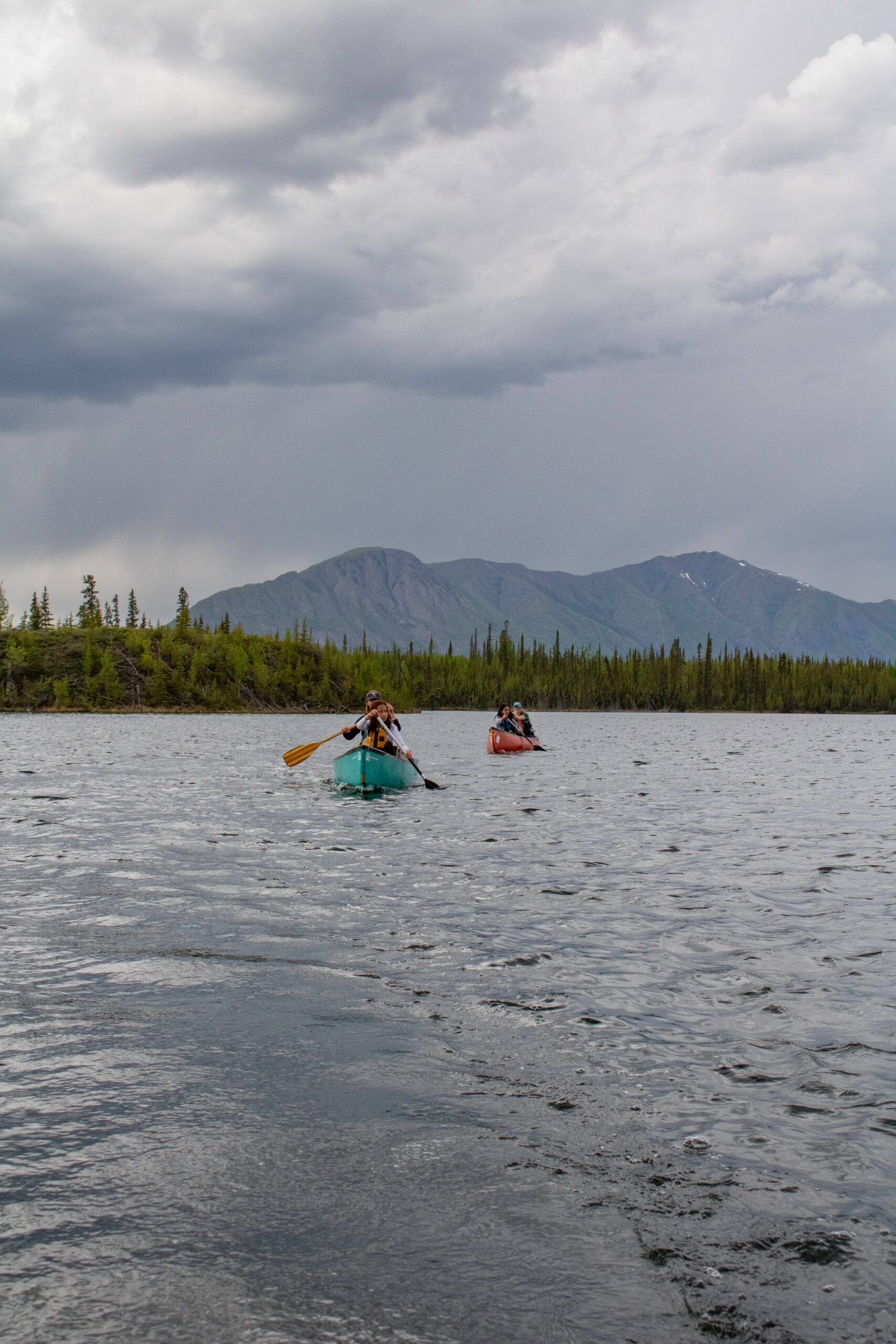
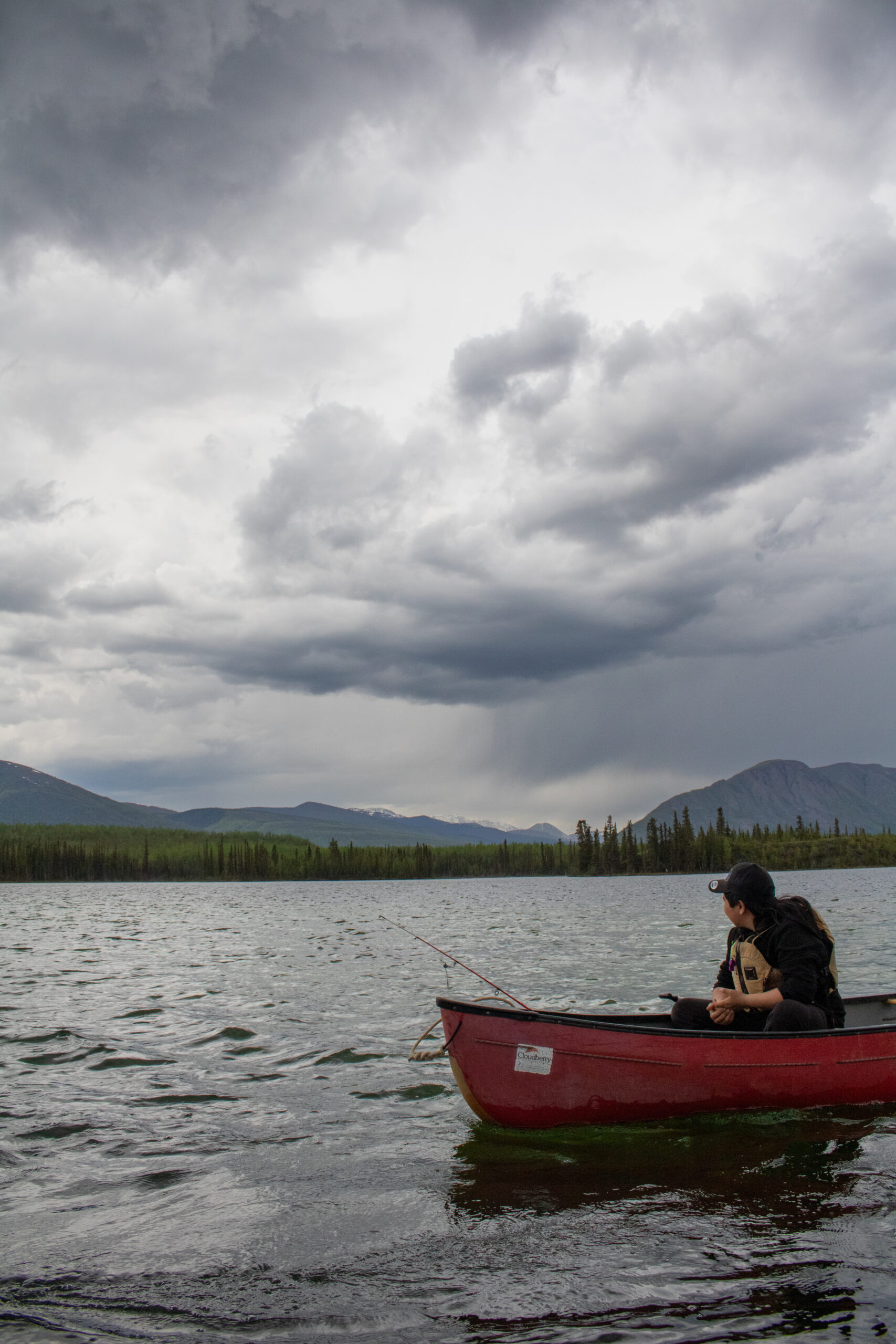
During the trip, Kadrienne speaks about her journey since her first trip on Tsé Tagé (Beaver River)—reflecting on how paddling connects her to culture and what it has meant to become a public voice for her Nation.
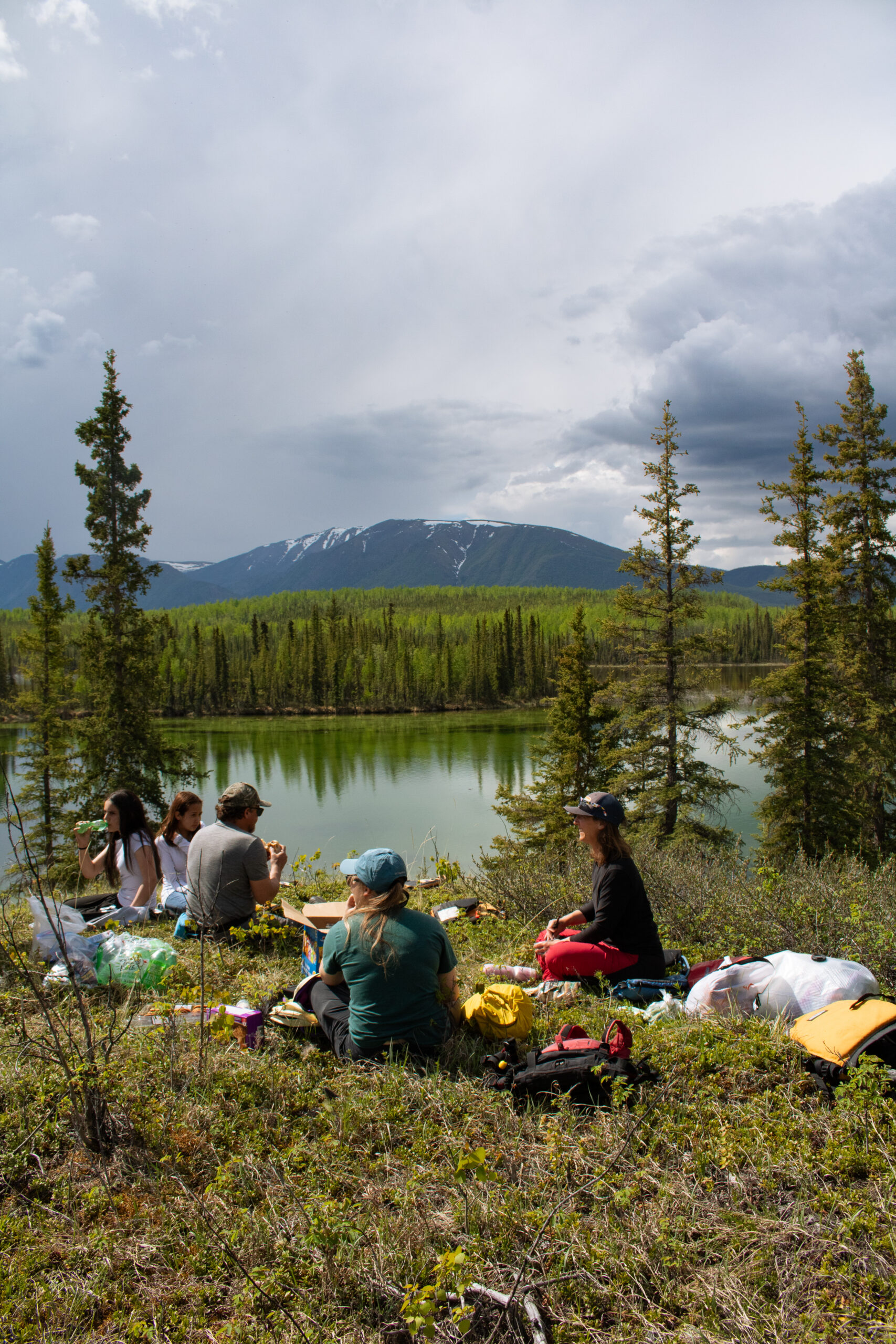
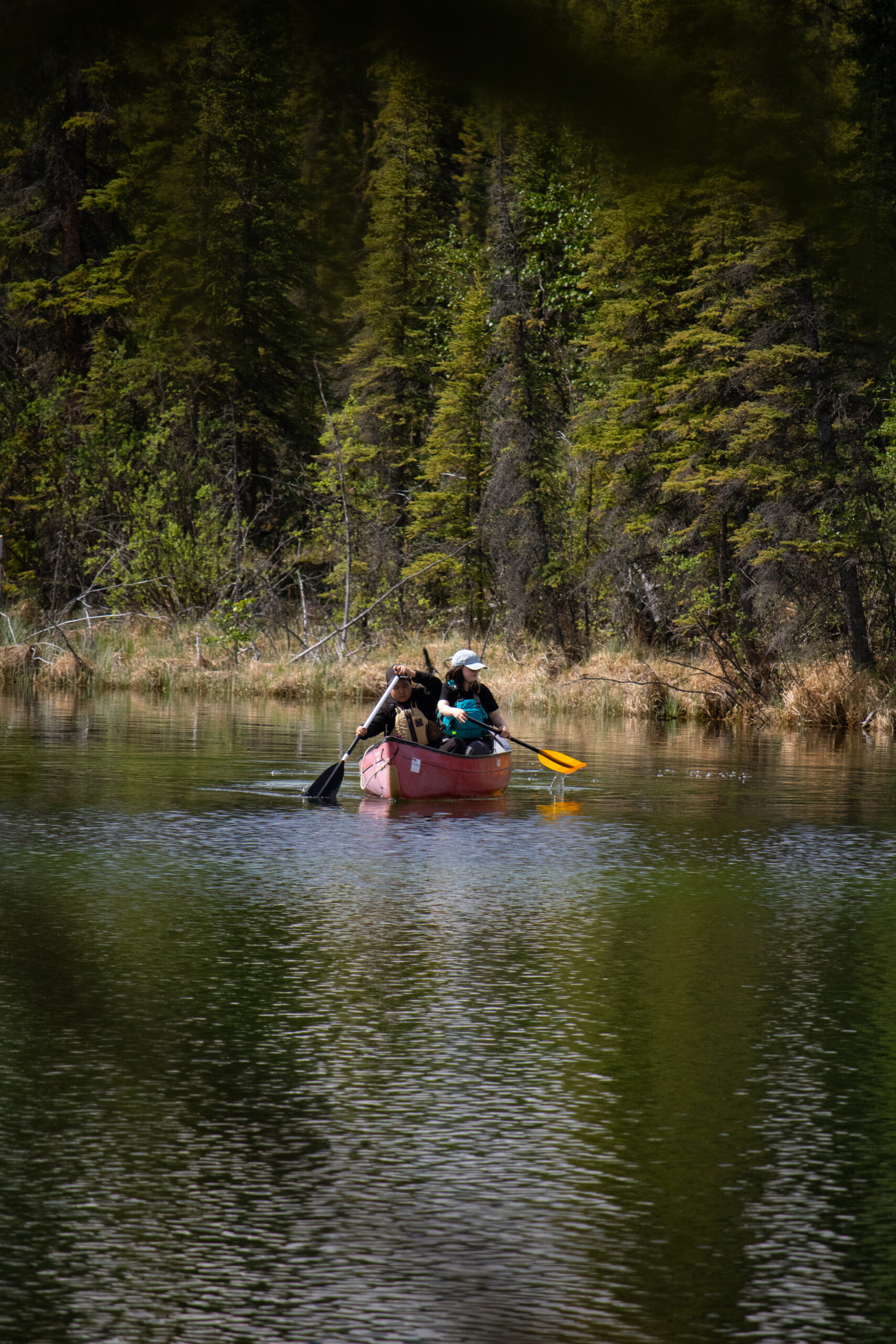
Jackfish Lake lies in the traditional territory of the Ross River Dena Council (RRDC), formed by melting glaciers over 10,000 years ago.
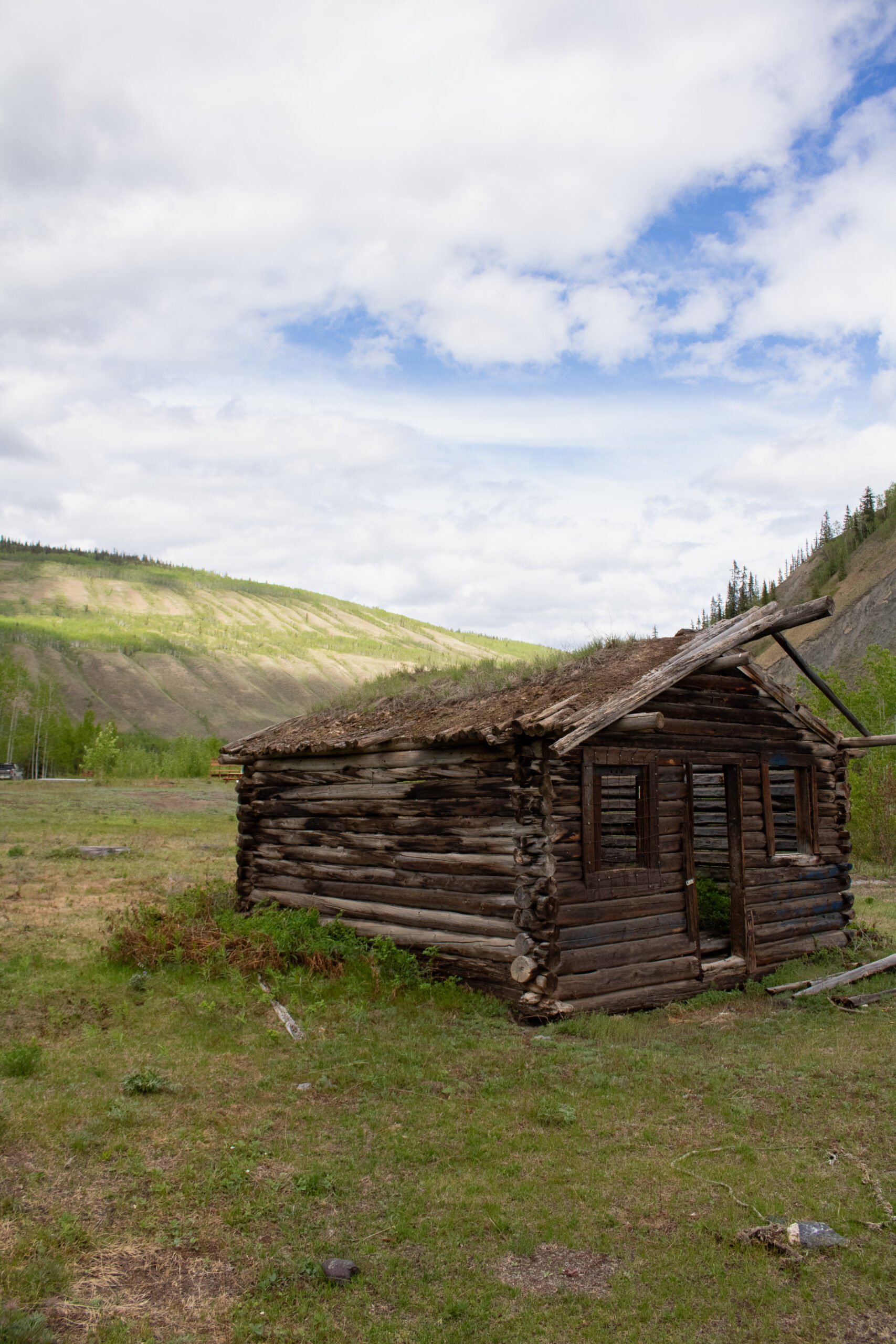
In the sediments surrounding Tu Łidlini, there are even traces of prehistoric life. Four different species of dinosaurs walked this land 85 million years ago, leaving behind fossilized footprints – one of which is on display at the school.
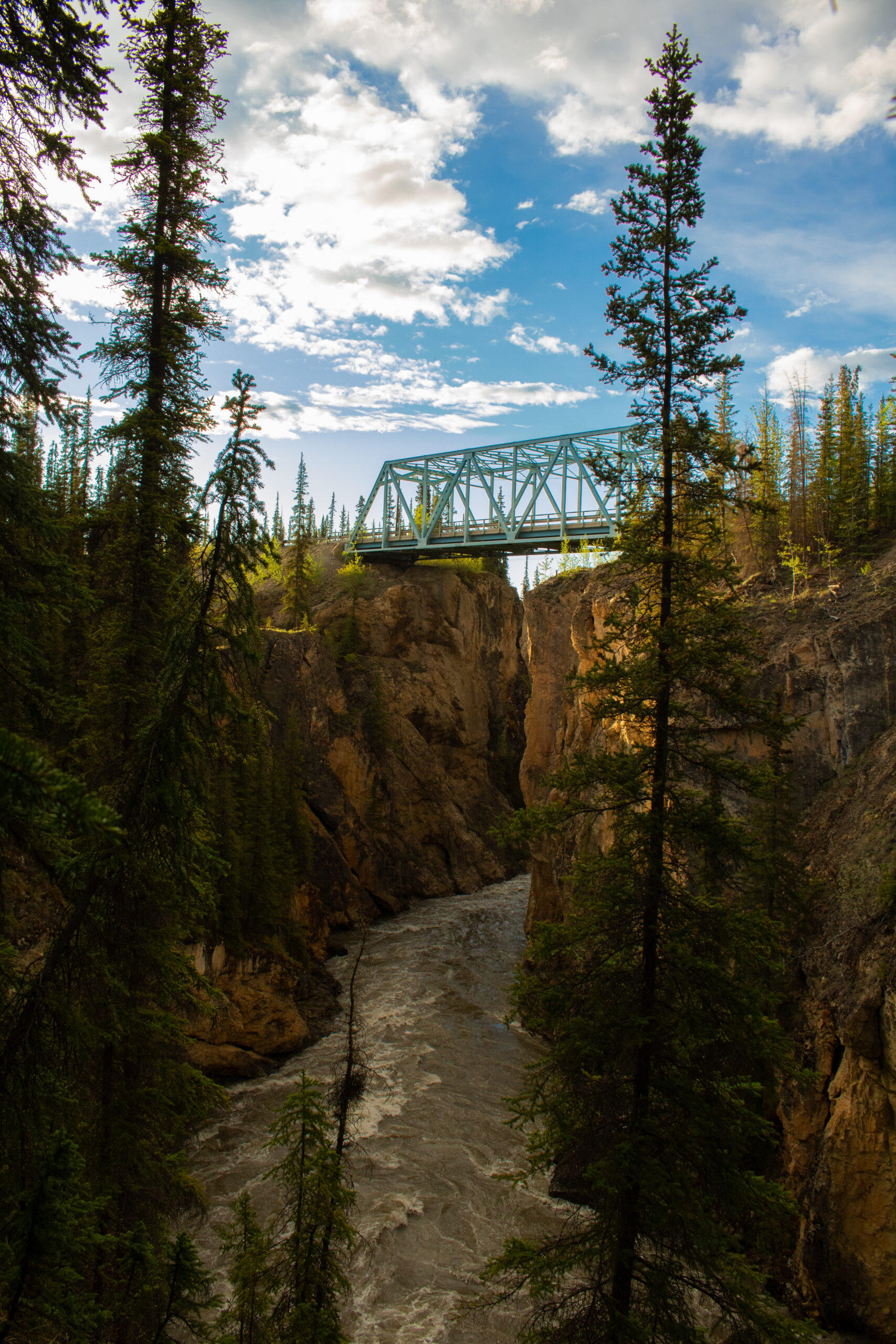
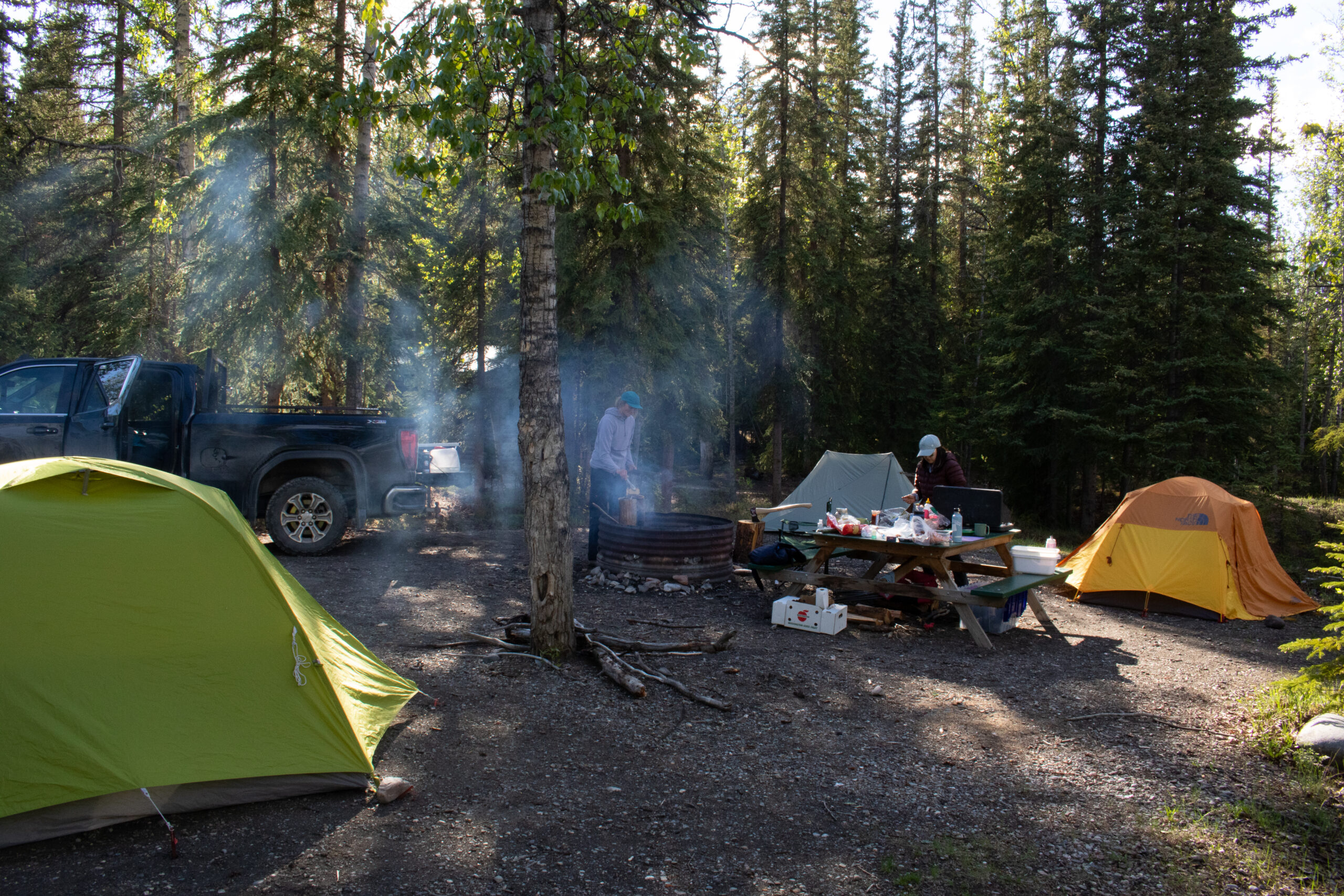
Nearby, around the Lapie Canyon where our CPAWS team is camping, snowshoe hares dart in and out of sight. Lichen and mosses cover the rocks, soils, and creep up some trees.
Our Conservation Intern, Hannah, takes photos of nearby lichens and mosses. To help more people connect with these tiny species, she’s creating a field guide this summer. Often this means getting down to their level and using a special camera lens to capture all of their textures and colours.
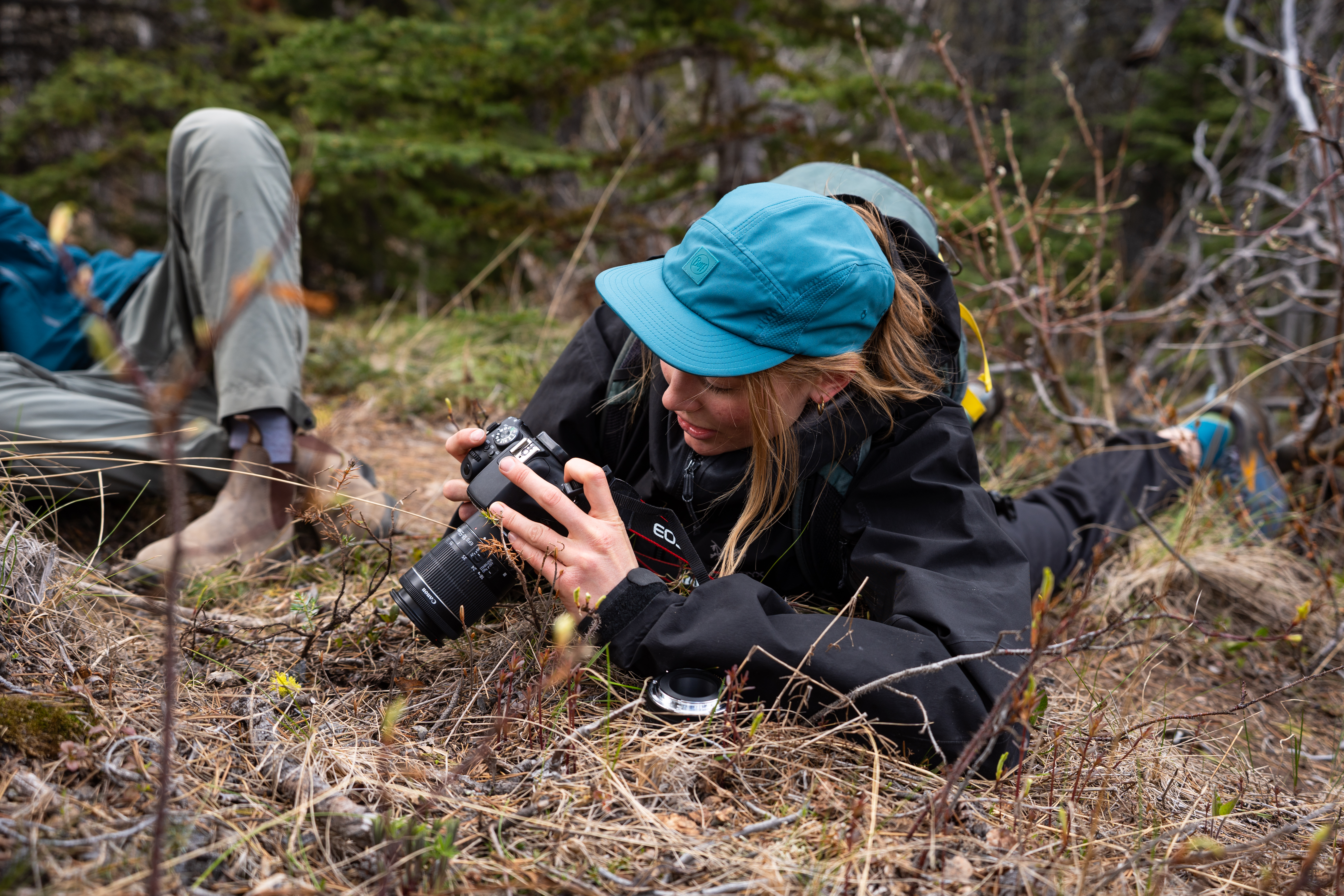
During the trip, Hannah shares with students more about lichens and their role on the land.
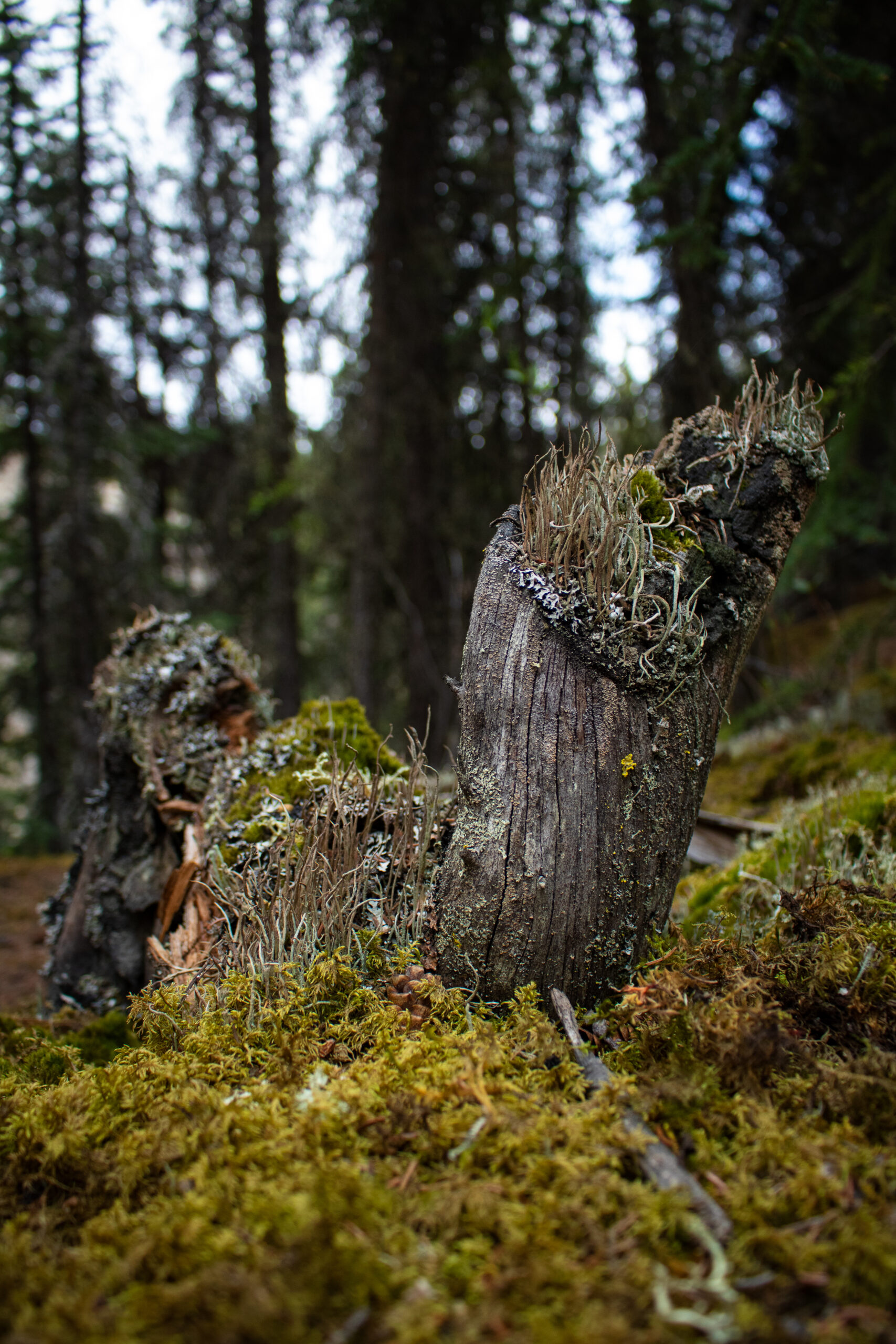
“Lichens are a partnership between a fungus and an algae. The fungus provides the structure, while the algae provides energy through photosynthesis. Without lichen, forests would struggle to survive. They insulate permafrost, help plants grow, store carbon, and provide food for caribou. Lichens grow really slow, with some species only growing 0.1 mm per year!
On a stump near the canyon, Cladonia lichen grows, a fruticose (shrubby) lichen characterized by elongated horn-like stalks that Caribou forage in the winter. Around it, Stairstep Moss (Hylocomium splendens) creates a dense mat that absorbs water, retaining moisture and trapping nutrients to support soil building and erosion control.”
These lands and waters are part of Dene Kēyeh (Kaska Country), where the Tu Łidlini Land Guardians continue on-the-ground monitoring and care.
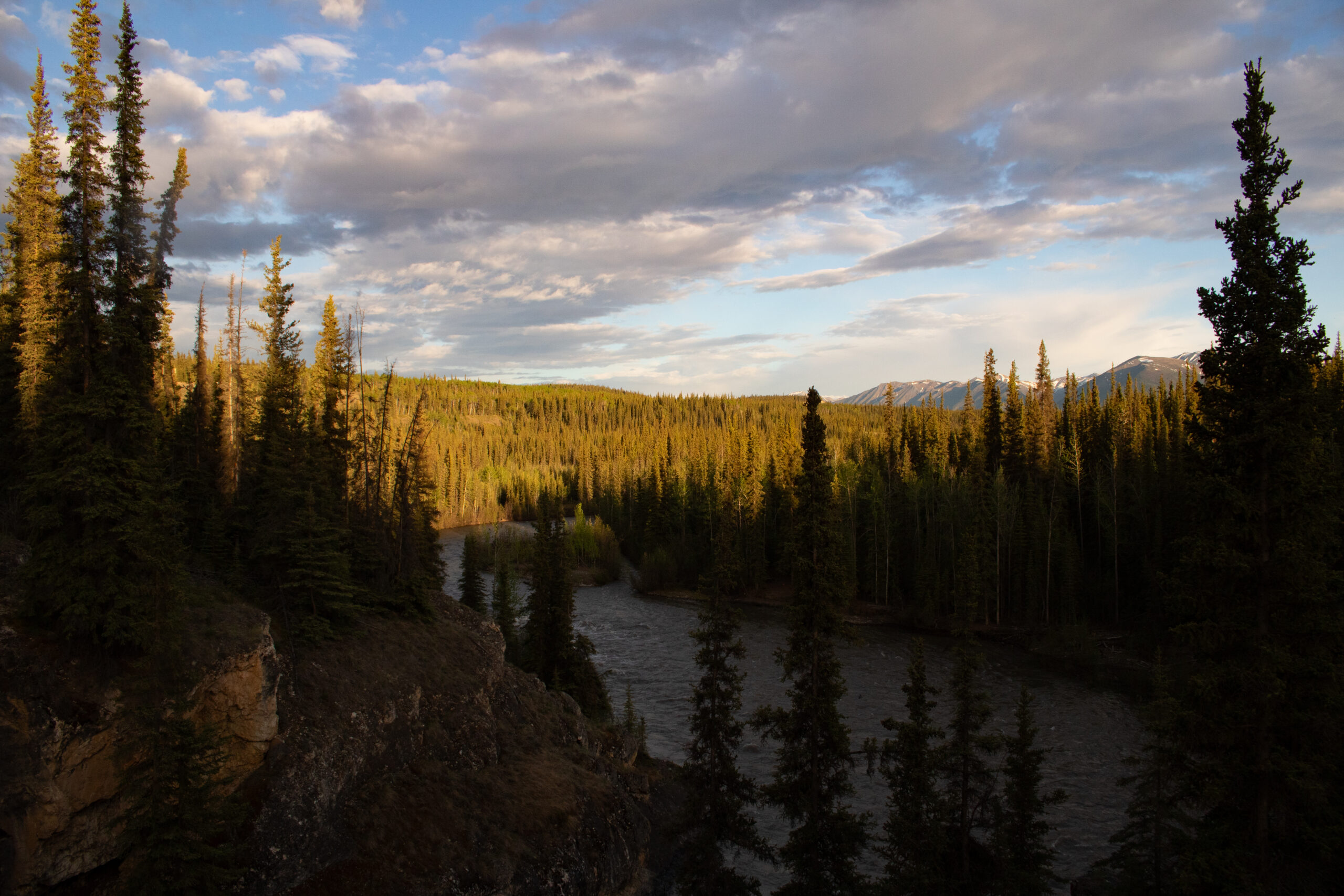
As the days pass, our team joins handgames in town and visits the Dena Cho trailhead where exciting Guardian work will be underway soon. Between paddle strokes, hikes, and stories, we get a glimpse of just how deep the water’s history runs and the abundance that’s supported by Dene Kēyeh.
Youth learning on the water, wildlife thriving, and opportunities to connect are just some of the values RRDC is working to safeguard through their Indigenous Protected and Conserved Area (IPCA). We’re excited to paddle alongside RRDC leadership, supporting their work and sharing more about what makes these lands and waters so important.