


Join the Herd
An Evening for the Porcupine Caribou Event Recap
Written by Paula Gomez Villalba | March 23, 2026
Earlier in March, people across Canada and the U.S. came together to stand up for the Arctic Refuge – again. Through the CPAWS submission portal, nearly 300 letters were sent to the U.S. Bureau of Land Management (BLM) calling for lasting protection of the Porcupine Caribou Herd’s calving grounds. Over 100 of you joined us at events over the past few weeks, which culminated with Join the Herd at the Yukon Arts Centre on March 11th.
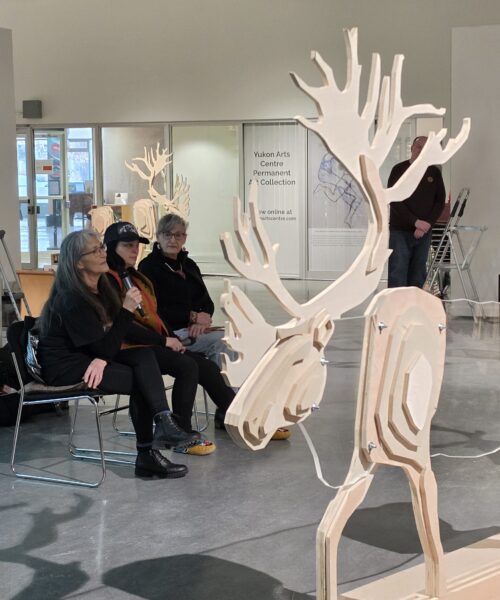
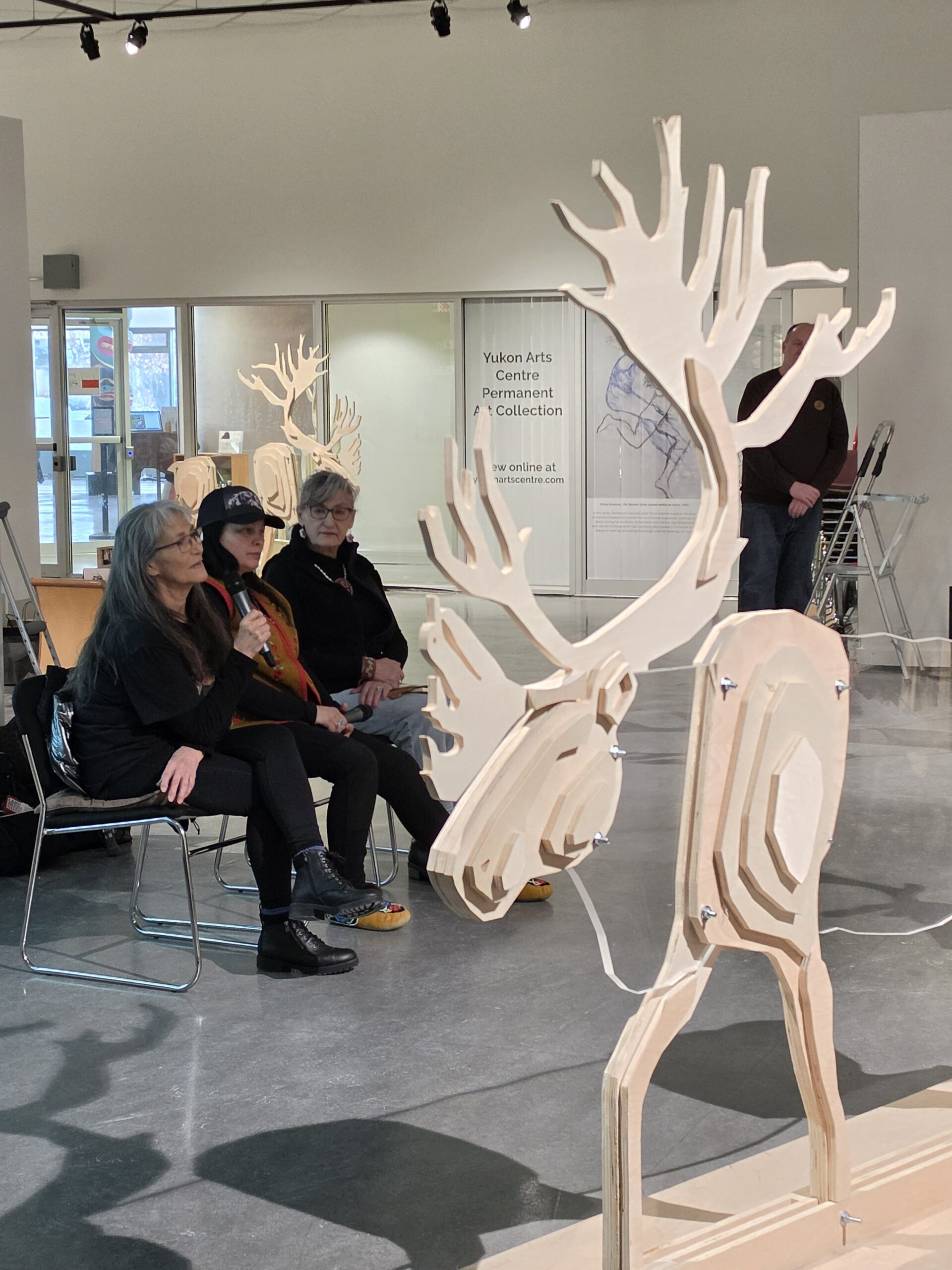
We are deeply grateful to everyone who attended, and to our partners at Vuntut Gwitchin First Nation, Dechinta Centre for Research and Learning, and the Yukon Arts Centre for helping make this event possible. We were honoured to be joined by Norma Kassi, Shirlee Frost, and Debra-Leigh Reti, Vuntut Gwitchin Citizens who shared meaningful reflections and stories following a technical update.
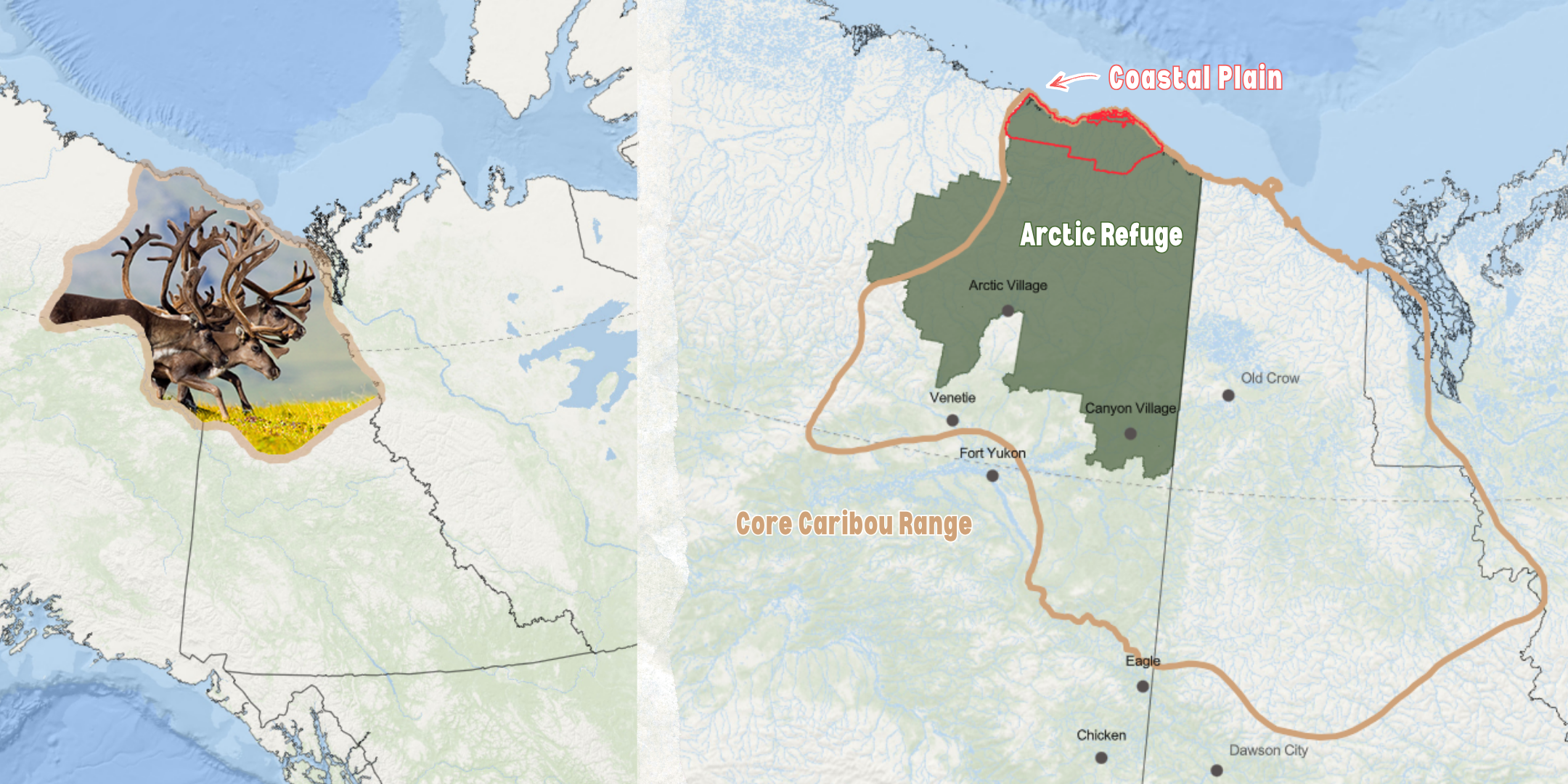
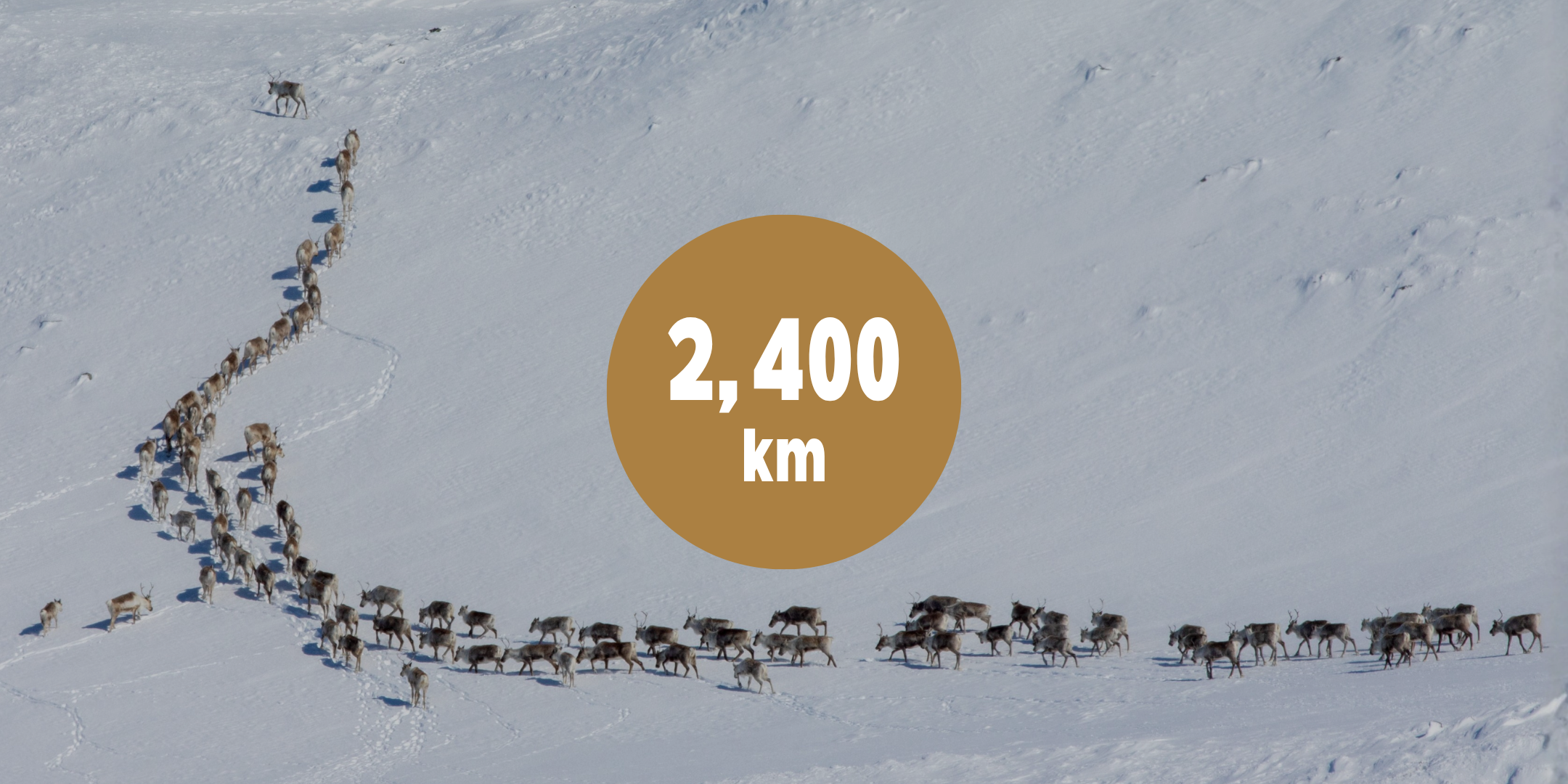
The calving grounds of the Porcupine Caribou are in the Coastal Plain of the Arctic Refuge. The caribou’s range and deep connections to land and people extend through the Northwest Territories, Yukon, and Alaska. Map by Paula Gomez Villalba, inset photo by Atsushi Sugimoto/www.apl-as.com.
At a time when oil and gas lease sales could happen as early as May 5th and there are active leases where seismic testing could begin any day, coming together and sharing positive, impactful stories like those of the Gwich’in is incredibly important. They show us how far we’ve come, that we are not alone, and the importance of Indigenous leadership.
During Join the Herd, Laurence from our team updated everyone on all the bills, acts, lawsuits, and actions of U.S. administrations that got us here (7:29 in the recording). They also highlighted how the 2025 budget bill that reinforces more lease sales does so to offset costs from tax cuts for billionaires and large corporations, increased military, and specifically ICE deployment, which harasses people, separates families, and deports many illegally. “It’s not just the caribou and the Arctic Refuge and the Gwich’in that they’re hurting. They’re literally hurting people to hurt more people,” Laurence shared.
-
- Aelyia Brick
-
- Mike Thomas/Yukon Arts Centre
-
- Mike Thomas/Yukon Arts Centre
We were incredibly lucky to have three strong Vuntut Gwitchin women speak about growing up on the land and standing up for the Porcupine Caribou Herd. Norma Kassi shared a story about being put down on the ground as a baby, being surrounded by caribou while her mother hunted. Reflecting on the history of fighting for the Arctic Refuge, Norma recalled meeting with grandmothers, travelling to Arctic Village in Alaska where leaders gathered, and the strategy Elders laid out focused on Gwich’in life and connections. She shared about the movements of the Porcupine Caribou Herd, how the young bulls lead the cows while the old bulls follow, showing the young what to do.
“When the cows come, there’s muskrat houses all over the land, all over the lakes… We trap muskrats so that we can survive to sell the pelts when we come back in June. The cows eat what the muskrats bring up for them, and it’s powerful medicine. And for some reason they all go to sleep amongst all the lakes near the muskrat houses. The cows they rest, and the young bulls circle them, the 2 to 3 year olds circle them and watch them, and protect them, because they’re carrying young ones.”
– Norma Kassi, Vuntut Gwitchin First Nation
Shirlee Frost was also raised in Old Crow. She spoke about how Gwich’in and caribou hearts are connected, sharing a story about going out to see the caribou with her father, feeling overwhelmed and awed by all the caribou lying on a lake.
“To be amongst them when they’re migrating, you wouldn’t believe, you feel it right through your body… Mother Earth literally vibrates with them”
– Shirlee Frost, , Vuntut Gwitchin First Nation
Debra-Leigh Reti, newly elected MLA for Vuntut Gwitchin in Old Crow, spoke about hardships in town and about bringing forward a motion that unanimously passed in the Yukon Legislative Assembly to help protect the Porcupine Caribou Herd. Emotional and grateful seeing her grandson, Landon, at the back of the exhibit by a bull caribou, Debra-Leigh shared a story about them hunting together.
“We all have a caribou story. We all have some kind of caribou story. And I was thinking, you know [about] my time in Old Crow since I moved home in 2018, from the oldest elder to the youngest child, they have a caribou story already.”
– Debra-Leigh Reti, Vuntut Gwitchin First Nation
Following some door prizes, Laurence hopped back on the microphone with some caribou facts. For example, did you know that they can turn off their circadian rhythm so the darkness doesn’t make them tired all the time? Or that the caribou have a special pigment in their eyes that helps them see in near, total darkness?
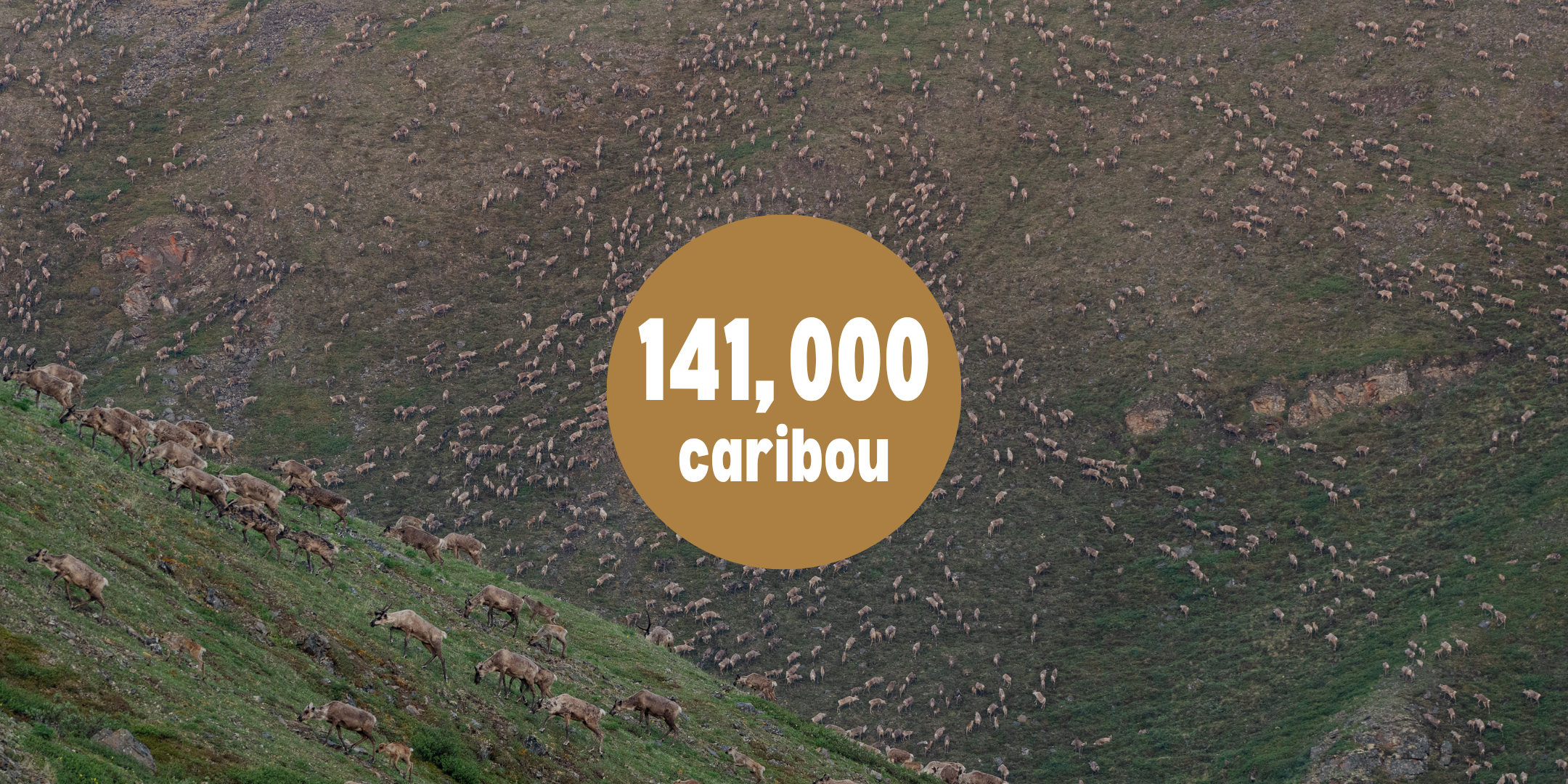
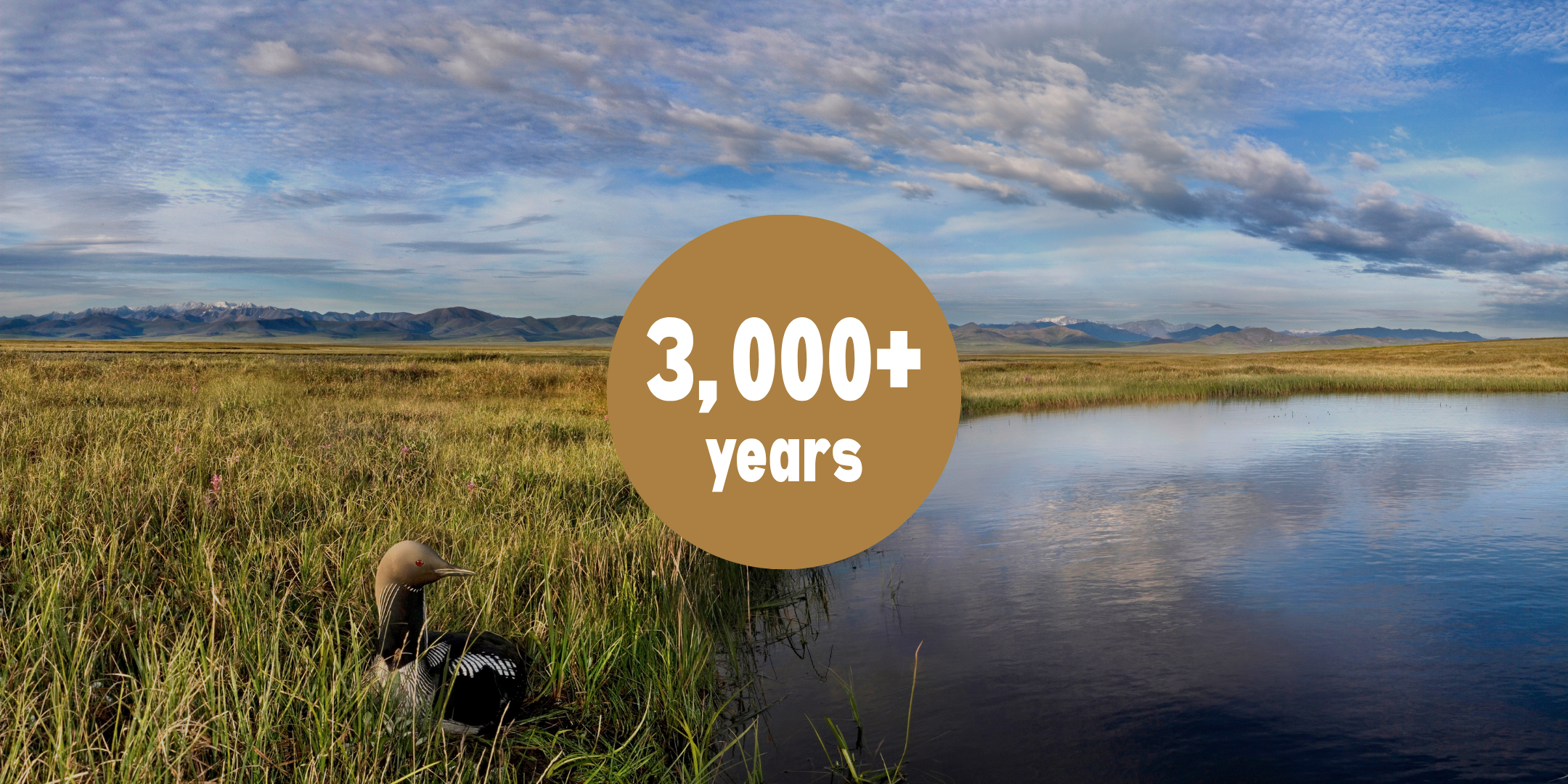
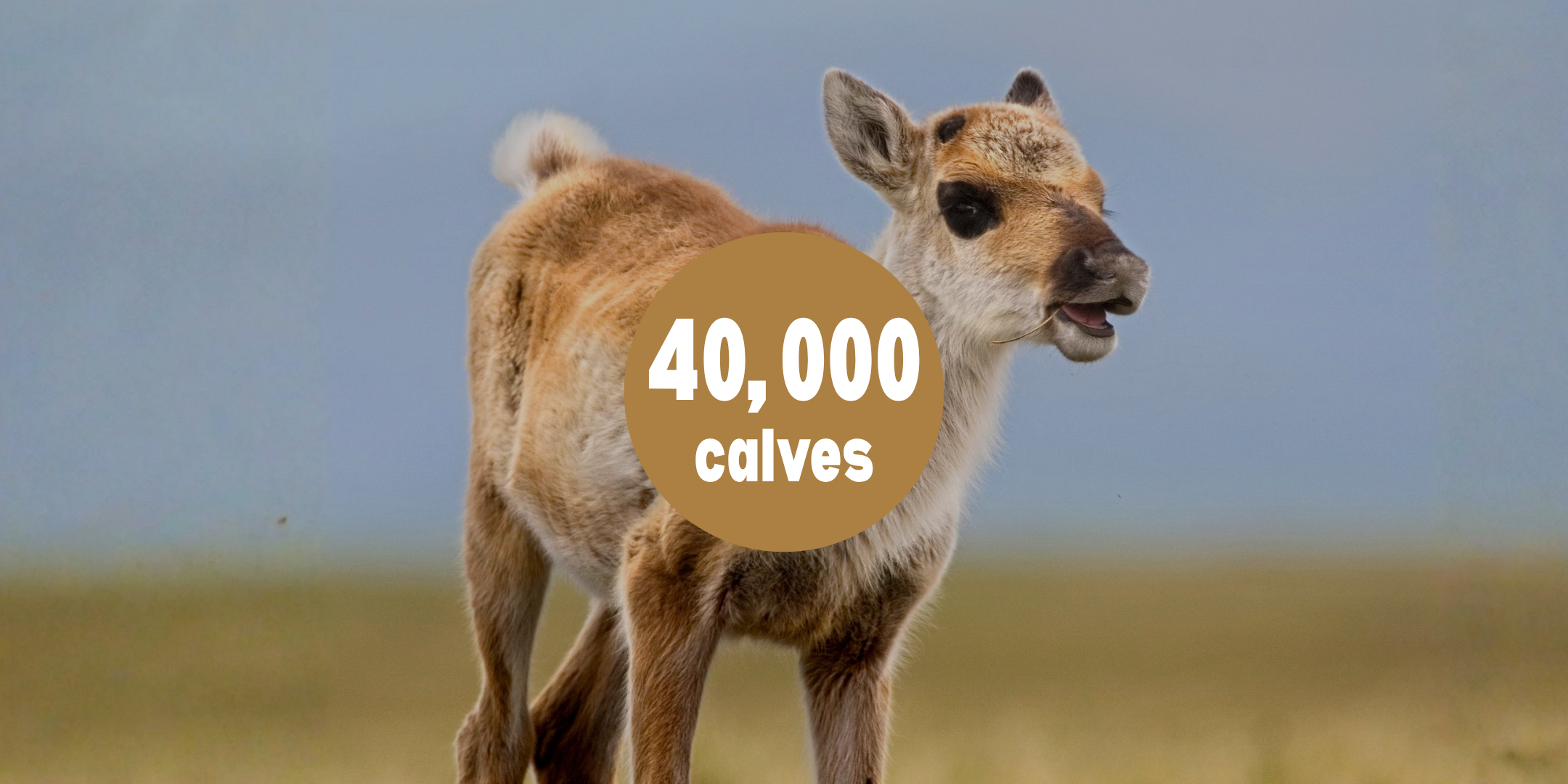
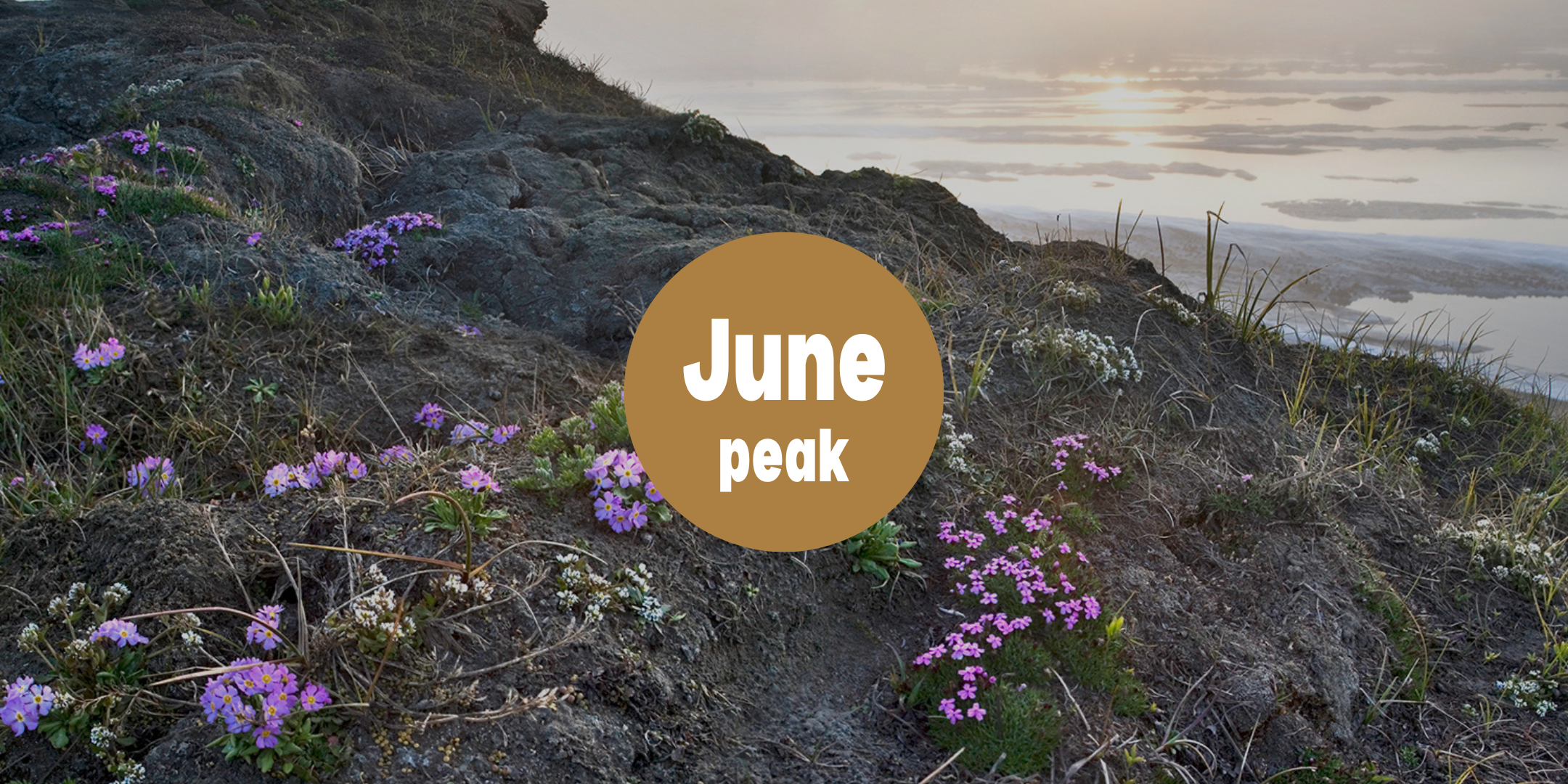
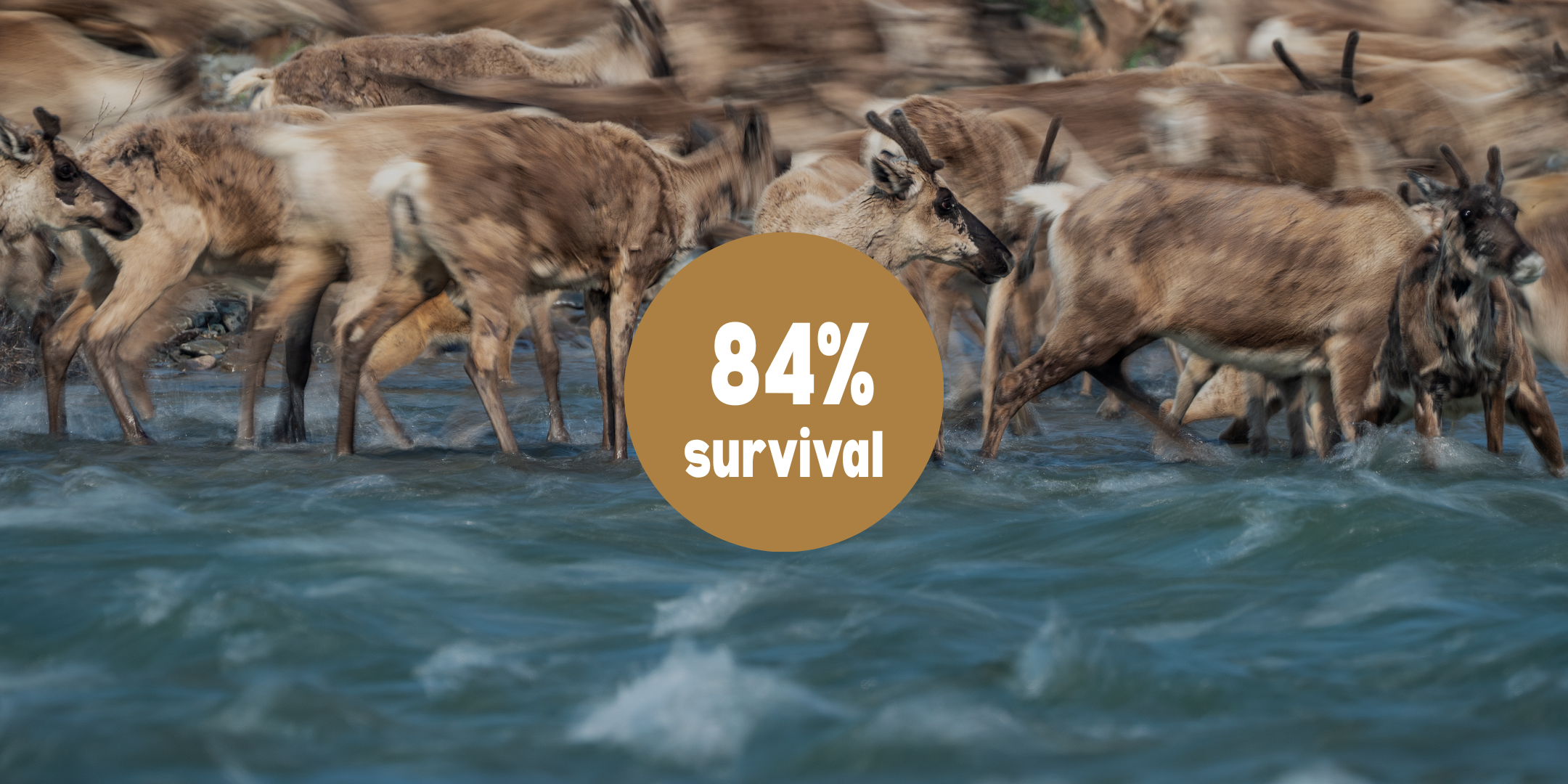
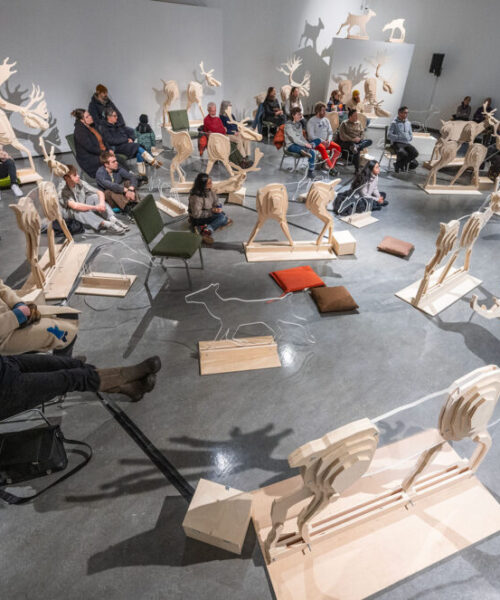
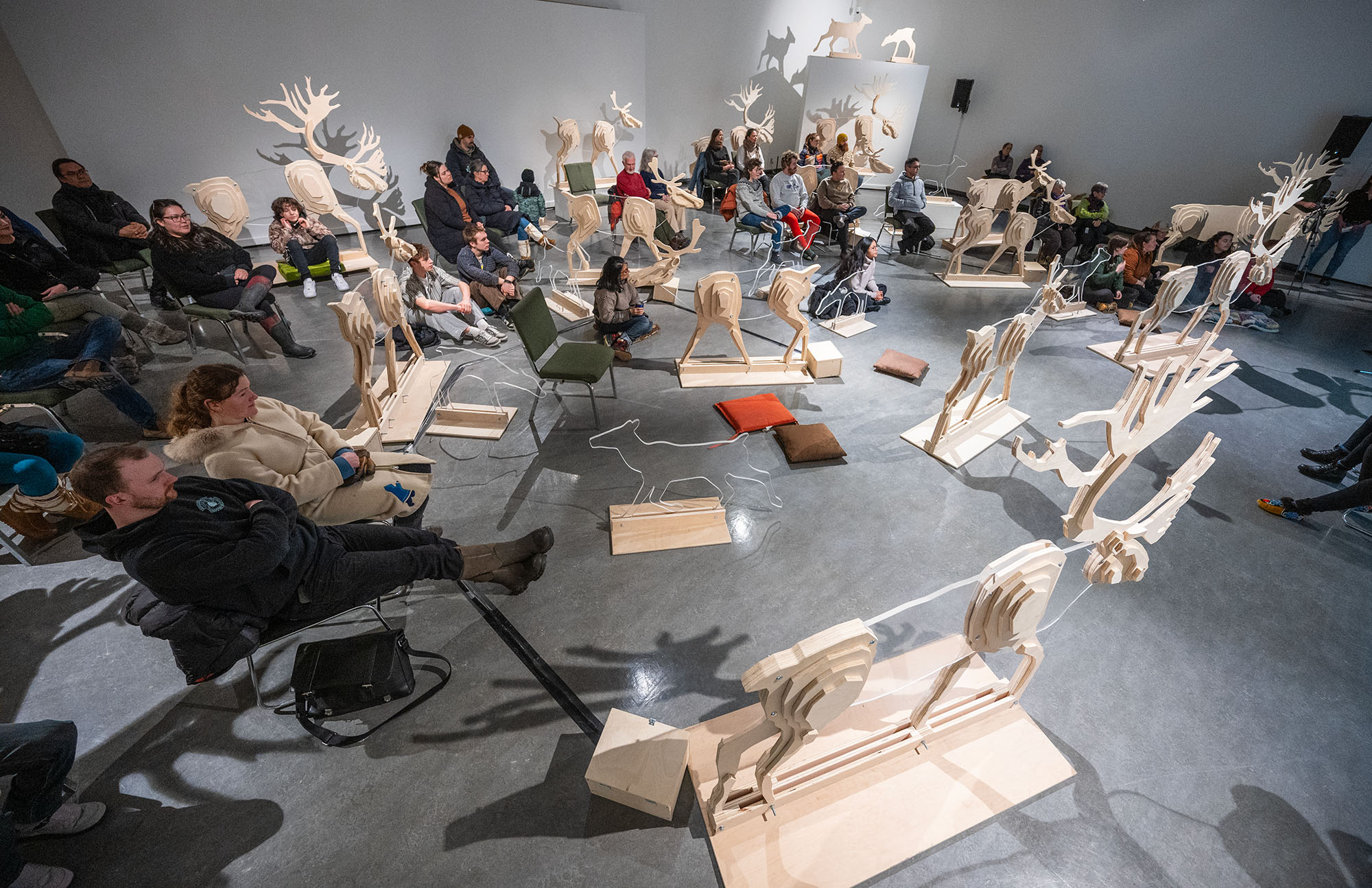
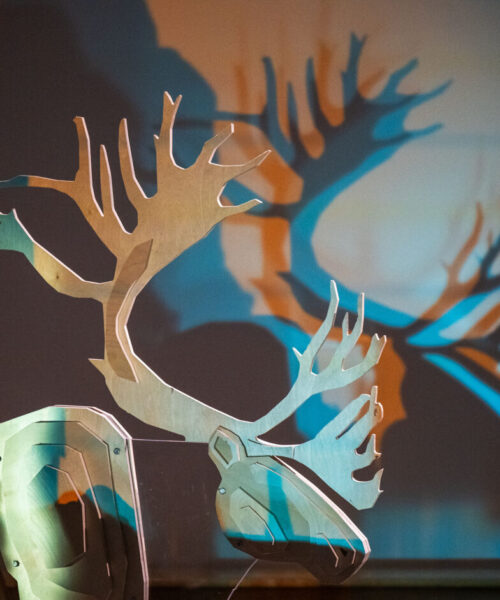
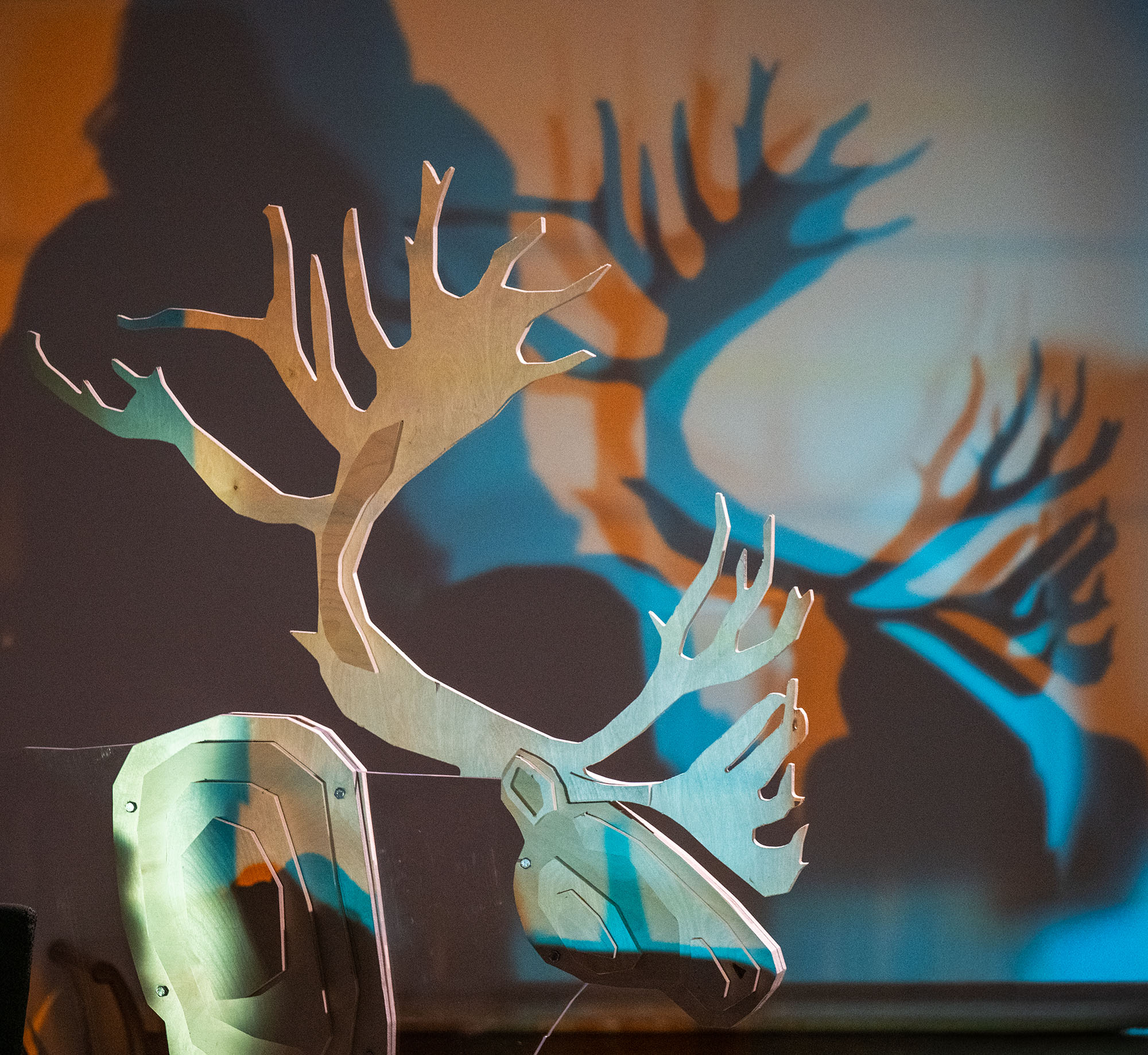
The evening wrapped up with a chance to see the caribou come to life through sound, light, and storytelling. Artists Lianne Charlie and Nicolas Hyatt, co-leads of The Caribou Art Project shared more about the art installation and how the herd has grown. Caribou are carefully laid out, so that when you enter the exhibit you start walking in step with them. The cows and calves are in the centre. Fifteen speaker boxes placed throughout the room play stories and music.
“The hope and desire [is] that folks who weren’t or do not have the type of connection that these Gwitch’in people have talked about, could use this installation and opportunity to experience proximity, to experience closeness to caribou. Many of us don’t have that opportunity now, due to environmental impacts further south”
– Lianne Charlie, Wolf Clan of the Tagé Cho Hudän (Little/Salmon Carmacks First Nation)
“We have a physical herd here made from plywood and acrylic. And those speak, especially the choice of acrylic, to the disappearance of caribou. You’ll notice that some of the calves in particular, are entirely made out of acrylic… Our hope is that that is not where we’re going in the future.”
– Nicolas Hyatt
Events like this celebrate community and highlight how we can stand strong, together. A heartfelt thank you once again to everyone who attended, to our speakers, volunteers, and organizers. The Caribou Art Project will be at the Yukon Arts Centre’s Main Gallery until May 22, 2026. Visit Monday to Friday between 10 am and 5 pm to develop your own caribou story.
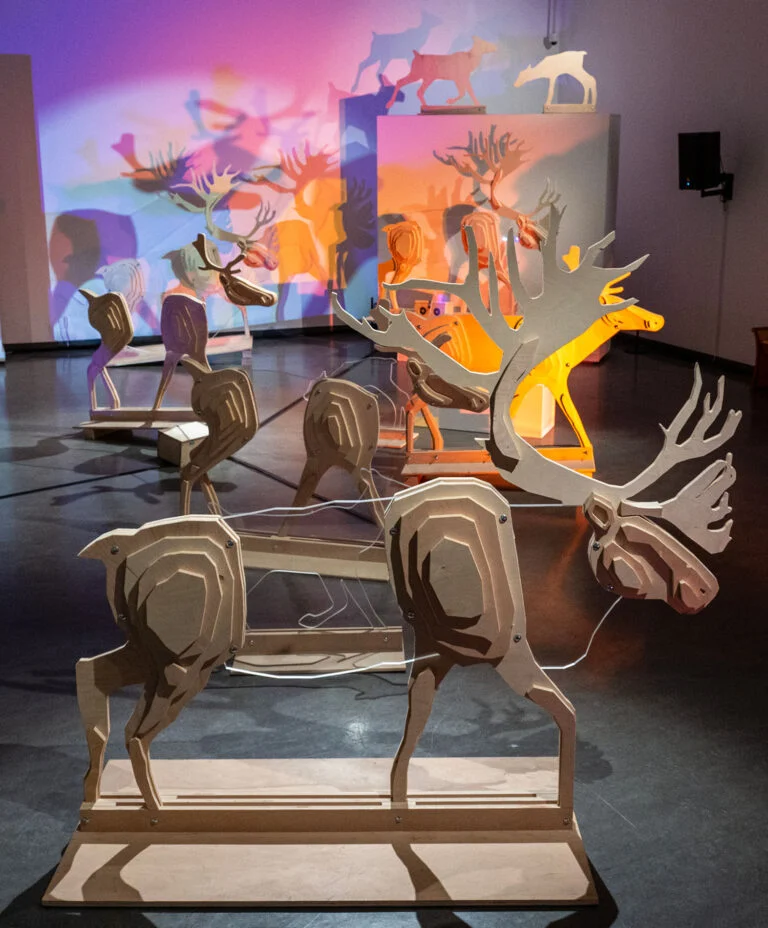
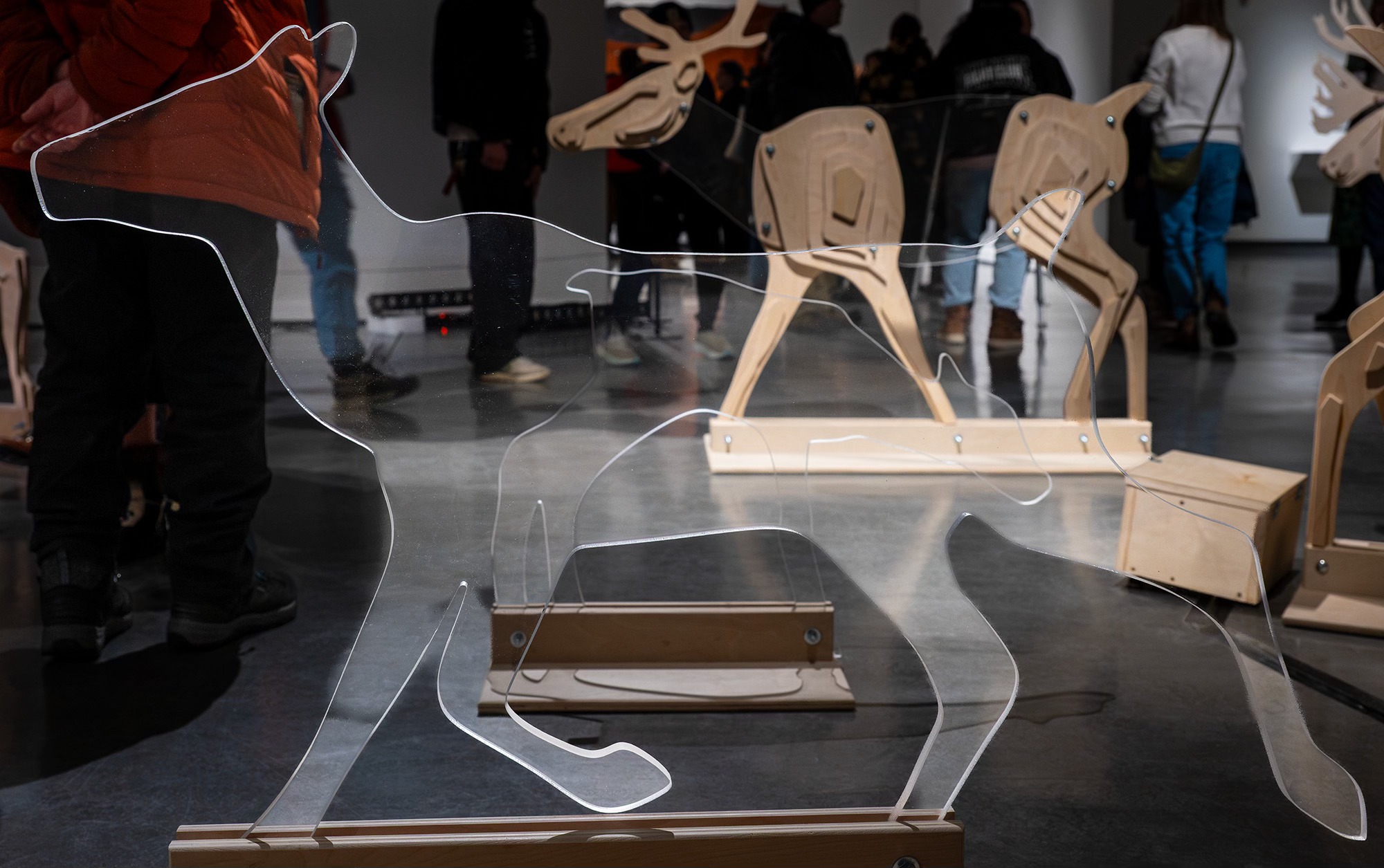
Video by Adil Darvesh with event photos by Mike Thomas/Yukon Arts Centre. Additional photos by Malkolm Boothroyd and Peter Mather.
You can still help give a voice to the Porcupine Caribou. Vuntut Gwitchin First Nation is urging everyone to call on federal ministers and the Government of Canada to protect the Arctic Refuge. The Nation even created a script and compiled phone numbers to make the process incredibly easy.
613-992-9381
Minister Julie Dabrusin
Minister of Environment
613-995-4014
Minister Anita Anand
Minister of Foreign Affairs