

Moving with the Herd
Navigating change and defending the Arctic Refuge
Written by Paula Gomez Villalba, Communications Coordinator | February 6, 2026
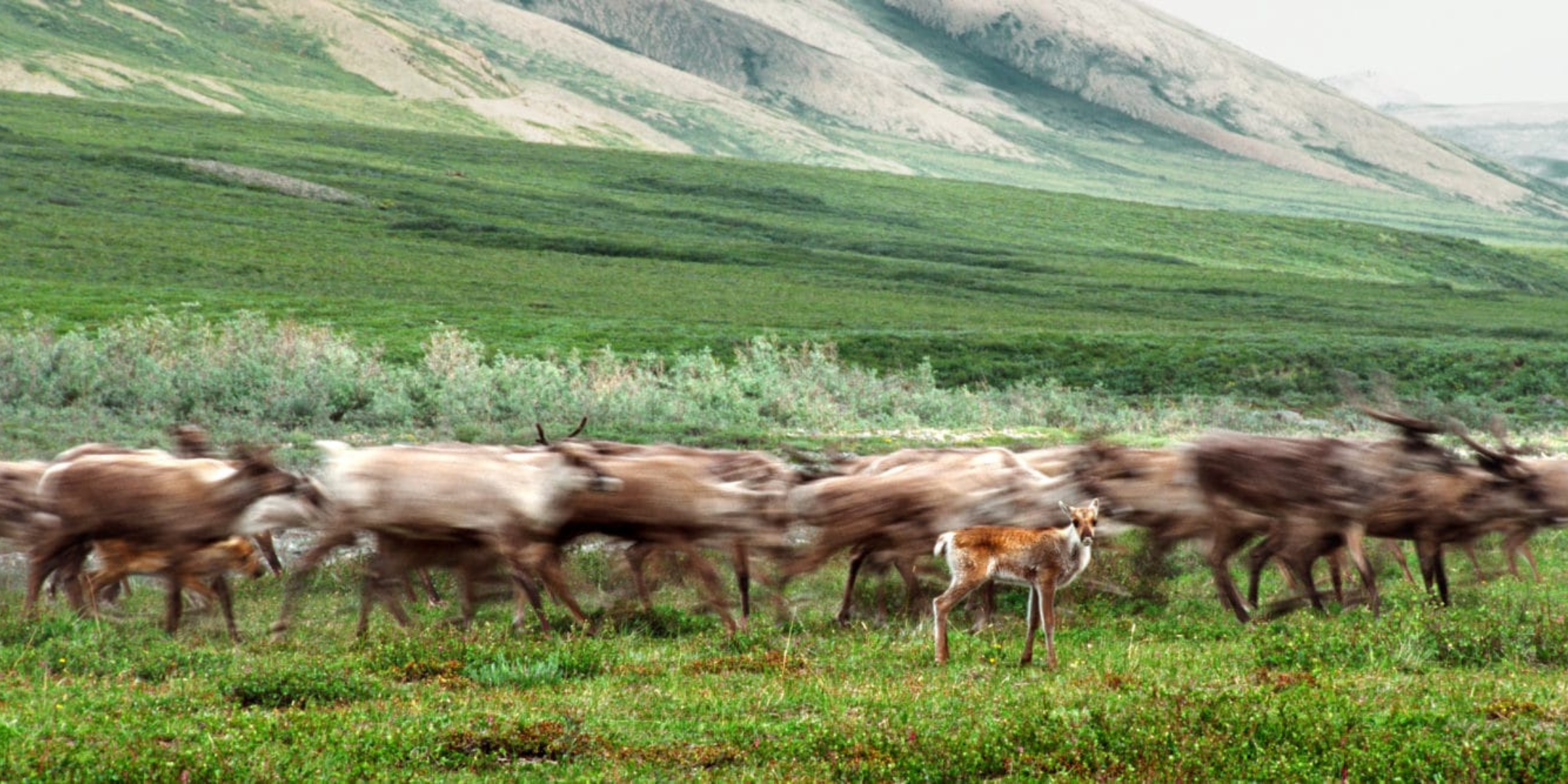
As one of the last remaining healthy caribou herds in North America, the Porcupine Caribou are inextricably linked to the natural cycles of the lands that support them. Pregnant females, bulls, and yearlings travel 2,400 kilometres each year through the rolling tundra, mountains, and rivers of the Northwest Territories, Yukon, and Alaska. This is a journey guided by generations of instinct and the knowledge of the oldest members of the herd. A journey to reach the abundance and safety found in their calving grounds within the Arctic Refuge. Not only is this migration essential for the health of the caribou themselves, but for much of life in the Arctic. Calving adds nutrients to the tundra, providing food for scavengers and supporting new plant growth.
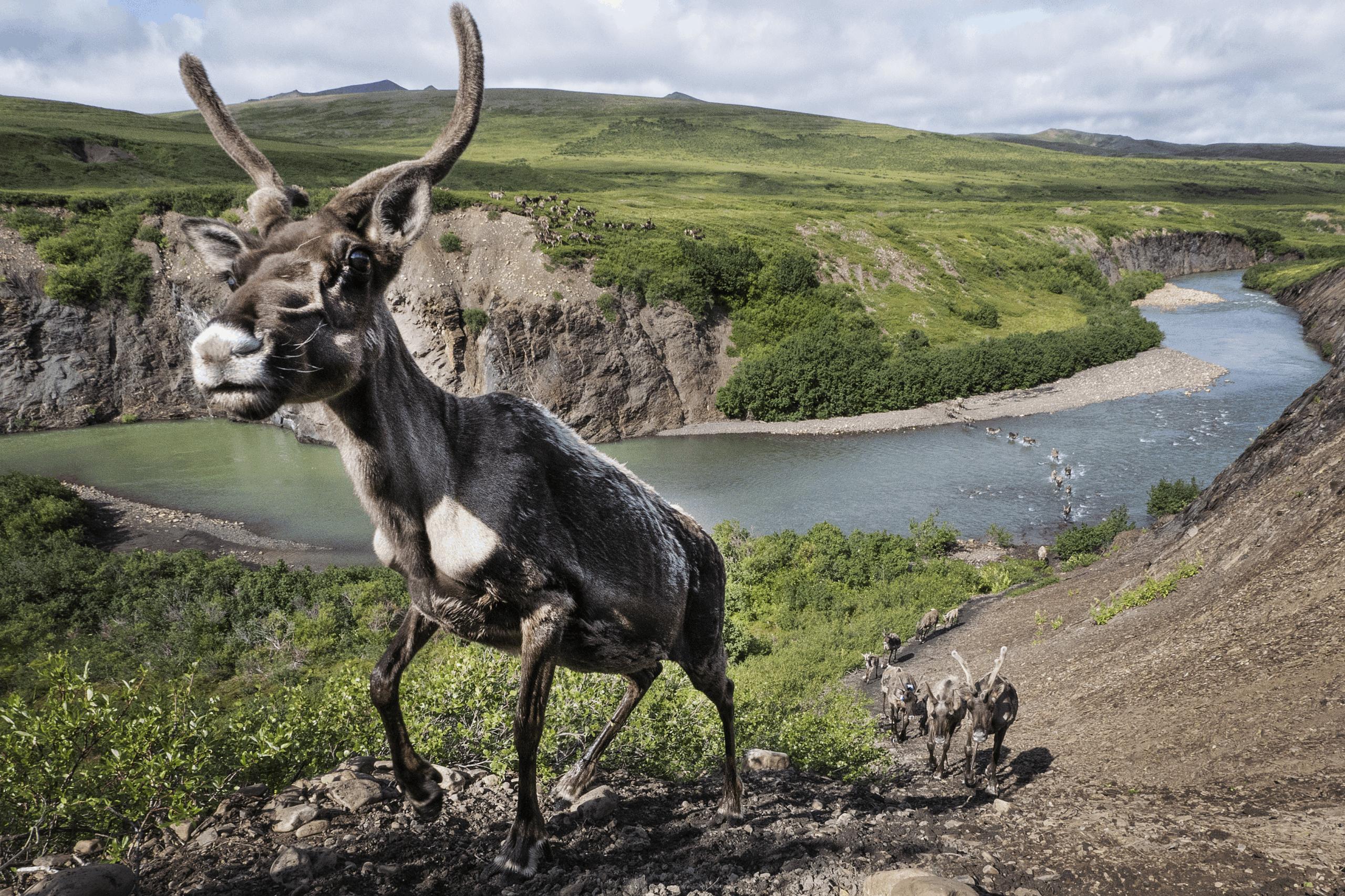
Porcupine Caribou migration across Blow River, photo by Peter Mather.
Nestled between the mountains and the sea, these calving grounds are called Iizhik Gwats’an Gwandaii Goodlit (The Sacred Place Where Life Begins) by the Gwich’in. Their way of life — history, culture, sustenance — is deeply woven with the Porcupine Caribou Herd. Despite decades of advocacy by the Gwich’in and their allies to protect these calving grounds (and the caribou by extension), the Arctic Refuge is currently threatened by oil and gas development like never before.
As part of the Arctic Defense Campaign and in partnership with the Vuntut Gwitchin First Nation, CPAWS Yukon has been carefully gathering information, planning our approach, and collecting our strength to help defend the refuge, so that when we move forward, we all move together.
Turn up the volume to hear thousands of hooves and huffs on a historic path. Video by Neil Hartling.
Alongside the 10+ organizations of the Arctic Defense Campaign and the Gwich’in Steering Committee, we are suing the Trump administration. Again.
When the oil and gas leasing program in the Arctic Refuge was first mandated under the first Trump administration in 2017, it triggered an Environmental Impact Statement (EIS). But the rushed EIS was widely criticized by scientists, First Nations, and legal experts for being full of scientific and legal flaws, and lacking proper consultation. It led to the most aggressive scenario imaginable for leasing in the Arctic Refuge.
This is when the first lawsuit against the Trump administration was filed.
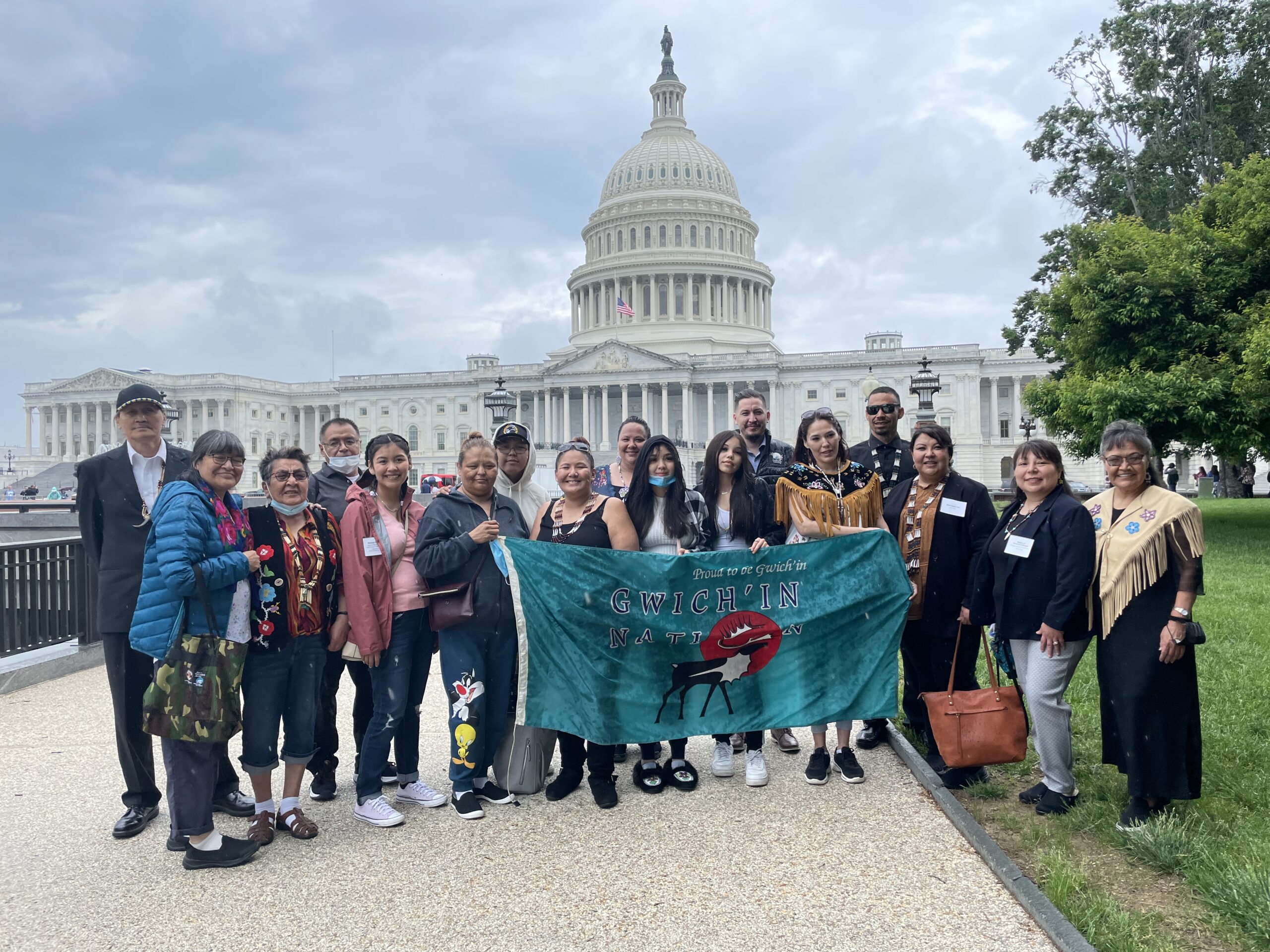
Community is central. Many Gwich’in Chiefs and Tribal leaders gathered in Washington, and over 2,500 of you signed our letter emphasizing how what happens to the Arctic Refuge affects everyone.
Afterwards, we celebrated over 20 banks committing to NOT fund drilling in the Arctic Refuge, lease sales that flopped, cancelled leases, and a new Supplementary EIS under the Biden administration.
However, last year, the new Trump administration overturned those decisions, restored previously cancelled leases, and set up a program that legally requires 5 new lease sales over the next 7 years, covering most of the Arctic Refuge’s Coastal Plain and beyond.
“Long ago the Gwich’in followed vadzaih (caribou) to see where they went and to learn their ways. They led us to the Coastal Plain of what is now called Alaska. It was here that we exchanged half of our heart with half of the heart of vadzaih. In this way we became one and would always be connected. Iizhik Gwats’an Gwandaii Goodlit is the critical nursery grounds of the vadzaih, which are essential to the nutritional, cultural, and spiritual needs of the Gwich’in Nation.
Our traditional knowledge tells us that if you develop in the nursery grounds of the caribou you destroy the caribou, and therefore, destroy the Gwich’in.“
– Gwich’in Steering Committee, Jan 8 2025 Press Release
Laurence Fox, our Conservation Coordinator, has been attending many meetings, conducting deep research, and thinking out a new strategy every week with our partner organizations and the Gwich’in.
The Trump administration often does things in ways that are outside of normal procedure, using its executive powers, reducing timelines and requirements for consultations, gutting department resources, and saying one thing only to change their mind or do a completely different thing. This leaves everyone fatigued, with their attention divided, and scrambling to understand what is actually happening.
During the last U.S. administration, the most restrictive leasing scenario in the Supplementary EIS was selected for the oil and gas leasing program. The Trump administration, unhappy with limits in development and caribou protections, decided to go with another option that leads to essentially the same scenario in the old, flawed EIS. This means 5 new lease sales covering most of the Coastal Plain. And with the restored leases in place, seismic testing could technically begin in the next year. Aggressive and short-sighted, to say the least.
Our team has been meeting with reporters and dedicating hours to backgrounding, which means compiling resources and chatting with media in depth to explain what’s happening so that they can report to the public better. Much of this work has been happening behind the scenes, gathering energy for the fight ahead.
We’re mirroring the herd. Spread out across their winter range into northern Yukon, the caribou are currently digging through snow to find lichen. Most of the cows are already pregnant, and finding food is key so that the growing calves are born strong and healthy. They make small moves. The caribou are recovering from breeding and conserving energy before the big migration.
As they get ready to return to the Arctic Refuge this spring, we’re organizing events to celebrate them, build community, and bring us all onto the same page. Sign up to our newsletter for updates and opportunities to take action, support the Gwich’in Steering Committee and the Vuntut Gwitchin First Nation, and protect the caribou. They are gearing up to take more action, and we hope you’ll join us in standing in solidarity with the caribou and the Gwich’in.