Whitehorse, Yukon—CPAWS Yukon stands in solidarity with our Gwich’in allies in decrying the U.S. Government’s decision to proceed with the environmentally, socially, and economically reckless launch of the oil and gas leasing program within the Coastal Plains of the Arctic Refuge. The announcement, made April 17th, officially opened more than 680,000 acres of the Coastal Plain—home to the sacred calving of the Porcupine Caribou Herd at a formal lease sale to be held June 5.
This lease sale represents a direct threat to the health and stability of the Porcupine Caribou Herd, who have been returning to the Coastal Plain to birth, nurture, and protect their calves for millenia. It is also an affront to the sovereignty, culture, and will of the Gwich’in people, who live in ongoing relationship with the caribou who have steadfastly and adamantly opposed any and all development within the Coastal Plain. The move also represents the continued disrespect of the U.S. government for the sovereignty and security of Canada and Canadians, as this unilateral action is in direct violation of the legally binding 1987 Canada-U.S. Porcupine Caribou Management Agreement.
Offering oil and gas leases in the nursing grounds of baby caribou during an accelerating climate crisis and unprecedented biodiversity loss following two previous sales that, due to a lack of industry interest, were universal flops, is not only immoral and irresponsible, but absurd.
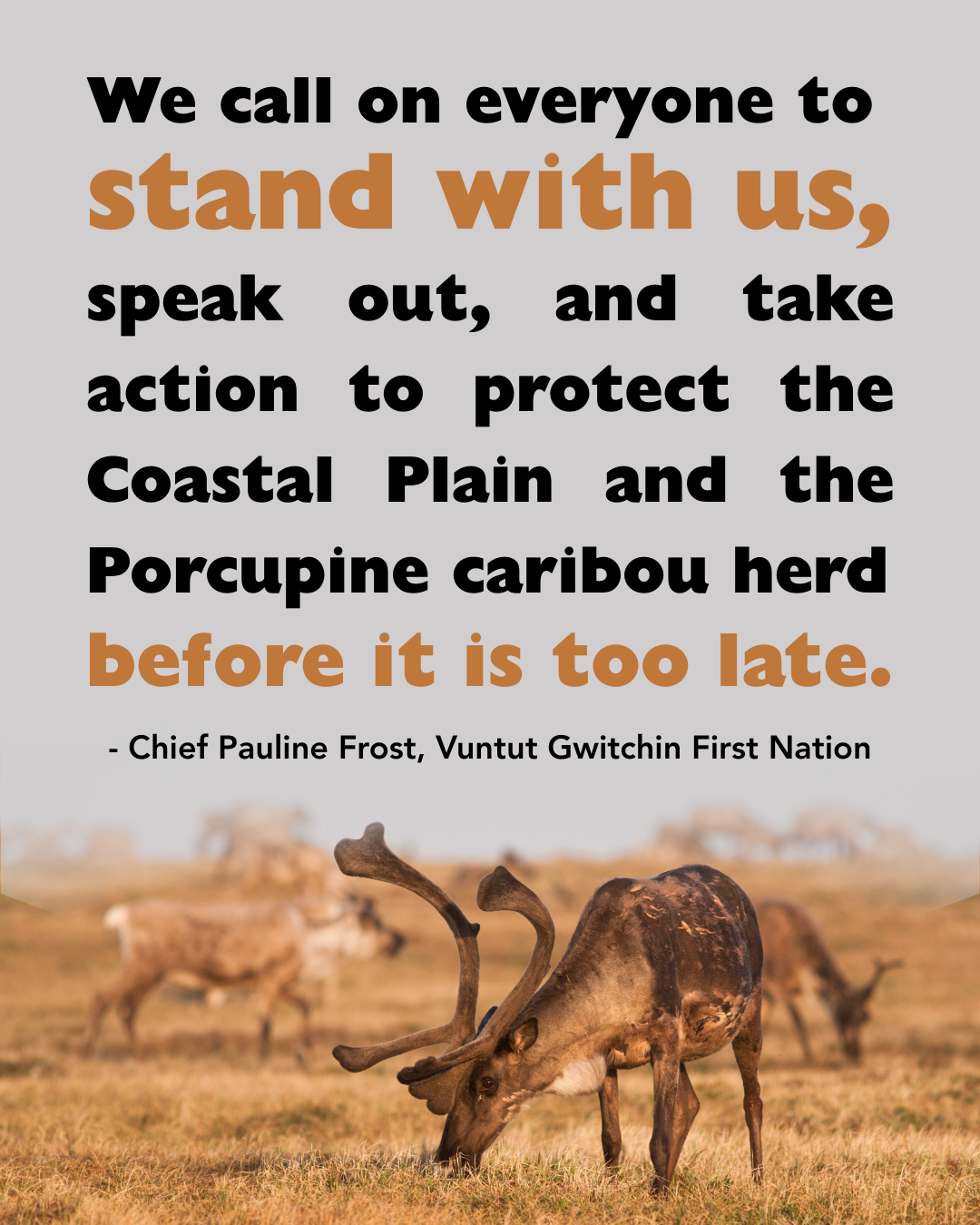
CPAWS Yukon remains committed to standing beside the Gwich’in in the fierce and unwavering defense of the Arctic Refuge and the sacred calving grounds of the Porcupine caribou. The only acceptable oil and gas extraction on the coastal plain is none, and we won’t stop fighting until the Refuge is protected. Now and forever.
-30-
Contact
Laurence Fox, Conservation Coordinator, CPAWS Yukon lfox@CPAWSYukon.org| 867-393-8080 x 3
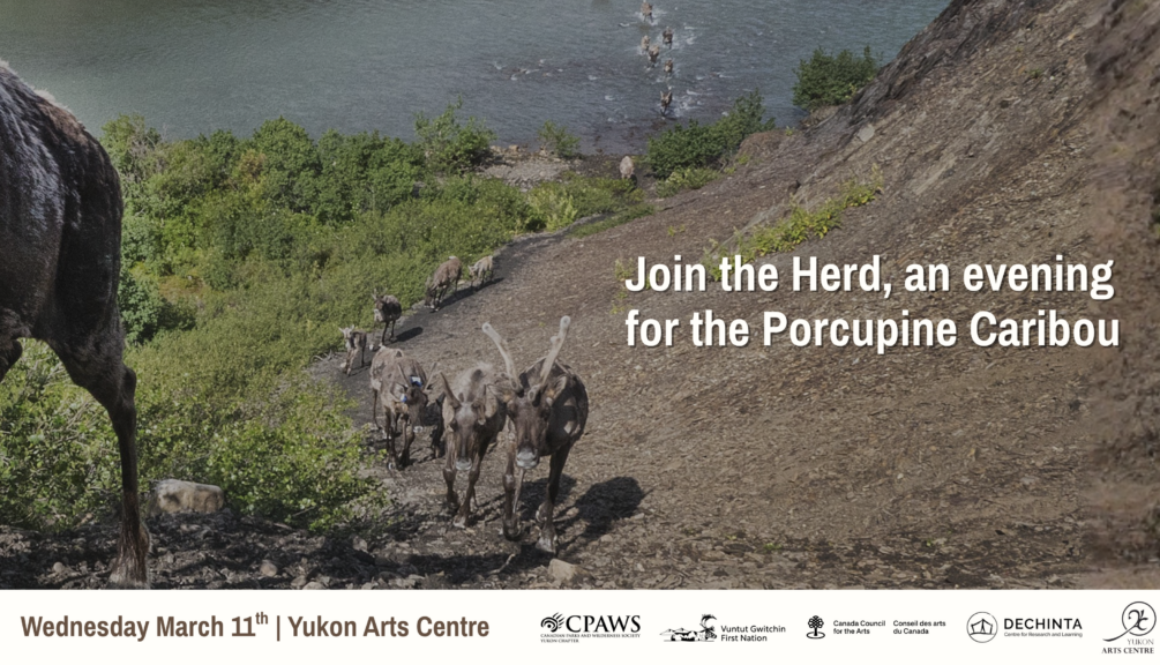
Earlier in March, people across Canada and the U.S. came together to stand up for the Arctic Refuge – again. Through the CPAWS submission portal, nearly 300 letters were sent to the U.S. Bureau of Land Management (BLM) calling for lasting protection of the Porcupine Caribou Herd’s calving grounds. Over 100 of you joined us at events over the past few weeks, which culminated with Join the Herd at the Yukon Arts Centre on March 11th.
We are deeply grateful to everyone who attended, and to our partners at Vuntut Gwitchin First Nation, Dechinta Centre for Research and Learning, and the Yukon Arts Centre for helping make this event possible. We were honoured to be joined by Norma Kassi, Shirlee Frost, and Debra-Leigh Reti, Vuntut Gwitchin Citizens who shared meaningful reflections and stories following a technical update.
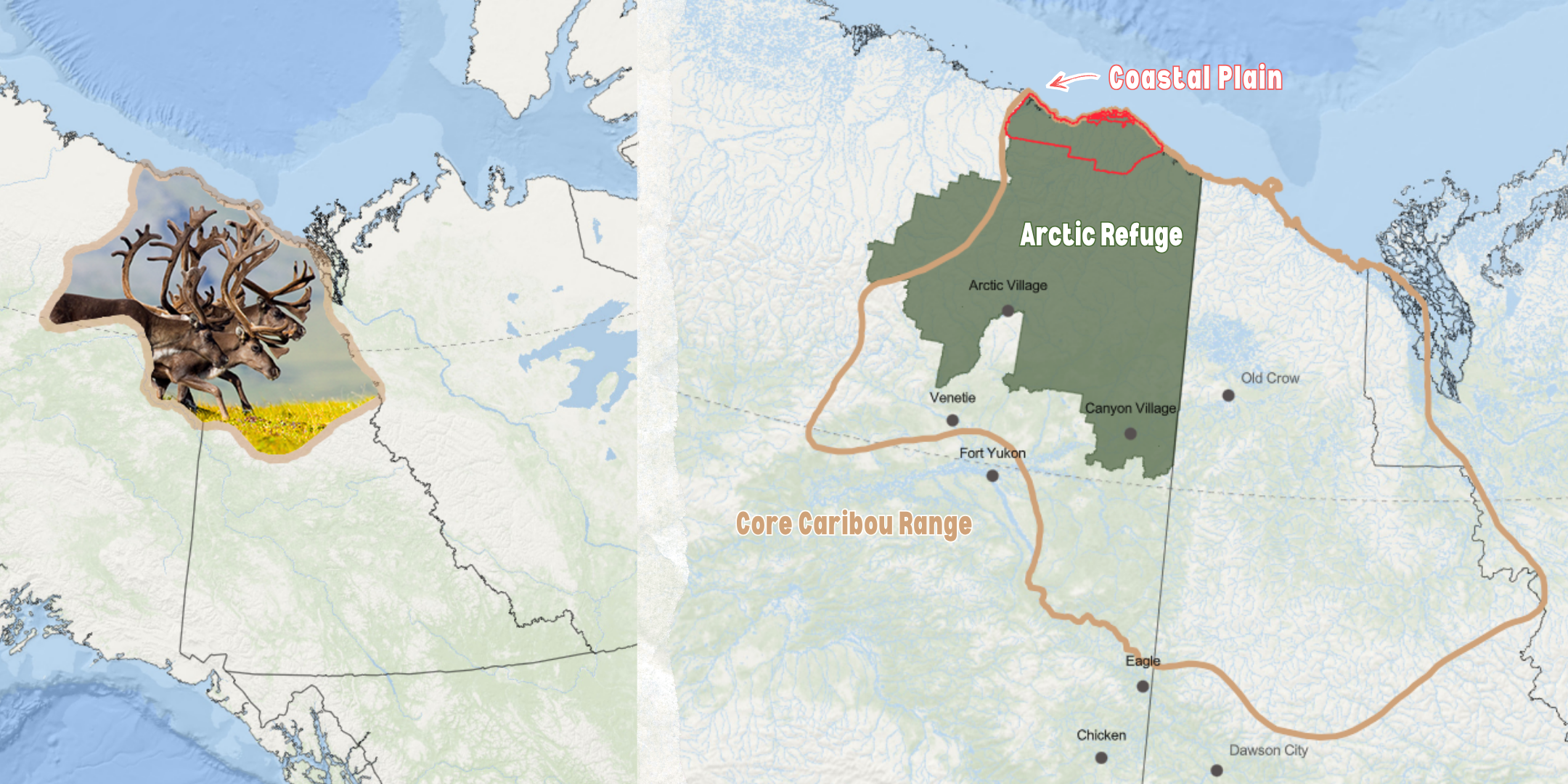
The calving grounds of the Porcupine Caribou are in the Coastal Plain of the Arctic Refuge. The caribou’s range and deep connections to land and people extend through the Northwest Territories, Yukon, and Alaska. Map by Paula Gomez Villalba, inset photo by Atsushi Sugimoto/www.apl-as.com.
At a time when oil and gas lease sales could happen as early as May 5th and there are active leases where seismic testing could begin any day, coming together and sharing positive, impactful stories like those of the Gwich’in is incredibly important. They show us how far we’ve come, that we are not alone, and the importance of Indigenous leadership.
During Join the Herd, Laurence from our team updated everyone on all the bills, acts, lawsuits, and actions of U.S. administrations that got us here (7:29 in the recording). They also highlighted how the 2025 budget bill that reinforces more lease sales does so to offset costs from tax cuts for billionaires and large corporations, increased military, and specifically ICE deployment, which harasses people, separates families, and deports many illegally. “It’s not just the caribou and the Arctic Refuge and the Gwich’in that they’re hurting. They’re literally hurting people to hurt more people,” Laurence shared.
Aelyia Brick
Mike Thomas/Yukon Arts Centre
Mike Thomas/Yukon Arts Centre
We were incredibly lucky to have three strong Vuntut Gwitchin women speak about growing up on the land and standing up for the Porcupine Caribou Herd. Norma Kassi shared a story about being put down on the ground as a baby, being surrounded by caribou while her mother hunted. Reflecting on the history of fighting for the Arctic Refuge, Norma recalled meeting with grandmothers, travelling to Arctic Village in Alaska where leaders gathered, and the strategy Elders laid out focused on Gwich’in life and connections. She shared about the movements of the Porcupine Caribou Herd, how the young bulls lead the cows while the old bulls follow, showing the young what to do.
“When the cows come, there’s muskrat houses all over the land, all over the lakes… We trap muskrats so that we can survive to sell the pelts when we come back in June. The cows eat what the muskrats bring up for them, and it’s powerful medicine. And for some reason they all go to sleep amongst all the lakes near the muskrat houses. The cows they rest, and the young bulls circle them, the 2 to 3 year olds circle them and watch them, and protect them, because they’re carrying young ones.”
– Norma Kassi, Vuntut Gwitchin First Nation
Shirlee Frost was also raised in Old Crow. She spoke about how Gwich’in and caribou hearts are connected, sharing a story about going out to see the caribou with her father, feeling overwhelmed and awed by all the caribou lying on a lake.
“To be amongst them when they’re migrating, you wouldn’t believe, you feel it right through your body… Mother Earth literally vibrates with them”
– Shirlee Frost, , Vuntut Gwitchin First Nation
Debra-Leigh Reti, newly elected MLA for Vuntut Gwitchin in Old Crow, spoke about hardships in town and about bringing forward a motion that unanimously passed in the Yukon Legislative Assembly to help protect the Porcupine Caribou Herd. Emotional and grateful seeing her grandson, Landon, at the back of the exhibit by a bull caribou, Debra-Leigh shared a story about them hunting together.
“We all have a caribou story. We all have some kind of caribou story. And I was thinking, you know [about] my time in Old Crow since I moved home in 2018, from the oldest elder to the youngest child, they have a caribou story already.”
– Debra-Leigh Reti, Vuntut Gwitchin First Nation
Following some door prizes, Laurence hopped back on the microphone with some caribou facts. For example, did you know that they can turn off their circadian rhythm so the darkness doesn’t make them tired all the time? Or that the caribou have a special pigment in their eyes that helps them see in near, total darkness?
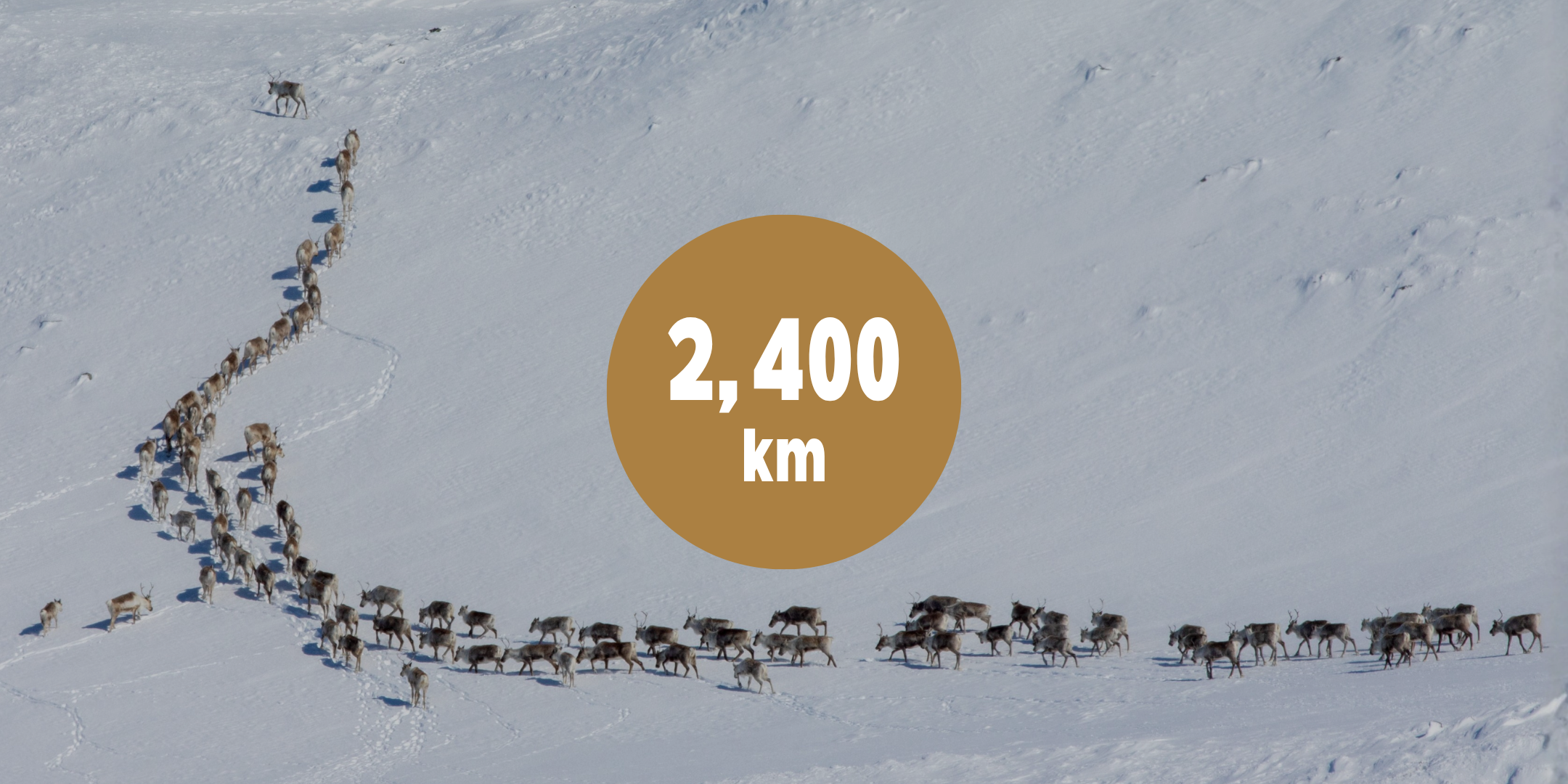
Each year the Porcupine Caribou Herd migrates 2,400 kilometres through the Northwest Territories, Yukon, and into Alaska. It’s the longest land migration on Earth. Photo by Atsushi Sugimoto/www.apl-as.com.
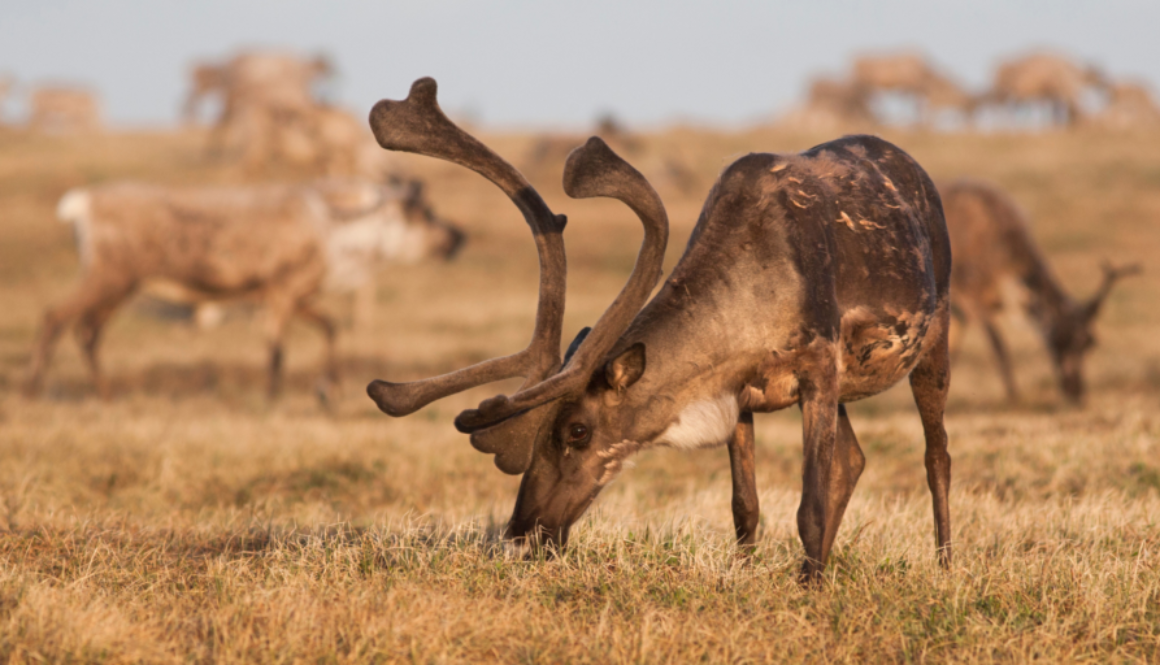
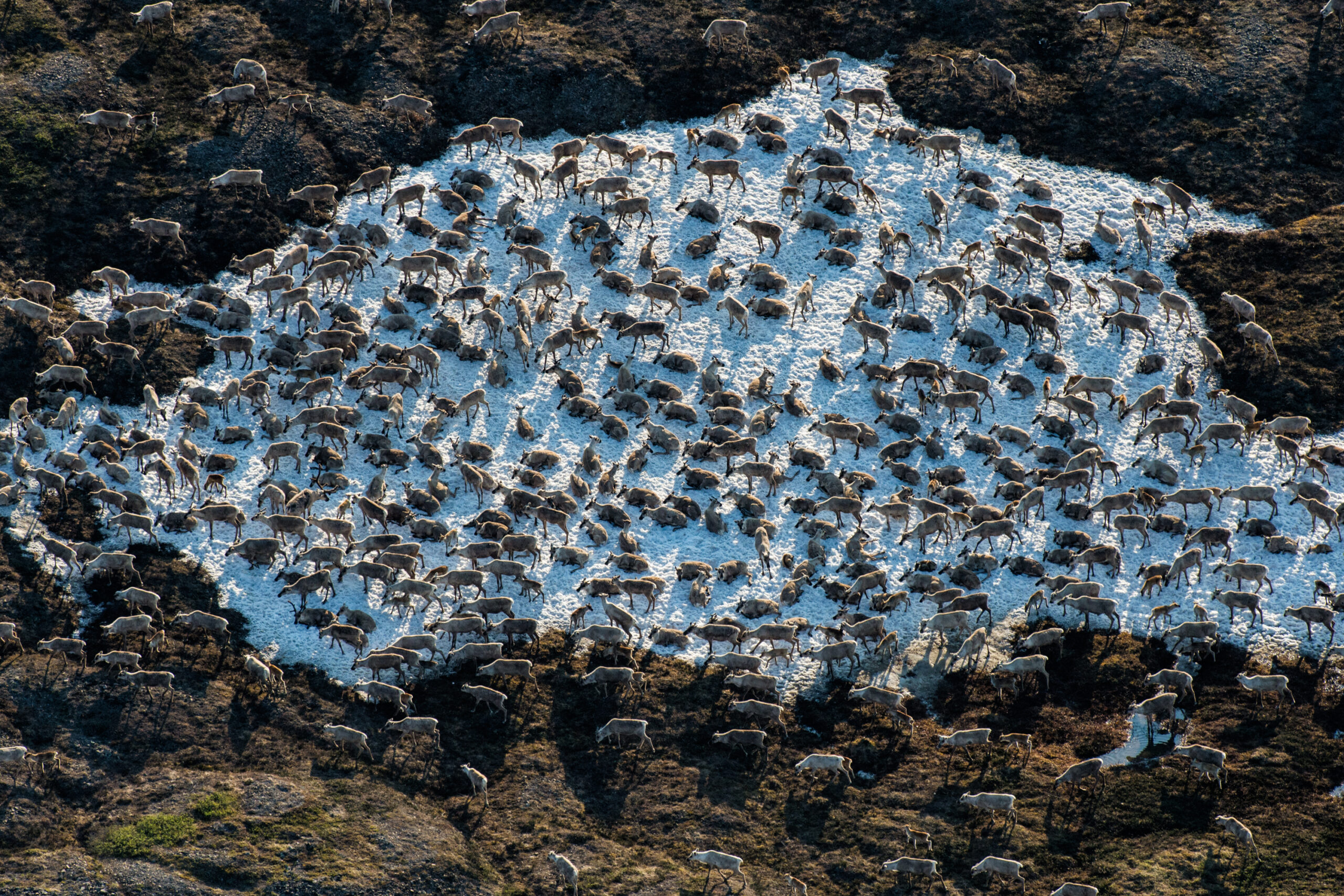
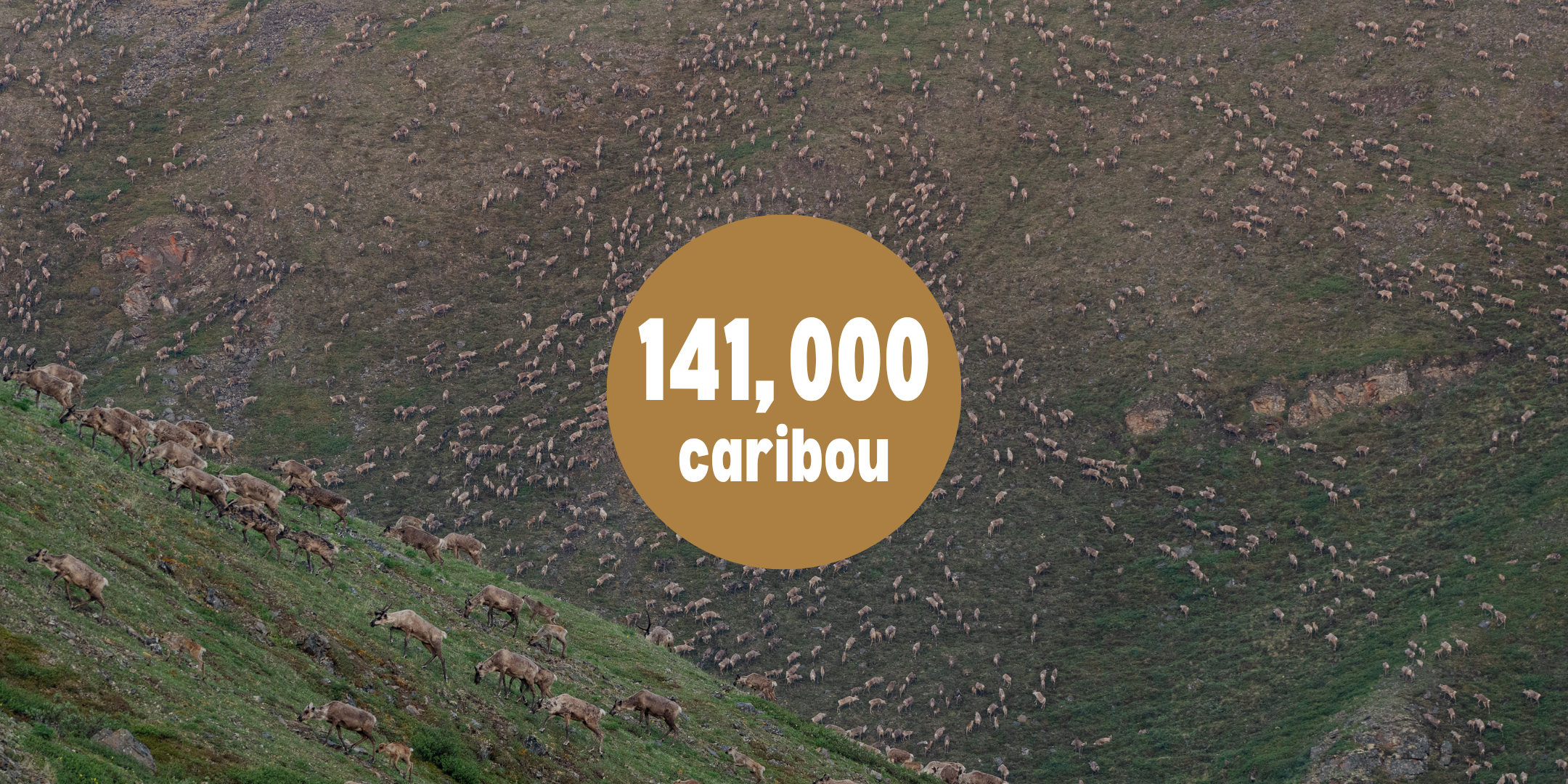
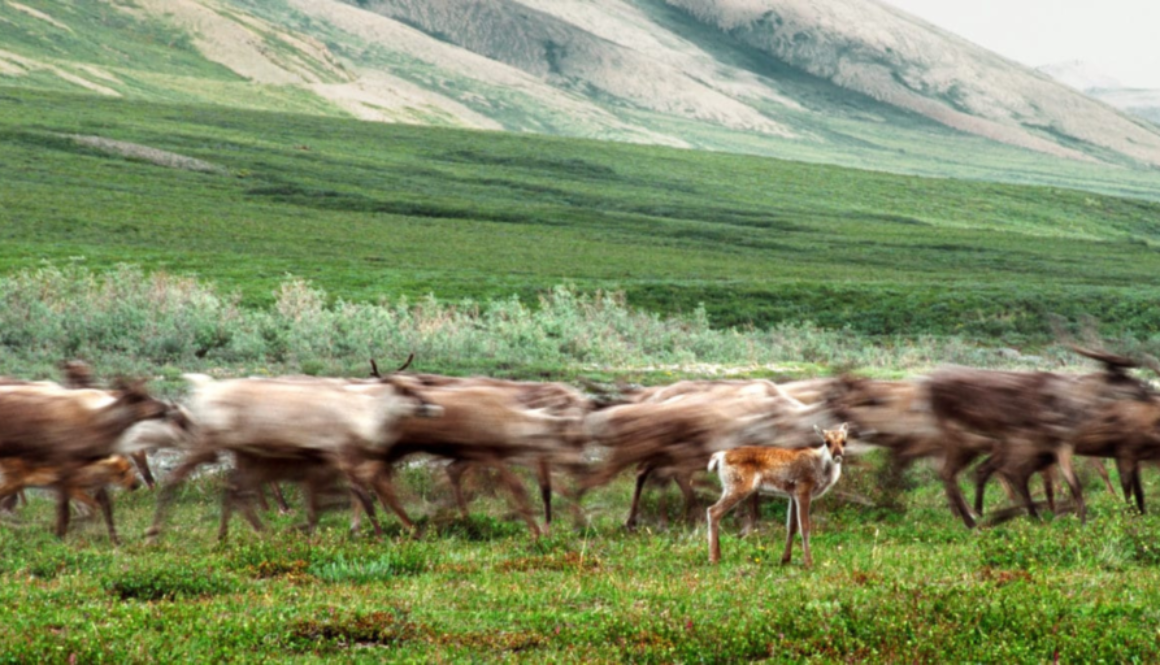
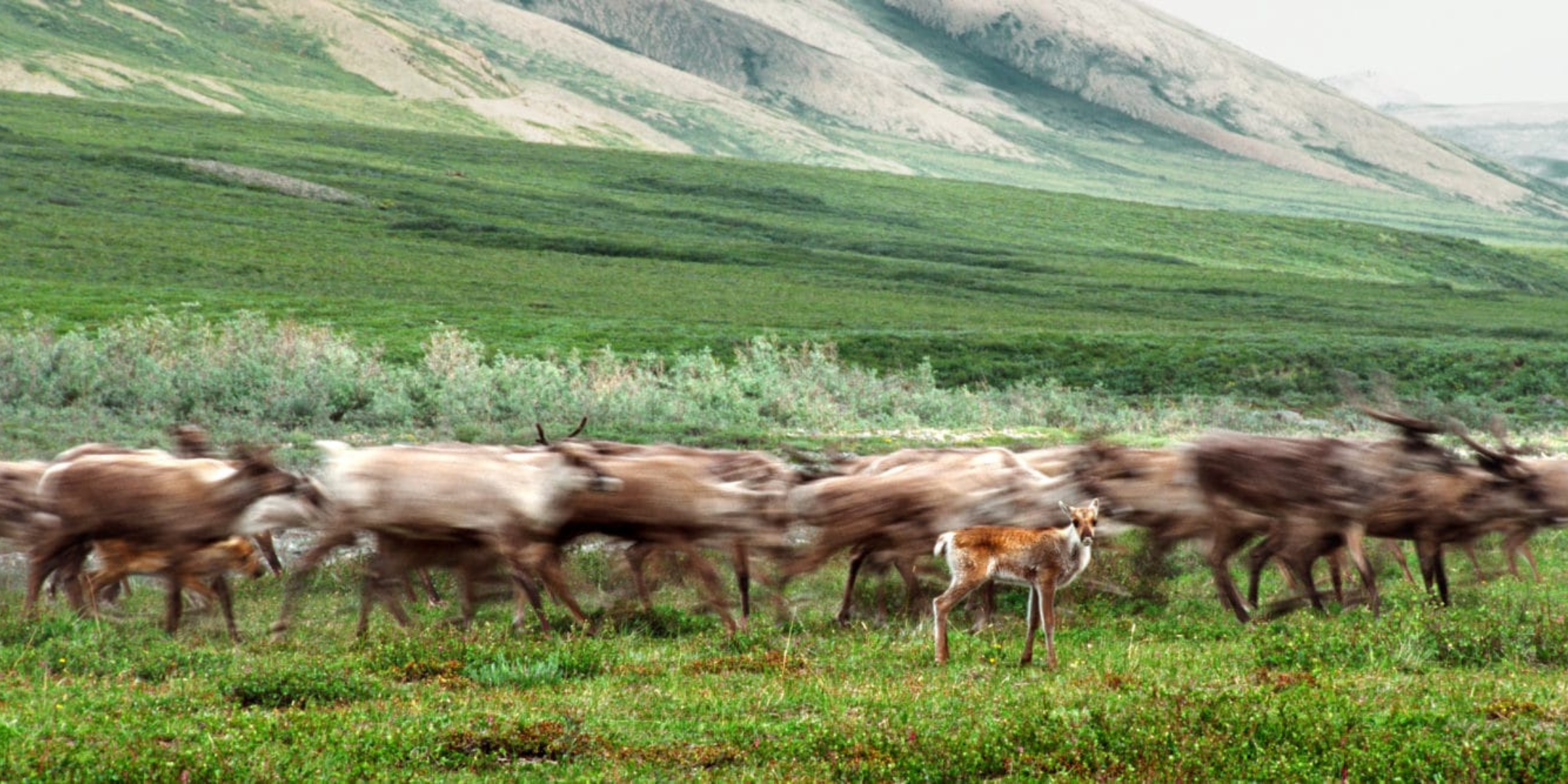
The Porcupine Caribou Herd is one of the largest caribou herds in North America, 141,000 caribou strong according to a 2025 photocensus. The population usually fluctuates between 100,000 and 200,000 individuals. Photo by Peter Mather.
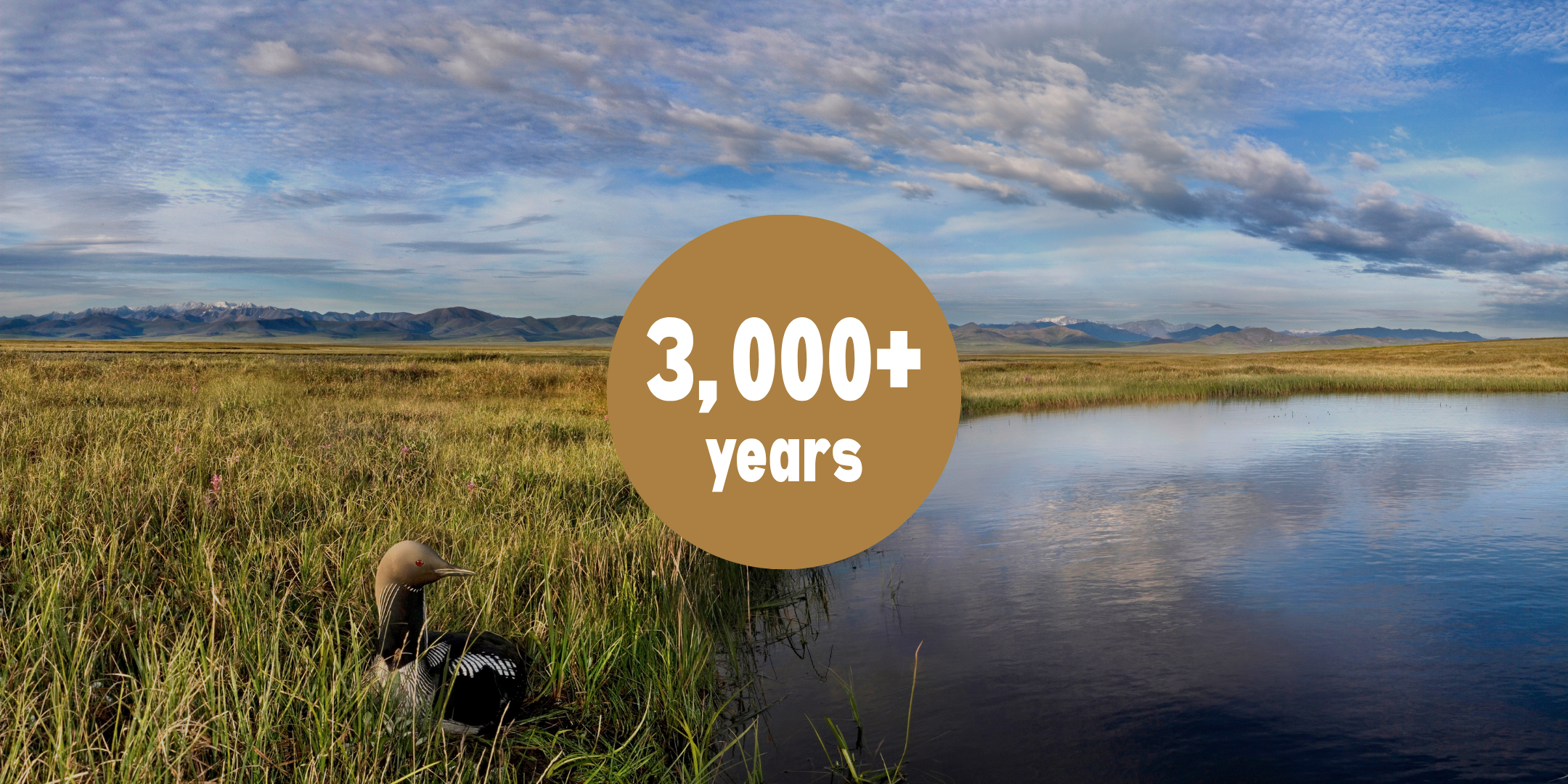
Moving into the Arctic Refuge’s Coastal Plain to give birth has been happening for millennia. Researchers found a 3000 year old Porcupine Caribou antler there in 2023. Photo by Malkolm Boothroyd.
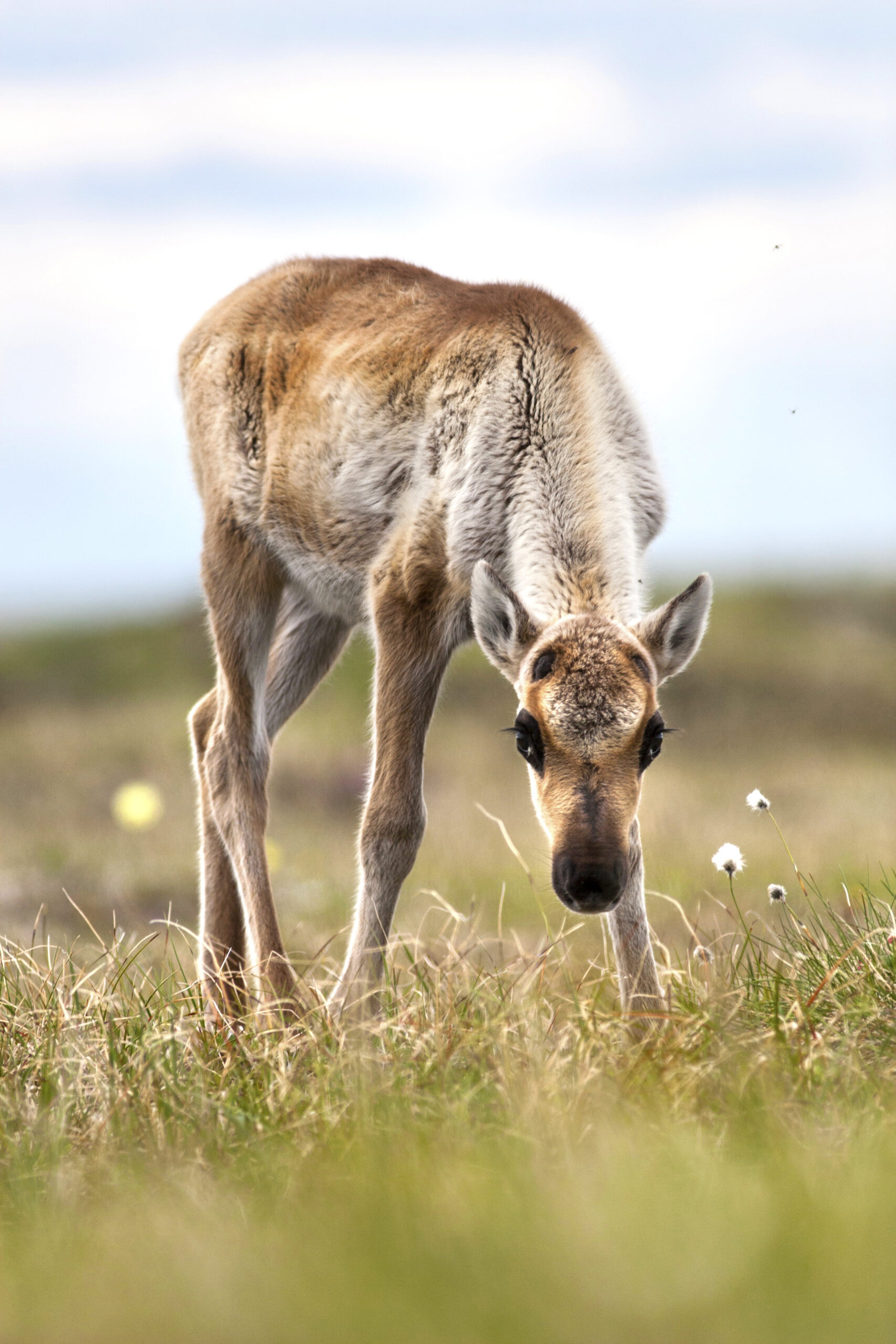
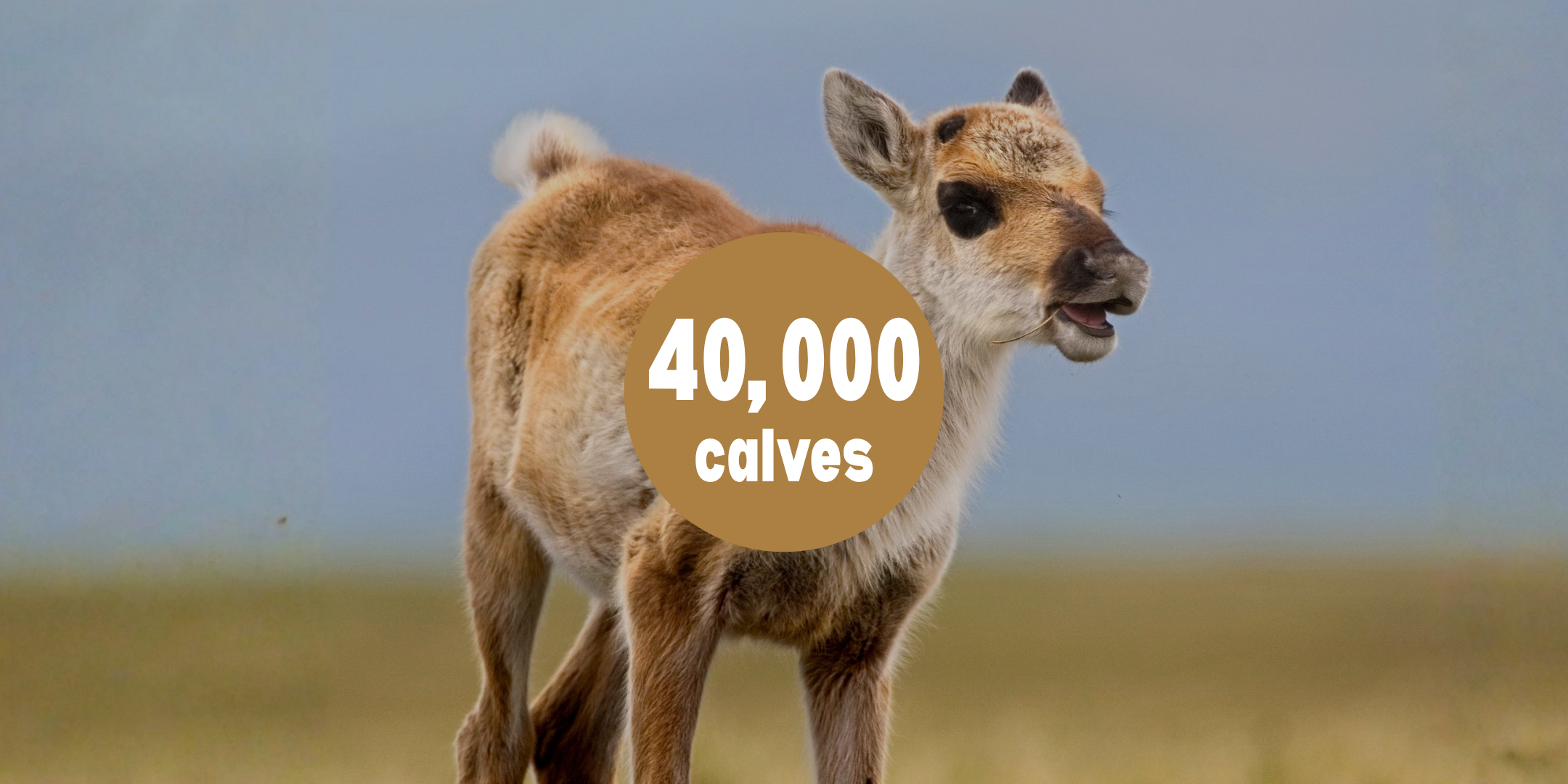
On average, 40,000 calves are born each year. Photo by Malkolm Boothroyd.
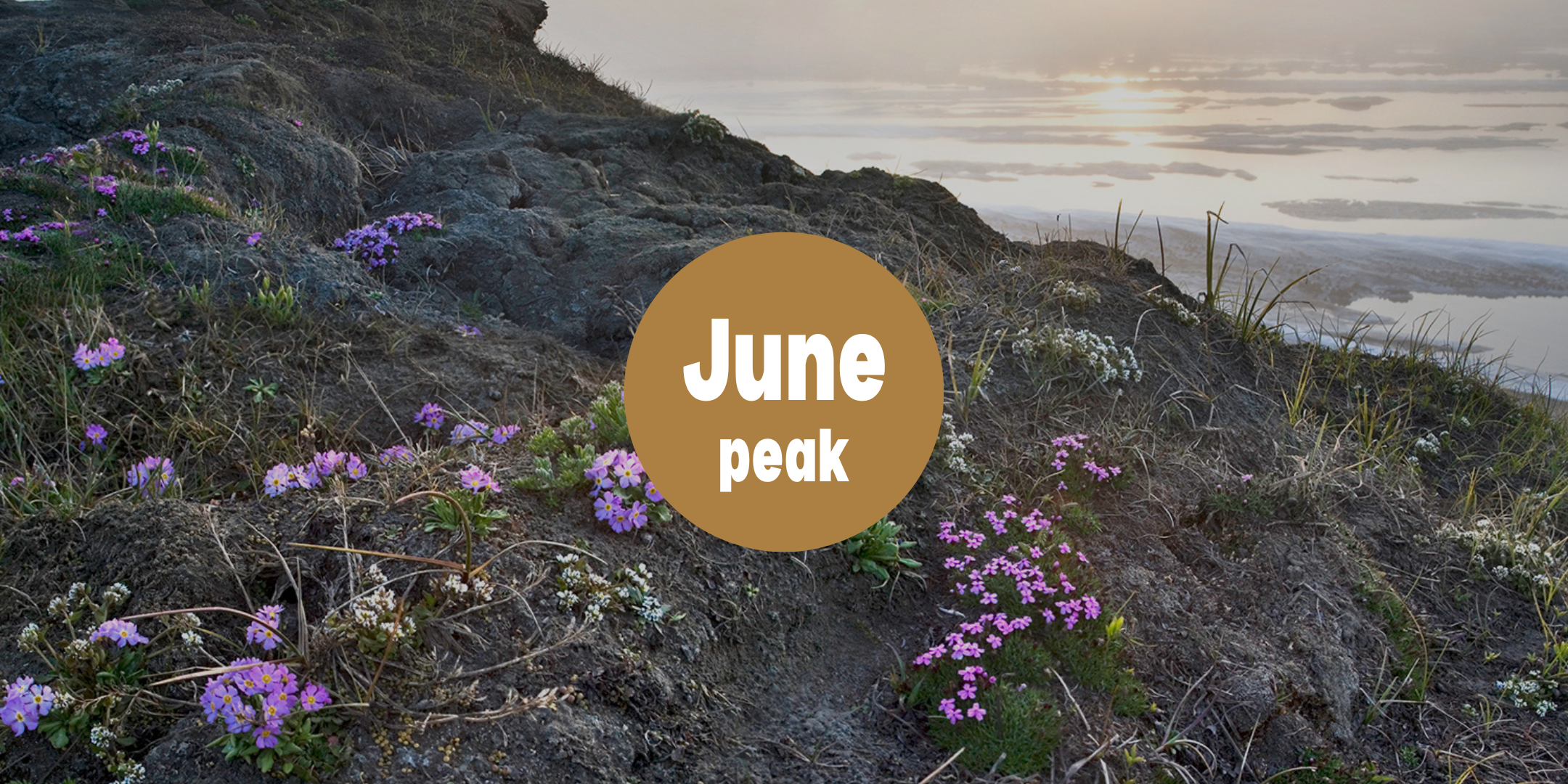
Calving peaks in the first week of June, when Porcupine Caribou cows give birth in a highly synchronized period that’s typical of barren-ground caribou. Photo by Malkolm Boothroyd.
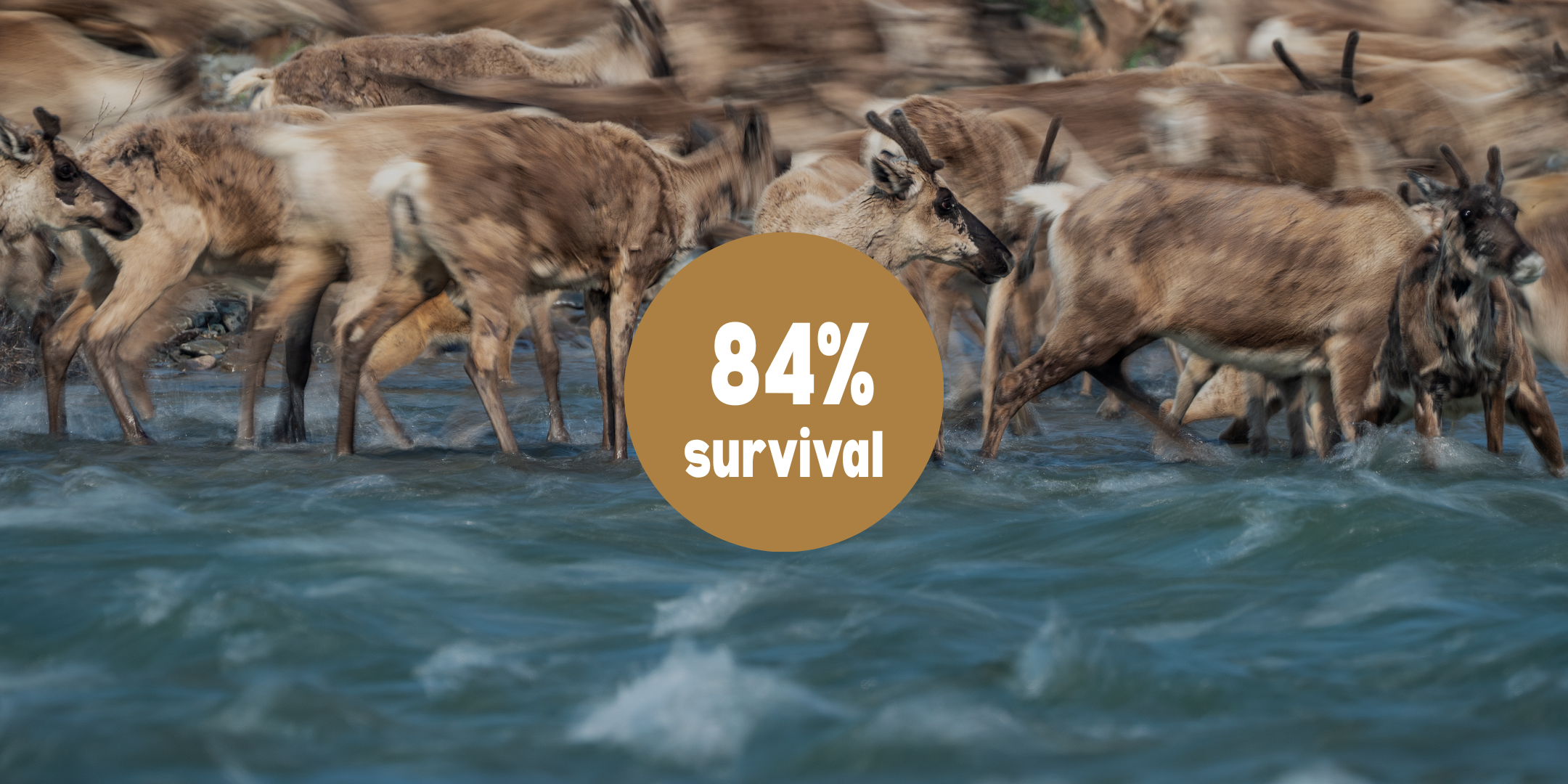
In good years, 84% of calves survive their first month, a high proportion that reflects how the Coastal Plain is a safe haven for the caribou during this important and vulnerable time. Photo by Peter Mather.
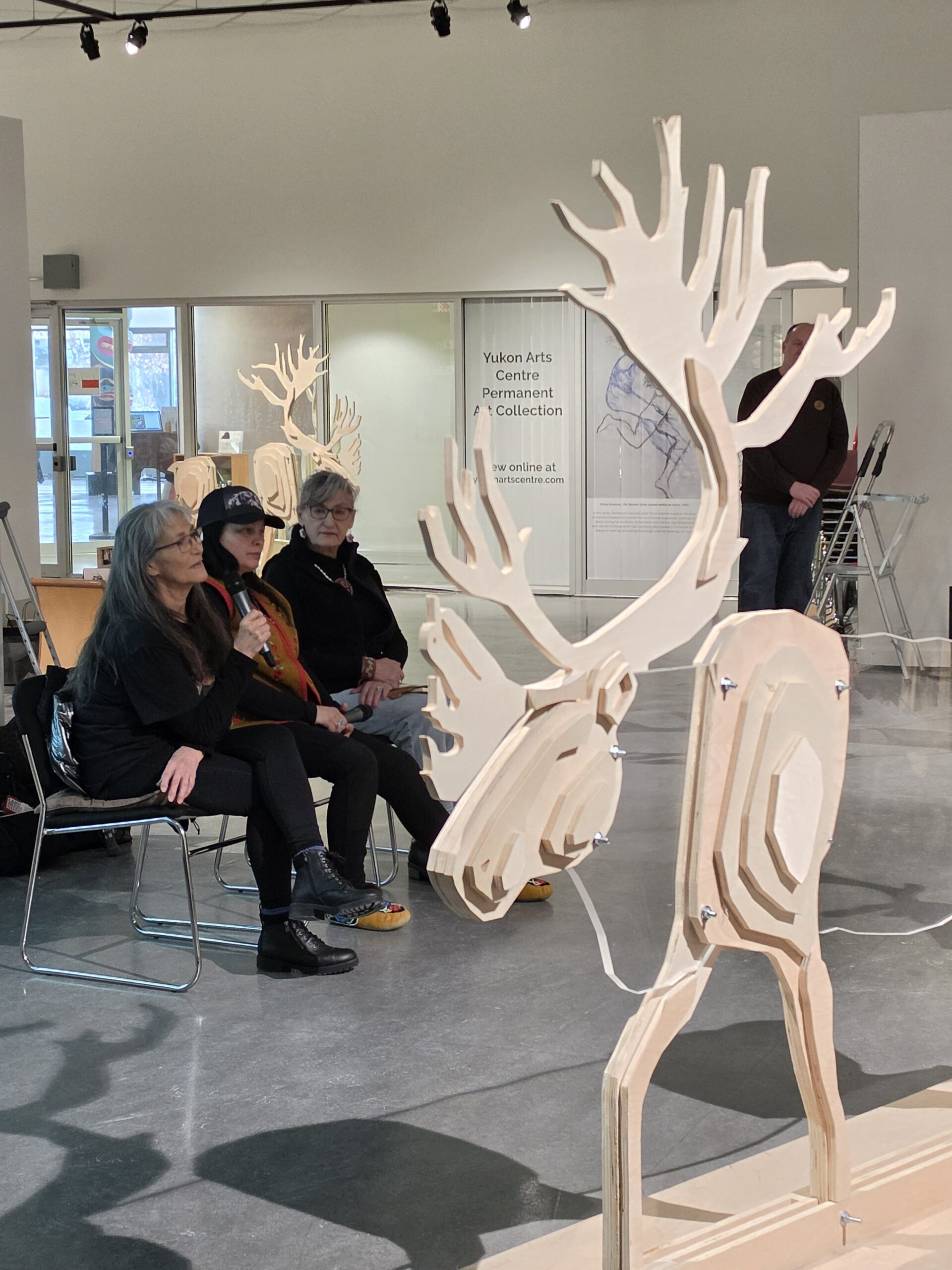
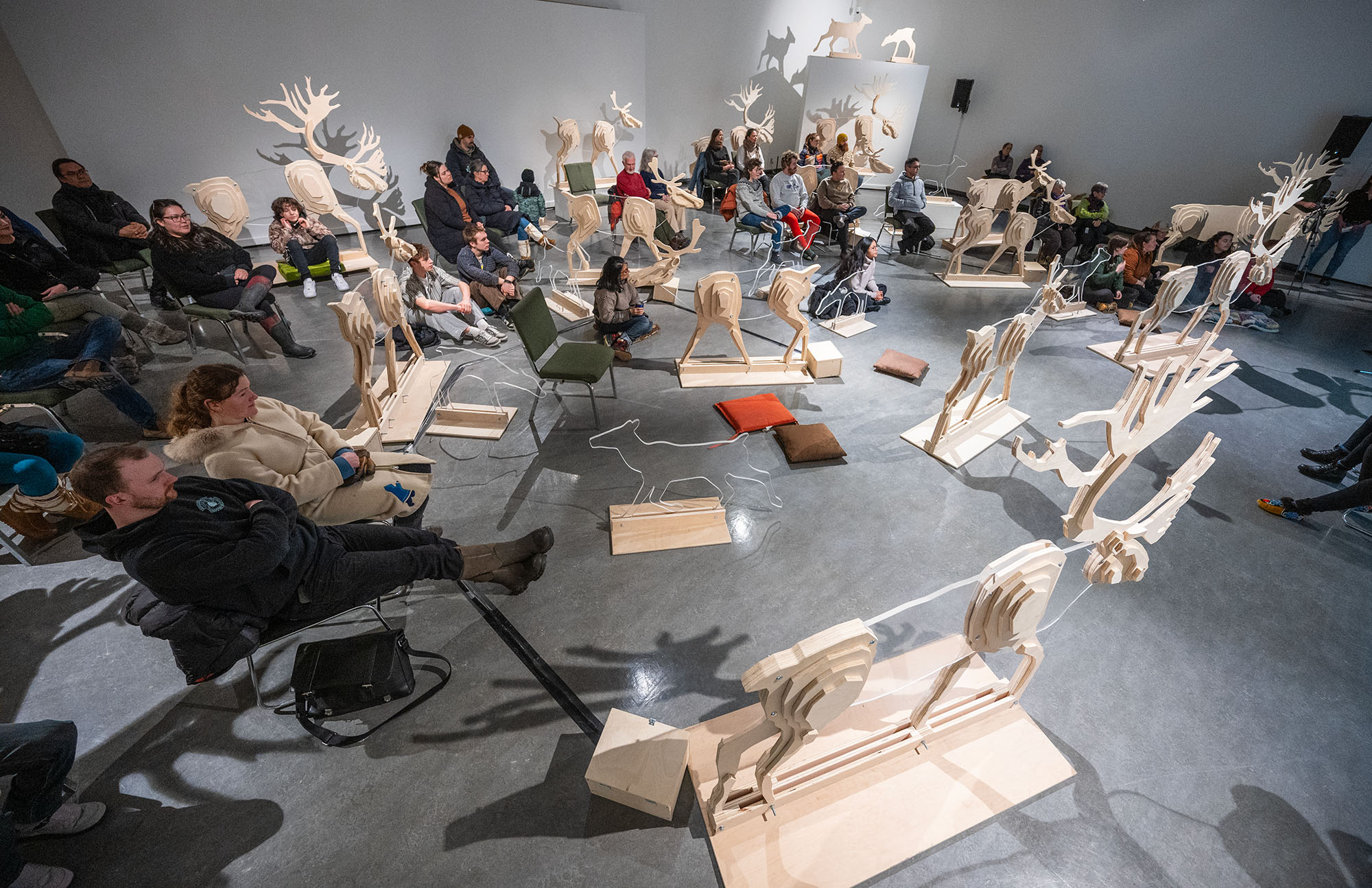
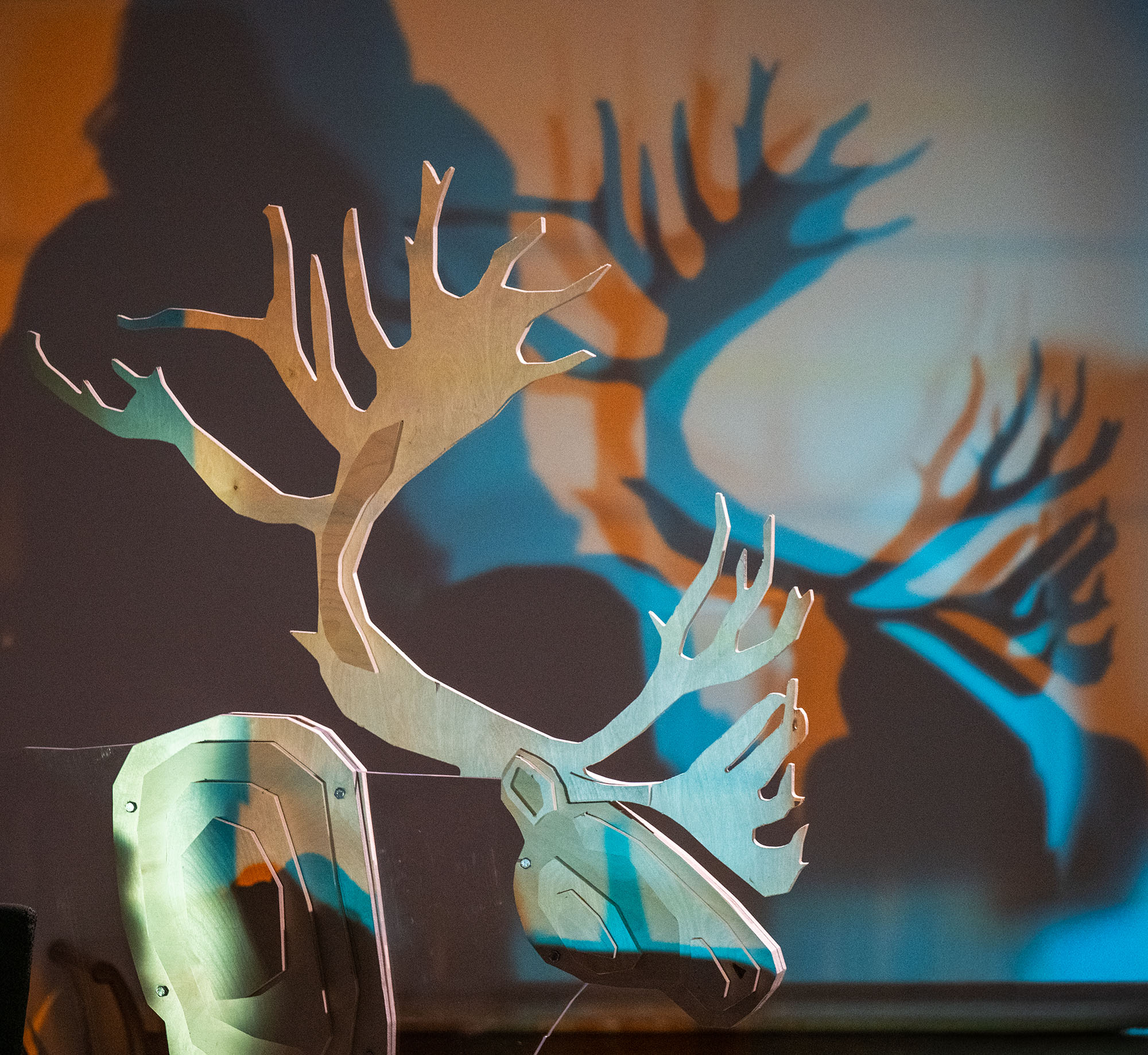
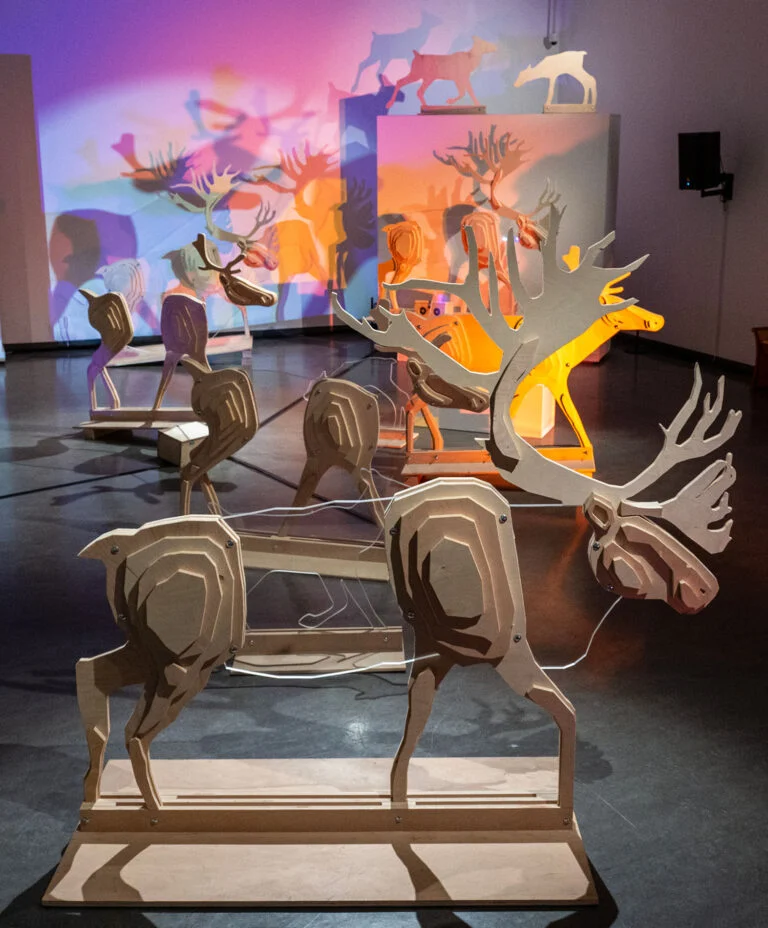
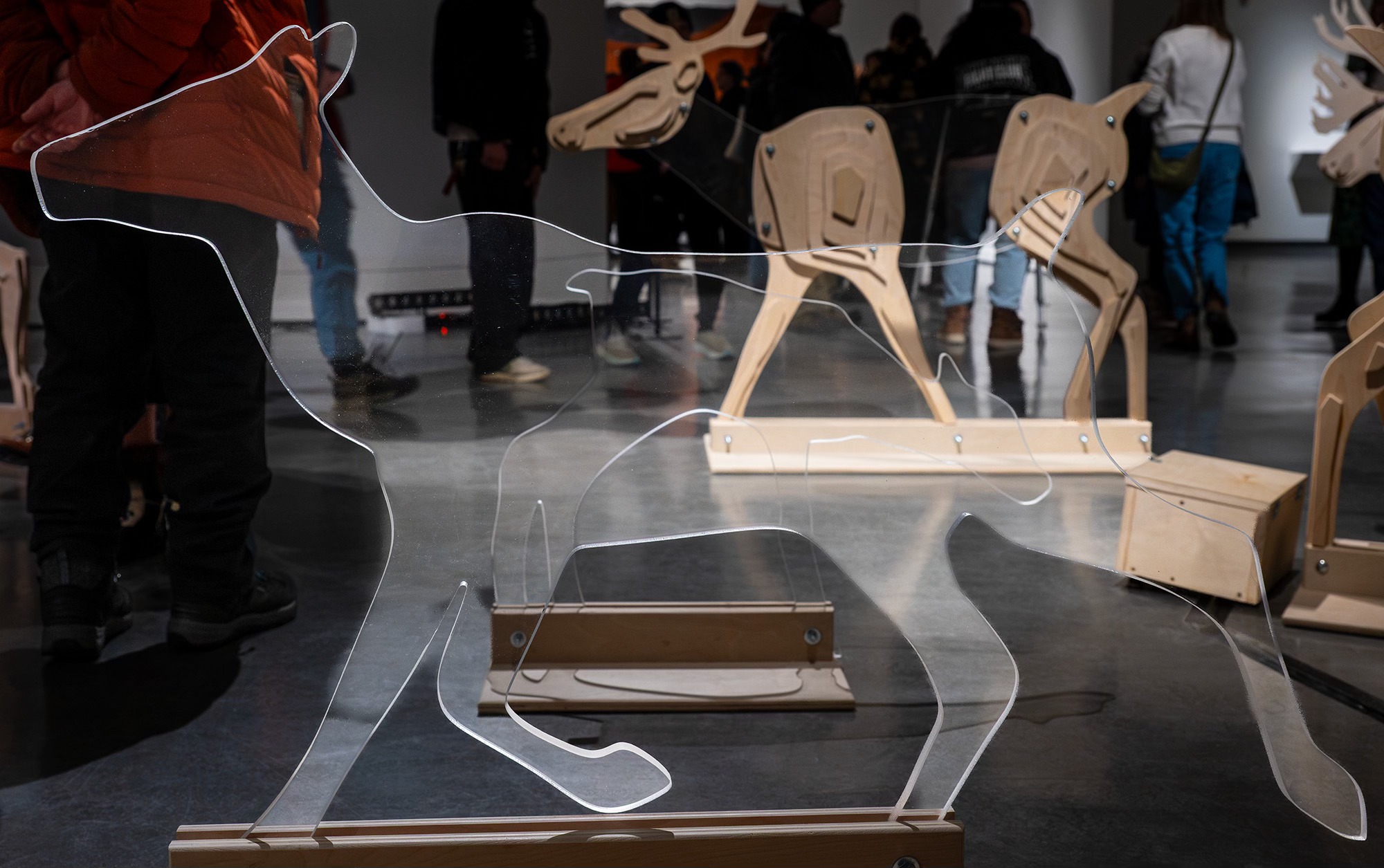
The evening wrapped up with a chance to see the caribou come to life through sound, light, and storytelling. Artists Lianne Charlie and Nicolas Hyatt, co-leads of The Caribou Art Project shared more about the art installation and how the herd has grown. Caribou are carefully laid out, so that when you enter the exhibit you start walking in step with them. The cows and calves are in the centre. Fifteen speaker boxes placed throughout the room play stories and music.
“The hope and desire [is] that folks who weren’t or do not have the type of connection that these Gwitch’in people have talked about, could use this installation and opportunity to experience proximity, to experience closeness to caribou. Many of us don’t have that opportunity now, due to environmental impacts further south”
– Lianne Charlie, Wolf Clan of the Tagé Cho Hudän (Little/Salmon Carmacks First Nation)
“We have a physical herd here made from plywood and acrylic. And those speak, especially the choice of acrylic, to the disappearance of caribou. You’ll notice that some of the calves in particular, are entirely made out of acrylic… Our hope is that that is not where we’re going in the future.”
– Nicolas Hyatt
Events like this celebrate community and highlight how we can stand strong, together. A heartfelt thank you once again to everyone who attended, to our speakers, volunteers, and organizers. The Caribou Art Project will be at the Yukon Arts Centre’s Main Gallery until May 22, 2026. Visit Monday to Friday between 10 am and 5 pm to develop your own caribou story.
Mike Thomas/Yukon Arts Centre
Mike Thomas/Yukon Arts Centre
Video by Adil Darvesh with event photos by Mike Thomas/Yukon Arts Centre. Additional photos by Malkolm Boothroyd and Peter Mather.
You can still help give a voice to the Porcupine Caribou. Vuntut Gwitchin First Nation is urging everyone to call on federal ministers and the Government of Canada to protect the Arctic Refuge. The Nation even created a script and compiled phone numbers to make the process incredibly easy.
613-992-9381
Minister Julie Dabrusin Minister of Environment
613-995-4014
Minister Anita Anand Minister of Foreign Affairs
“Hello, my name is (your name), and I am calling from (your location). I am urging the Government of Canada to help protect the Arctic National Wildlife Refuge, the calving grounds of the Porcupine caribou, from destructive oil and gas drilling.
I call on the Government of Canada to meet directly with First Nation and Inuvialuit leaders whose communities depend on the Porcupine caribou herd for their culture, food security, and way of life – and to take immediate action to protect this sacred place.
Canada must uphold its responsibilities under the Porcupine Caribou Management Agreement and the International Agreement on the Conservation of the Porcupine Caribou Herd. Thank you.”
Whitehorse, Yukon – The Yukon Chapter of the Canadian Parks and Wilderness Society (CPAWS Yukon) is once again renewing calls for permanent protection of sensitive caribou calving grounds in the Arctic National Wildlife Refuge.
Last week, the U.S. Department of Interior’s Bureau of Land Management (BLM) began the process of accepting land tract nominations for their oil and gas leasing program on the Coastal Plain of the Arctic National Wildlife Refuge, triggering a 30-day public comment period. This nomination and comment period is a step towards identifying plots of land on the Coastal Plain for oil and gas development and would be the third instance of nominations, with the first two resulting in flop lease sales.
CPAWS Yukon stands in solidarity with Vuntut Gwitchin First Nation, Gwich’in Steering Committee, and numerous Alaskan organizations in denouncing this poorly planned and rushed process.
The Coastal Plain of the Arctic Refuge is home to numerous sensitive ecosystems, including the calving grounds of the Porcupine Caribou Herd, whose transboundary migration is so crucial that the United States and Canada agreed to work towards conservation through the “Agreement between the Government of Canada and the Government of the United States on the Conservation of the Porcupine Caribou Herd” in 1987.
The Trump administration’s reckless decisions to force lease sales within the Arctic Refuge ignores previously established international treaties, environmental protections, and the voices of numerous Indigenous Nations, Canadians, and Americans.
As the 30-day public comment period continues, CPAWS Yukon is urging the public to go on the record and highlight the importance of the Arctic Refuge and say no to oil and gas in the calving grounds of the Porcupine Caribou Herd. Comments can be emailed to BLM_AKSO_AK932_AKLeasesales@blm.gov.
Written by Paula Gomez Villalba, Communications Coordinator | February 6, 2026
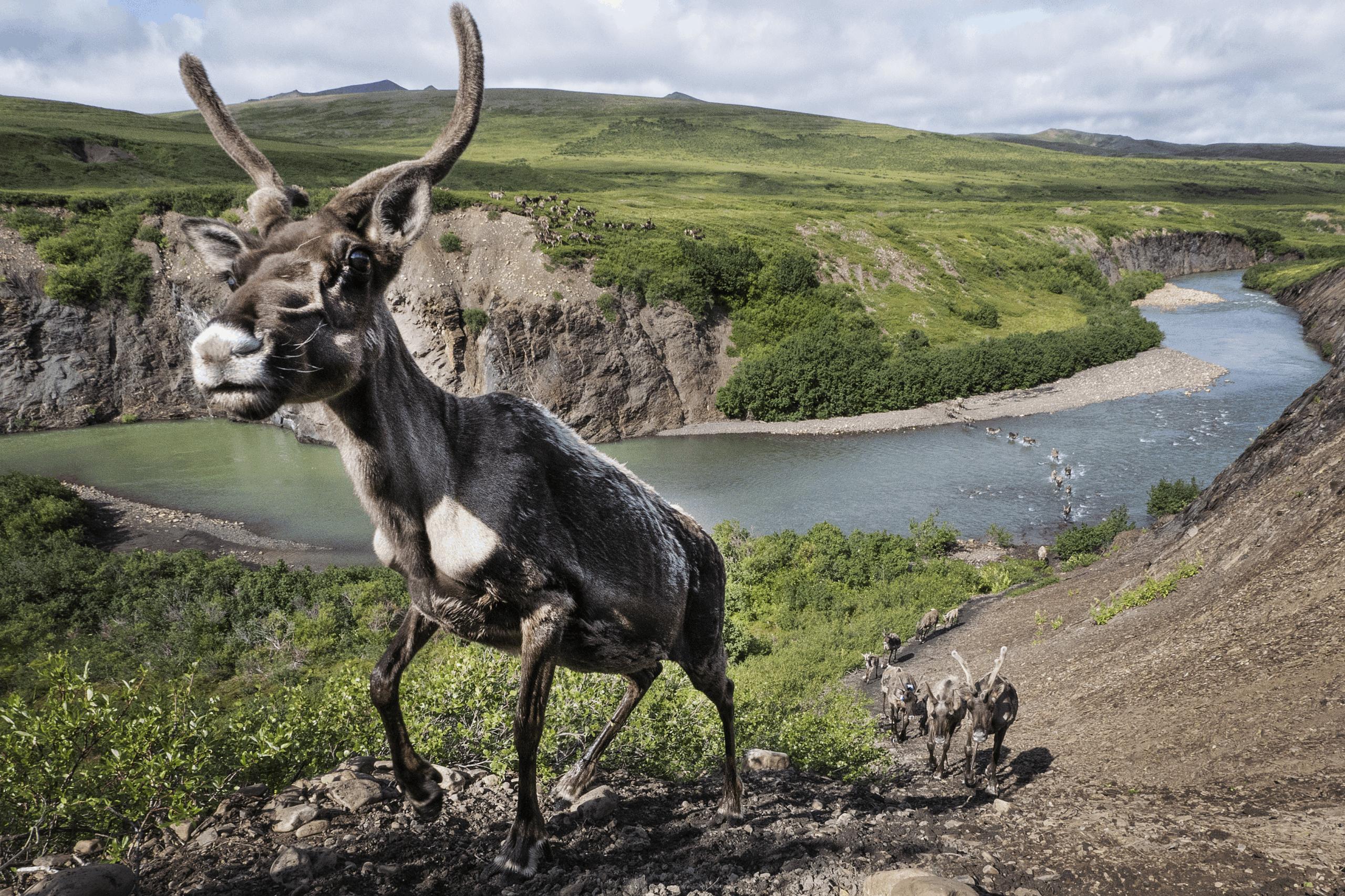
As one of the last remaining healthy caribou herds in North America, the Porcupine Caribou are inextricably linked to the natural cycles of the lands that support them. Pregnant females, bulls, and yearlings travel 2,400 kilometres each year through the rolling tundra, mountains, and rivers of the Northwest Territories, Yukon, and Alaska. This is a journey guided by generations of instinct and the knowledge of the oldest members of the herd. A journey to reach the abundance and safety found in their calving grounds within the Arctic Refuge. Not only is this migration essential for the health of the caribou themselves, but for much of life in the Arctic. Calving adds nutrients to the tundra, providing food for scavengers and supporting new plant growth.
Porcupine Caribou migration across Blow River, photo by Peter Mather.
Nestled between the mountains and the sea, these calving grounds are called Iizhik Gwats’an Gwandaii Goodlit (The Sacred Place Where Life Begins) by the Gwich’in. Their way of life — history, culture, sustenance — is deeply woven with the Porcupine Caribou Herd. Despite decades of advocacy by the Gwich’in and their allies to protect these calving grounds (and the caribou by extension), the Arctic Refuge is currently threatened by oil and gas development like never before.
As part of the Arctic Defense Campaign and in partnership with the Vuntut Gwitchin First Nation, CPAWS Yukon has been carefully gathering information, planning our approach, and collecting our strength to help defend the refuge, so that when we move forward, we all move together.
Turn up the volume to hear thousands of hooves and huffs on a historic path. Video by Neil Hartling.
Alongside the 10+ organizations of the Arctic Defense Campaign and the Gwich’in Steering Committee, we are suing the Trump administration. Again.
When the oil and gas leasing program in the Arctic Refuge was first mandated under the first Trump administration in 2017, it triggered an Environmental Impact Statement (EIS). But the rushed EIS was widely criticized by scientists, First Nations, and legal experts for being full of scientific and legal flaws, and lacking proper consultation. It led to the most aggressive scenario imaginable for leasing in the Arctic Refuge.
This is when the first lawsuit against the Trump administration was filed.
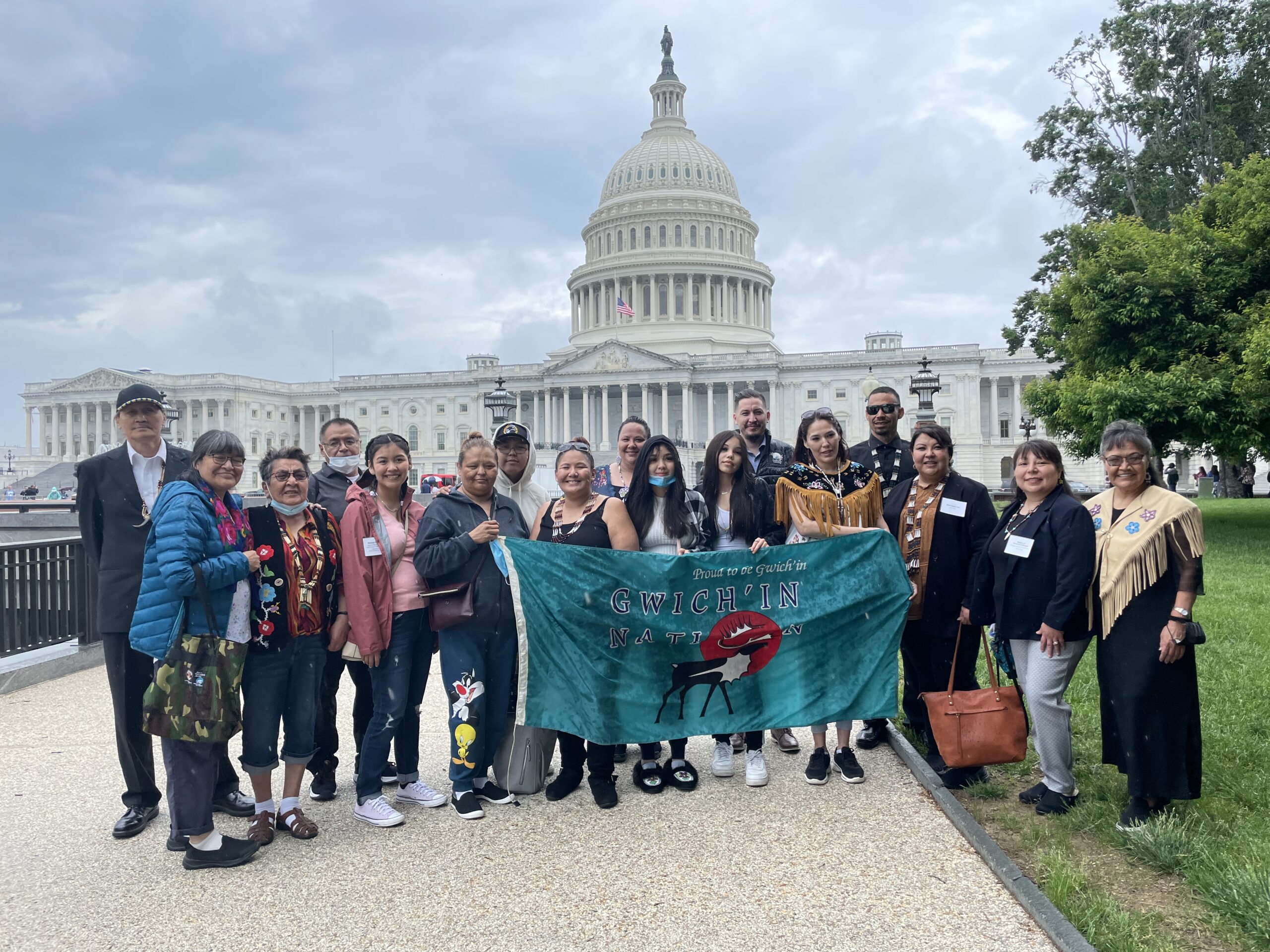
Community is central. Many Gwich’in Chiefs and Tribal leaders gathered in Washington, and over 2,500 of you signed our letter emphasizing how what happens to the Arctic Refuge affects everyone.
However, last year, the new Trump administration overturned those decisions, restoredpreviously cancelled leases,and set up a program that legally requires 5 new lease sales over the next 7 years, covering most of the Arctic Refuge’s Coastal Plain and beyond.
“Long ago the Gwich’in followed vadzaih (caribou) to see where they went and to learn their ways. They led us to the Coastal Plain of what is now called Alaska. It was here that we exchanged half of our heart with half of the heart of vadzaih. In this way we became one and would always be connected. Iizhik Gwats’an Gwandaii Goodlit is the critical nursery grounds of the vadzaih, which are essential to the nutritional, cultural, and spiritual needs of the Gwich’in Nation.
Our traditional knowledge tells us that if you develop in the nursery grounds of the caribou you destroy the caribou, and therefore, destroy the Gwich’in.“
Laurence Fox, our Conservation Coordinator, has been attending many meetings, conducting deep research, and thinking out a new strategy every week with our partner organizations and the Gwich’in.
The Trump administration often does things in ways that are outside of normal procedure, using its executive powers, reducing timelines and requirements for consultations, gutting department resources, and saying one thing only to change their mind or do a completely different thing. This leaves everyone fatigued, with their attention divided, and scrambling to understand what is actually happening.
During the last U.S. administration, the most restrictive leasing scenario in the Supplementary EIS was selected for the oil and gas leasing program. The Trump administration, unhappy with limits in development and caribou protections, decided to go with another option that leads to essentially the same scenario in the old, flawed EIS. This means 5 new lease sales covering most of the Coastal Plain. And with the restored leases in place, seismic testing could technically begin in the next year. Aggressive and short-sighted, to say the least.
Our team has been meeting with reporters and dedicating hours to backgrounding, which means compiling resources and chatting with media in depth to explain what’s happening so that they can report to the public better. Much of this work has been happening behind the scenes, gathering energy for the fight ahead.
We’re mirroring the herd. Spread out across their winter range into northern Yukon, the caribou are currently digging through snow to find lichen. Most of the cows are already pregnant, and finding food is key so that the growing calves are born strong and healthy. They make small moves. The caribou are recovering from breeding and conserving energy before the big migration.
As they get ready to return to the Arctic Refuge this spring, we’re organizing events to celebrate them, build community, and bring us all onto the same page. Sign up to our newsletter for updates and opportunities to take action, support the Gwich’in Steering Committee and the Vuntut Gwitchin First Nation, and protect the caribou. They are gearing up to take more action, and we hope you’ll join us in standing in solidarity with the caribou and the Gwich’in.
CPAWS Yukon Stands with the Gwich’inin Renewed Call to Protect the Arctic Refuge from Oil and Gas Exploitation
Whitehorse, Yukon—CPAWS Yukon is deeply disappointed—and angered—by the U.S. government’s assertion that it will open the entirety of the coastal plains of Alaska’s Arctic National Wildlife Refuge to oil and gas leasing and development. As an environmental organization, Canadians, and long-time allies with the Vuntut Gwitchin First Nation, we at CPAWS Yukon stand with the Gwich’in people in strong opposition to this decision, which was announced last week by U.S. Secretary of the Interior and long-time oil-and-gas advocate Doug Burgum.
We find the U.S. decision to unilaterally decree the Arctic Refuge open to oil and gas leasing at a time of collapsing international esteem, free-falling markets, and accelerating climate crisis—and to do so the heels of the embarrassing failures of two previous lease sales—to be a complete and total departure from economic, political, and environmental common sense.
Nevertheless, CPAWS Yukon remains committed to standing beside the Gwich’in in the fierce and unwavering defense of the Arctic Refuge and the sacred calving grounds of the Porcupine caribou. The only acceptable oil and gas extraction on the coastal plain is none, and we won’t stop fighting until the Refuge is protected. Now and forever.
CPAWS Yukon is deeply disappointed to learn Bank of America has copped-out on its pledge not to fund oil and gas projects in the Arctic, including those which could take place within the sacred calving ground of the Porcupine Caribou Herd in Alaska’s Arctic Wildlife Refuge.
Placing these types of projects under “enhanced due diligence” means Arctic oil and gas and projects would be subject to a high-level of risk assessment and “escalated to the Senior Level” for risk assessment. While CPAWS Yukon understands Bank of America’s decision comes in the wake of increasing pressure from some U.S. politicians attempts to restrict or even criminalize the application of Environmental, Social, and Governance (ESG)—policies which, when applied within financial and business institutions, focus on social and environmental sustainability and responsibility—this change effectively moves potential funding for Arctic oil and gas projects, including those within the Arctic Refuge, from “off the table” to “on the table, under the right circumstances.” CPAWS Yukon finds this wholly unacceptable.
“The underhanded manner in which Bank of America has reneged on its commitment to boycott the funding of Arctic oil and gas projects casts a poor light on the institution’s willingness to take climate change, the health of the environment, and rights and sovereignty of Indigenous peoples on both sides of the border seriously. Frankly, Bank of America’s actions are shameful.”
-Laurence Fox, Campaigns Coordinator, CPAWS Yukon
Bank of America is the second largest financial institution in the U.S., with assets totalling US$2.4 trillion. It has been the fourth largest funder of fossil fuel development since the implementation of the 2016 Paris Accord and was the last of the six major U.S. banks to commit to not financing oil and gas projects in the Arctic. The remaining five major institutions all currently have policies committed to not financing drilling in the Arctic. Similarly, thanks to joint pressure from CPAWS, the Vuntut Gwitchin, Gwich’in Tribal Council, and our partners within the international Arctic Defence Campaign, all five of Canada’s major financial institutions have committed to denying funding for oil and gas projects within the Arctic Refuge in order to protect the Sacred Calving Grounds of the Porcupine Caribou Herd and the rights of the Gwich’in Nation. Bank of America’s decision to backpedal on its agreement is not only a broken promise to Arctic Indigenous communities, Americans, and Canadians, but a deviation from the international norms agreed upon by its contemporaries and competitors.
CPAWS Yukon stands in solidarity with the Vuntut Gwitchin, the Gwich’in Nation, independent Inupiat, Yukoners, Americans, and Canadians who have explicitly and emphatically opposed all oil and gas development within the Arctic Wildlife Refuge. The only acceptable development within the Arctic Refuge is no development, and the retraction of its no-funding policy for Arctic oil and gas projects by Bank of America is both a direct threat to this long-stated, Indigenous-lead position and the Refuge itself. Its decision is, furthermore, in direct contradiction of its own stated understanding within its framework that “the Arctic is a unique region with specific considerations to take into account, including those of marine and wildlife, a fragile ecosystem, and the rights of Indigenous peoples.” CPAWS Yukon cannot see how Bank of America can hold this statement to be true, while simultaneously going back on its promise to ban funding for oil and gas projects in the Arctic.
CPAWS Yukon urges Bank of America to reconsider its position and sincerely hopes the institution will make good on its previous commitments, now and in the future.
For more information on CPAWS Yukon and our campaign to protect the Porcupine Caribou and the Arctic Refuge, please visit our website.
Written by Laurence Fox, Campaigns Coordinator | October 25, 2023 A shortened version of this post appeared in the Wednesday, October 18th, 2023 edition of the Yukon News.
The cancellation of the remaining leases in the Arctic National Wildlife Refuge this past September was, and is, wonderful news for the Porcupine Caribou, the Gwich’in which have worked tirelessly to protect them, and everyone who loves, cares for, and wants to preserve wild places.
What comes next, though, for the Arctic Refuge?
Honestly? That’s hard to say. It’s a complicated process, legally and politically speaking. Where we’re at with the Arctic Refuge is largely contained within an 800-plus page report written in a mix of industrial mining jargon, data sets, and legally-nebulous bureaucratese that the average person needs a pot of black coffee and a thermal lance to break into, which certainly doesn’t make understanding things any easier. Having spent the last three weeks up to my eyeballs in this report I can tell you, however, that the nuts and bolts of the situation is this:
If you care about the Porcupine Caribou, wildlife conservation, climate change, First Nation rights and sovereignty, Canadian-American relations, the fundamental principles of democracy, or any combination thereof you should be paying attention to this.
Photo by Peter Mather.
Here’s why:
Way back in 2017, the Trump Administration passed the Tax Cuts and Jobs Act, which, as the name implies, was mostly about cutting taxes and creating jobs in the name of incentivizing economic growth. As you would quite reasonably expect, cutting taxes means less money for government spending, and the Tax Act was expected to cost around US$1.9 trillion, or about the same as the total GDP of Canada for the same year.
To help offset the upfront costs of this, the Trump Administration slapped a rider on the tail end of the Tax Act (page 182 of 185, specifically) authorizing the sale of oil and gas leases in the “1002 Area” of the Coastal Plains within the Arctic National Wildlife Refuge–around 1.5 million acres of sea-swept, mountain-rimmed Northern wilderness which also happens to contain the calving grounds of the Porcupine Caribou Herd, sacred to the Gwich’in.
To make these lease sales happen, however, the legislation which governs the Arctic Refuge, had to be altered. Prior to 2017, the Arctic Refuge had four express purposes: to conserve animals and plants in their natural diversity, to ensure a place for subsistence hunting and gathering activities, to protect water quality and quantity, and to fulfill international wildlife treaty obligations. When it passed the Tax Cuts and Jobs Act, the Trump Administration added a fifth; to “provide for an oil and gas leasing program within the Coastal Plain.”
The Act also directs the Secretary of the Interior to “establish and administer a competitive oil and gas program for the leasing, development, production, and transportation of oil and gas in and from the Coastal Plains,” making it a legal obligation to ensure lease sales happen.
What that means is that the Tax Cuts and Jobs Act makes oil and gas leasing an express, legal purpose of the refuge, regardless of who the President or the Secretary of Interior is. To this end, it specifies not only how much of the area must be put up for oil and gas leasing– a minimum of 400,000 acres, or an area about the size of Tombstone Territorial Park–but also requires no less than two leasing sales be held, the second of which must be held no later than December 2024.
In other words, the U.S. government unilaterally decided to not only start an oil and gas leasing program in the middle of a wildlife refuge, a move in direct conflict with the original intentions of the Arctic Refuge, smack dab in the middle of the Porcupine Caribou Herd’s calving grounds, but made it illegal not to do so.
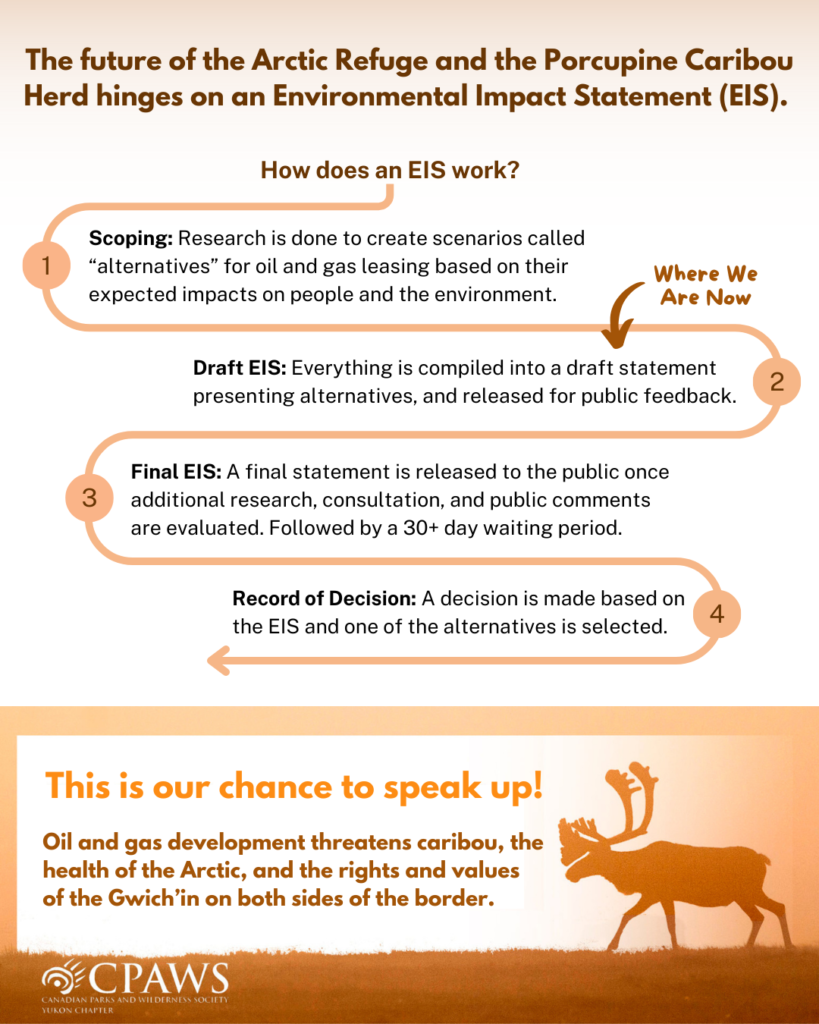
Under American law, when something like oil and gas leasing in the Arctic Refuge is proposed, it triggers the need for an Environmental Impact Statement (EIS). An EIS assesses the potential impacts of a project on both people and the environment and then makes recommendations about whether or not that project should proceed, and with what mitigations in place. Moreover, the government agency proposing the project is in charge of compiling the EIS and deciding if what it wants to do is okay after the EIS is complete. Although all projects have to work within Federal, state, and local environmental laws, it’s up to the agency–in this case, the Bureau of Land Management (BLM)– to determine their application within its EIS.
An EIS is supposed to look at all the potential environmental and human costs and benefits of a project, design ‘alternatives’–imaginary scenarios used to create baseline expectations about how a project might impact an area under differing development situations–consult scientists, experts and the community about those situations, and then make a decision based on those alternatives and the feedback around them. In this case, however, the administration wasn’t looking at whether or not the leases should be issued, but under what conditions they would be issued.
The Trump Administration had made it a foregone conclusion that those leases had to be offered up for sale, whether anyone wanted them to be sold (or wanted to buy them) or not.
If this sounds a bit like telling students to turn in their homework, grade their own assignments, and then decide if they’ve passed or failed the course, that’s only because it is– and that’s exactly what happened with the initial EIS issued in 2019 under the Trump Administration.
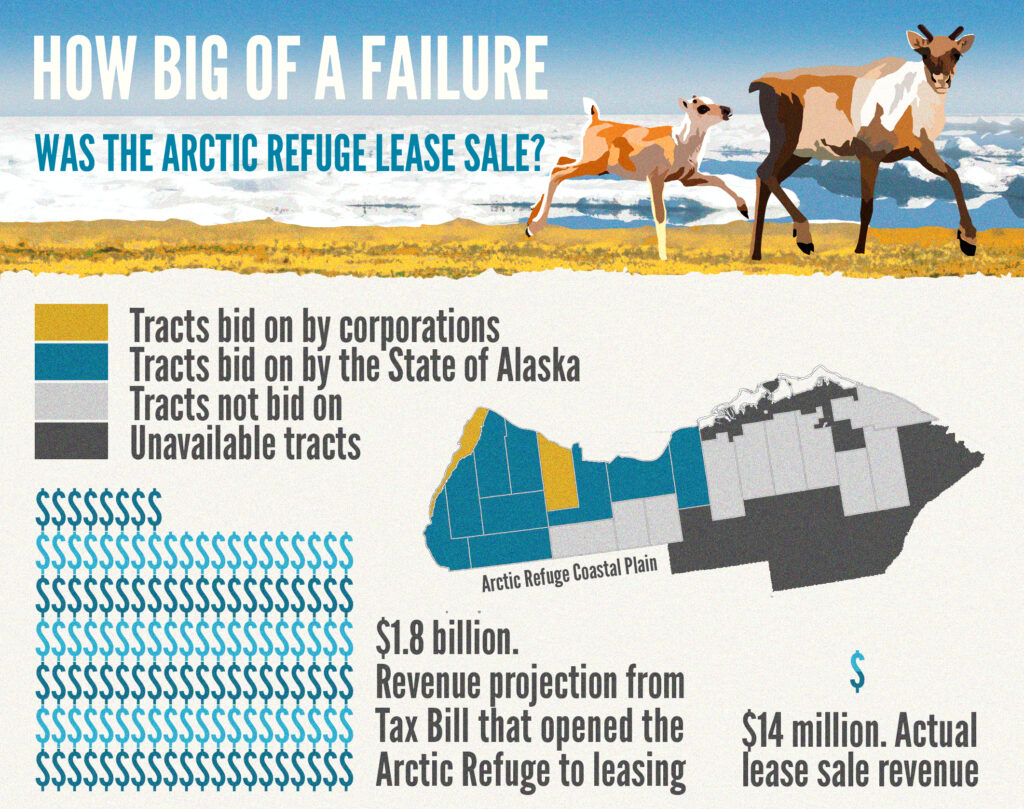
The 2019 EIS ultimately recommended all 1.5 million acres of the Coastal Plains be put up for leasing, with the fewest restrictions and the most aggressive development options possible. Most of the recently canceled leases–there were seven of them, all held by the State of Alaska, a handful and a half of the 11 sold in early 2021–were all issued under the original EIS. That EIS was, as you would expect, found to be so legally, methodically, and scientifically flawed that the Biden Administration ordered the whole thing binned like Tuesday’s tuna sandwich on a Friday afternoon.
One of the first things incoming-President Joe Biden did in 2021 was throw a hold on all development in the Arctic Refuge and order a Supplementary Environmental Impact Statement (SEIS) be undertaken. This SEIS restarted the consultation process–if not from square one then from square two or three–which technically makes it a mulligan more than a “supplement.”
This brings us to where we are now, being asked to comment a second time on an environmental assessment which is inherently flawed because it legally has to conclude that leasing in the Arctic Refuge will take place.
Okay… so now what?
The bad news is that there’s no way to stop the lease sale–no matter what happens, they are going to put a minimum of 400,000 acres up for potential development. The law says they have to. The only way to stop it would be to change the law, and the political will doesn’t exist for that in Washington.
The good news is while it’s not perfect, this EIS is still better than the original, and offers better alternatives with more restrictions on development. Of the three alternative development scenarios being practically considered by BLM, one (almost) fully protects the Porcupine Caribou Herd’s calving grounds from development.
Moreover lease sales are not the same thing as development in the Arctic Refuge. They don’t just get a piece of paper that says “sure, go ahead and drill here” and start building oil wells the next day–they may buy a lease and never develop it. Likewise, when the first leases were made available, it was with the fewest possible restrictions on development, and even then the industry found them about as appetizing as a wet bologna sandwich and made very few bids. Just because leases are made available doesn’t mean anyone is actually going to buy them. The ultimate hope is that decision makers will choose the most restrictive scenario that best protects the Porcupine Caribou Herd and all the other treasures of refuge, a scenario that is at odds with making developing the Arctic Refuge a good business choice.
This is all… frustrating at best, but the fight isn’t over. There’s still time for action. For one thing, you can actually go and comment on the SEIS. Tell the U.S. government you won’t accept any development in the Arctic Refuge. You can pop over to the CPAWS Yukon website and sign our campaign letter, or you can write your own.
Photo by Ken Madsen.
You can also support the Arctic Refuge and the Porcupine Caribou by talking about the Arctic Refuge; share a post, tell your friends, tweet about it.
A bunch of rich people want to roll into what’s ostensibly a wildlife refuge and start putting holes in the ground where the Porcupine Caribou raise their babies so they can slurp up oil and gas and walk away a little bit richer than they were before.
Does that seem right to you? Does that seem like something that’s good? Do you think it’s possible to have a wildlife refuge remain a refuge if you turn it into an oilfield?
I don’t think that’s even remotely possible, I don’t think that’s right and I don’t think that’s good.
If you don’t either, then say something. The Arctic Refuge needs you too.
Leases Have Been Canceled In The Arctic Refuge–Now What?
The Announcement Is Great News For The Refuge–But The Fight Is Far From Over
Written by Laurence Fox, Campaigns Coordinator | September 25, 2023
On September 6, the Biden Administration canceled the seven remaining– and much-contested– oil and gas leases within the Arctic National Wildlife Refuge, home to the calving grounds of the Porcupine caribou herd.
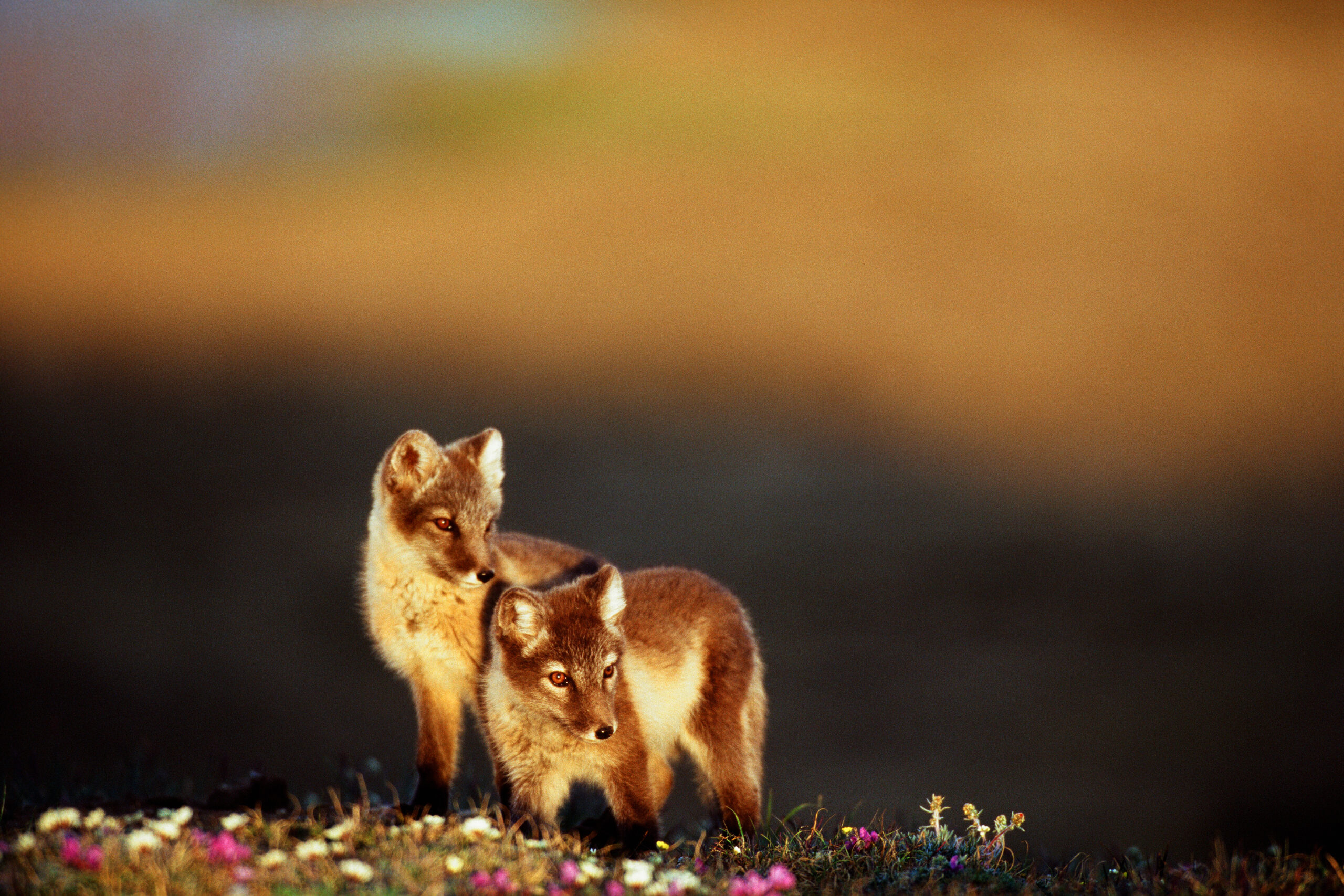
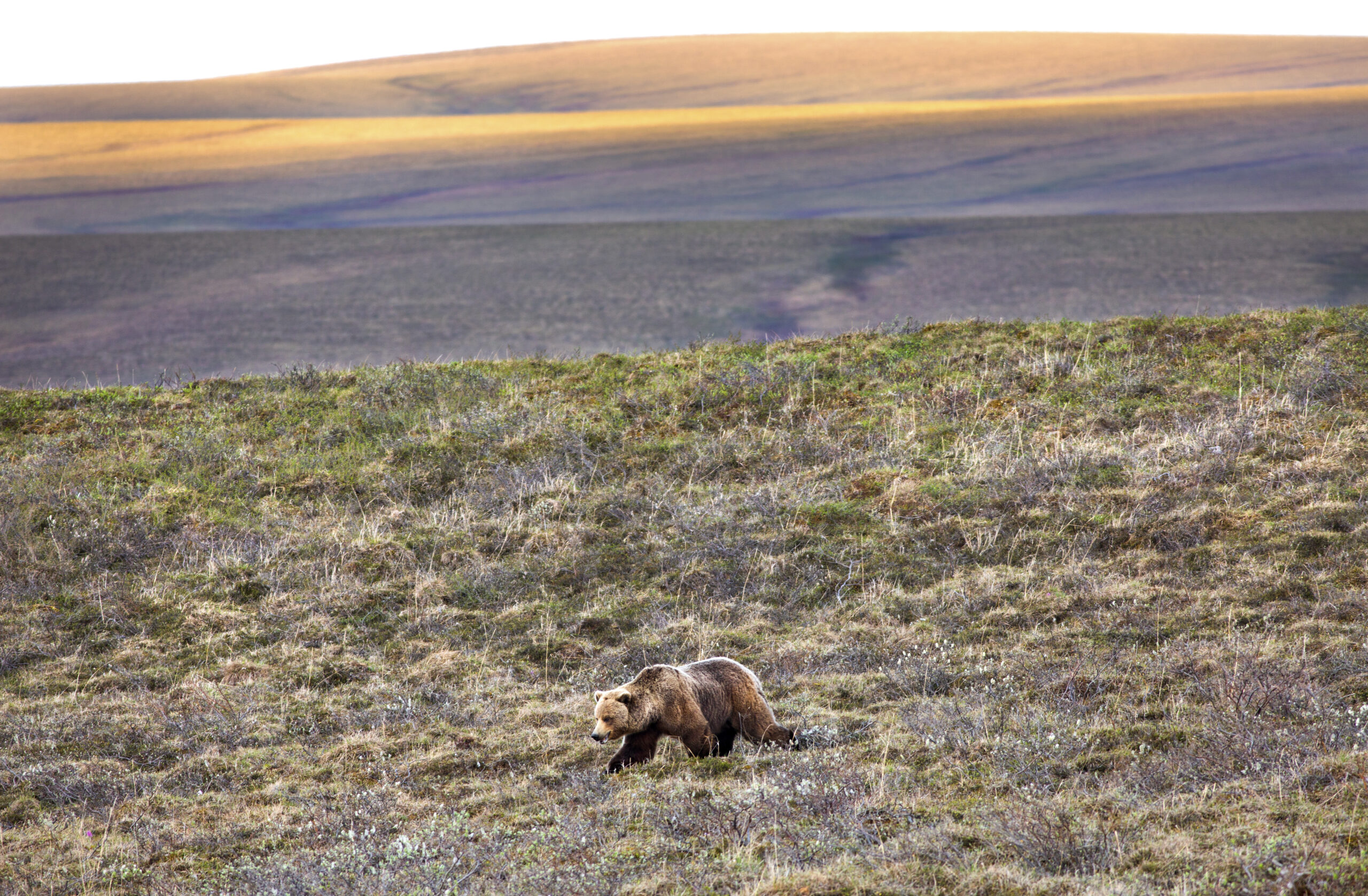
Undeniably, this is a huge win not only for the Arctic Refuge itself, but for Gwich’in on both sides of the border, their conservation allies, and the thousands of animals–caribou, polar bears, Arctic foxes and 200-some species of migratory birds, to name a few—which breed, feed, and live on the coastal plains. It’s the strongest move towards protection for the Arctic Refuge–and the Porcupine caribou– since the Trump Administration first announced it was reopening the region to oil and gas extraction in 2017.
Wildlife of the Arctic Refuge. Photos by Malkolm Boothroyd.
So. What does that mean?
It means celebrations are in order, along with gratitude for the decision, the political will behind it, and the tireless advocacy spearheaded by the Gwich’in Steering Committee, which made it possible.
It also means that, although we may have won this particular battle, the work is far from over.
The fight to protect the Arctic National Wildlife Refuge has been long, fraught, and complicated. What we need to understand right now is that just because these leases have been repealed does not mean the Arctic Refuge is protected – it just means these specific leases in these particular places are no longer on the table at this time, with the previously agreed upon buyers.
The Tax Cuts and Jobs Act signed into action by the Trump Administration in 2017 not only mandated the sale of the oil and gas leases within the 1002 area of the Arctic Refuge–smack dab in the heart of the calving grounds of the Porcupine caribou herd–but requires the Secretary of the U.S. Department of the Interior to “establish and administer a competitive oil and gas program for the leasing, development, production, and transportation of oil and gas in and from” the region. The Act also requires that no less than two lease sales be held. As long as the Tax Cuts and Jobs Act is in effect, those sales must take place. The Department of the Interior is obligated to hold them.
What that really means is that, unless something dramatically changes–and fast– it’s not a matter of if another lease sale will be held, but when.
Once we’ve all taken a breather, the next matter to turn our attention to is the Supplementary Environmental Impact Statement (SEIS), which was mandated to address the noted flaws and blatant favouritism the previous Environmental Impact Statement showed towards oil and gas development. The report will help determine where, when, and how aggressively drilling for oil in the Arctic Refuge will take place, and heavily impact the number, type, and environmental oversights in place on the next round of leases.
Porcupine caribou herd. Photo by Peter Mather.
In the coming weeks, we at CPAWS are going to be diving deep into the SEIS to understand what, exactly, this second round of environmental assessments has found–and if it’s any more sound than the original. Please be patient with us while we do this, because at nearly 700 pages, this report is huge (and that’s just Volume One). Sign up for our newsletter to stay updated.
Repealing these leases is a win in that it rights a wrong; realistically, however, we’ve simply broken even. Our own complacency is the strongest weapon that those who would see the Arctic Refuge torn up and exploited for oil and gas extraction in the name of profit have to wield against its would-be protectors. To make real gains, we need to do more than hold our position–we need to push back against the front lines. If we learned anything from the decades-long battle to protect the Peel Watershed, it’s that until we have legislation that fully, permanently, and legally protects the Arctic National Wildlife Refuge from oil and gas extraction now and into the future, we’re not done fighting.
The lease cancellation is a welcome gift–one that could become a Trojan horse, however, if we don’t continue to work together to see the Arctic Refuge permanently protected from oil and gas extraction.
Written by Aiden Duncan, Conservation Intern July 31, 2023
Tansi! As a Cree/Metis 2spirit man originally from Manitoba my culture is very important to me, so I have always had a passion for protecting the environment. My grandmother attended Indian day school so my family suffered a loss of culture, but as I have gotten older I have started learning about my peoples traditional views on conservation and how that ties into modern day science, and my love for the environment. Over the years I have done everything I can to reconnect with my culture. Whether it be through art, ceremony, teachings, nature or other evolving practices.
This summer I want to gather people from all different walks of life and cultures, and to celebrate our individuality, spirit, and passion for what unites us. There are so many different interests, hobbies, and beliefs that can all be connected to conservation and protecting the environment. For me that is my culture, art, and the land that we share with all the other beings that walk among us.
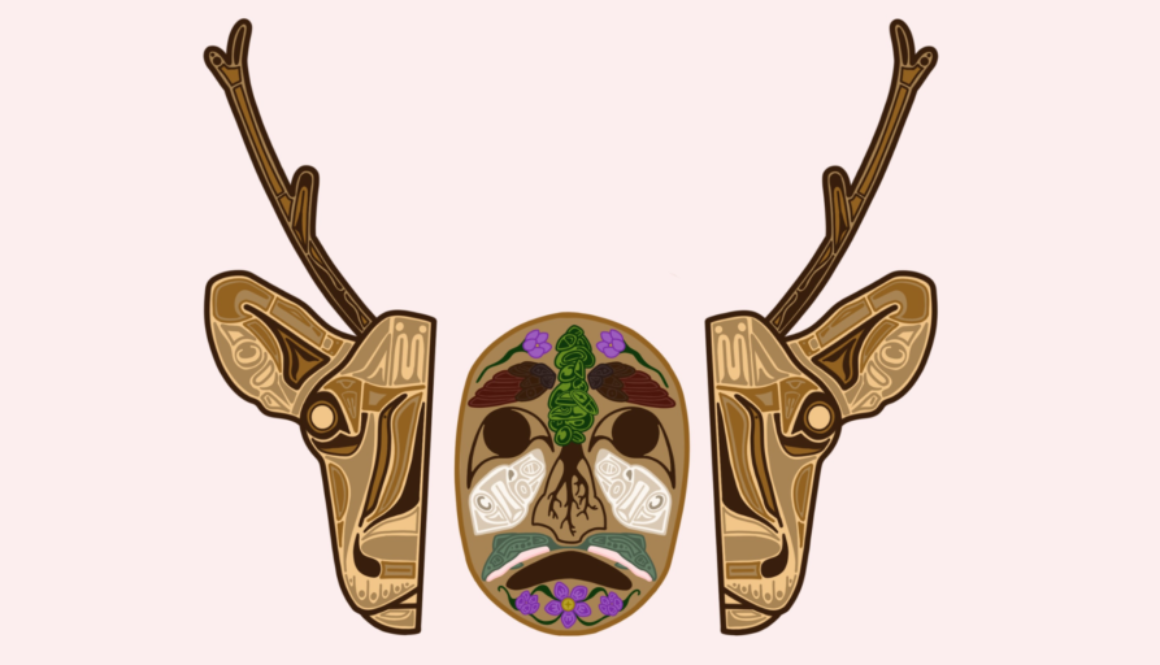
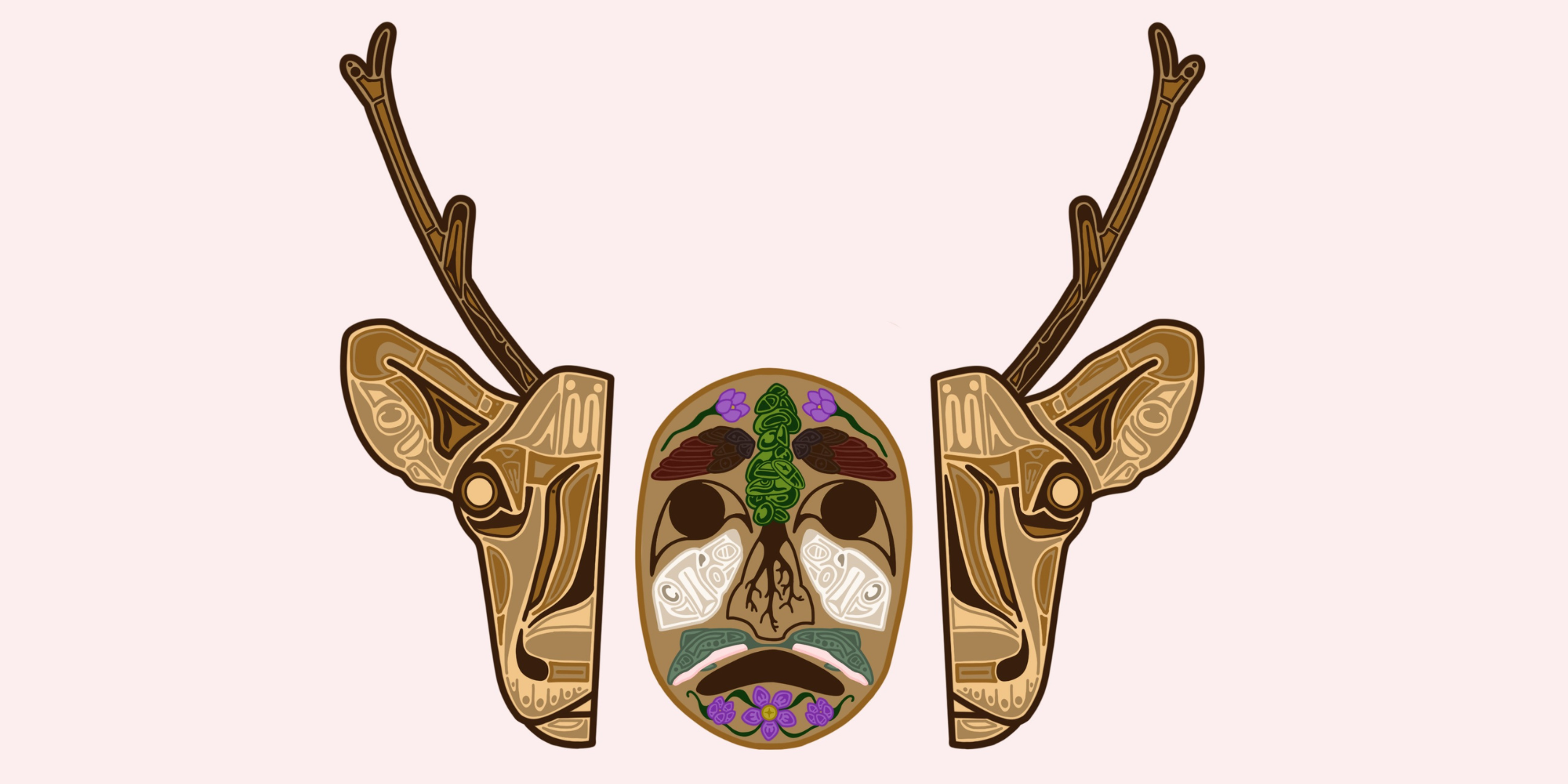
As part of my internship with CPAWS Yukon, I will be carving a traditional Indigenous transformation mask and sharing my journey with you. For centuries Indigenous people have shared knowledge in a way that today can sometimes get lost. Teachings were not kept on paper, but passed on through music, dance, and art.
Draft mask design by Aiden Duncan.
It is a common misconception that Indigenous people want to return to living completely off the land in teepees. That kind of lifestyle isn’t a reality anymore due to climate change, environmental issues, and how society runs today. We want to keep our culture alive and remind people that it’s important to look at traditional ways of living when talking about conservation in today’s world. Sometimes “conservation” can be difficult to grasp, but approaching big daunting ideas through traditional teachings and community is key to understanding.
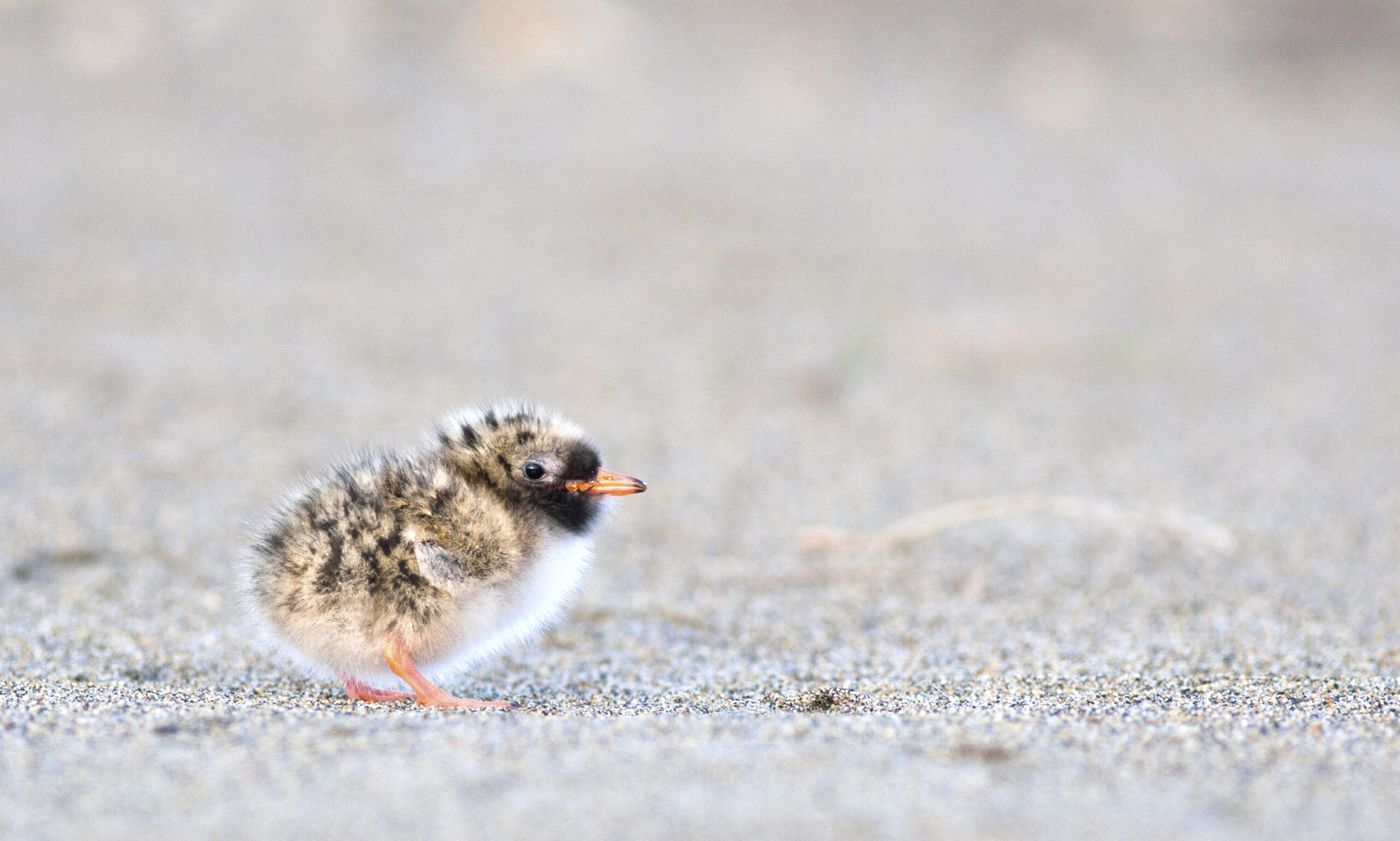
The mask will be accompanied by a series of powwow dances that tell the story of the Porcupine caribou and the Arctic National Wildlife Refuge, located just across the Yukon-Alaska border. Often referred to as “America’s Serengeti,” the Arctic Refuge is an essential space for over 200 different species from the mighty Ice bear to the smallest baby loon. The area is home to many animals, and a sacred and safe space for many who may just need a temporary home, like the Porcupine caribou.
Photo by Peter Mather.
The refuge provides protection and stability for the Porcupine caribou. It is an important stop along their journey of 2400 kilometers, the longest land migration in the world, through Alaska, the Yukon, and the Northwest Territories. Here they give birth to their calves, and the amazing wild space provides nutrients for the calves and moms to stay strong and grow.
Not only does the Arctic Refuge keep the caribou alive, it is also a lifeline for Indigenous people like the Gwich’in who depend on them. These animals nourish communities in need and help them keep their culture alive. The Porcupine caribou herd is one of the healthiest in the world thanks to the Gwich’in peoples efforts to protect these beautiful animals and their wild spaces, all while treating them with respect and honour.
Back home in Manitoba, boreal caribou are listed as a threatened species provincially and federally. Their population is decreasing, and the caribou aren’t traveling as far south as they used to because of urban development. When I visit museums and see beautiful historical creations using caribou hide, I feel disconnected from my ancestors. One of the most important reasons to protect these animals is to preserve the traditional teachings in northern communities. It can be hard to grasp just how much that could affect a person, but I know. I live in a place where those teachings have been lost over time, although many people are trying to revitalize and preserve them.
The population of Porcupine caribou is increasing by 3.7% per year, so sometimes it is easy for us to push loss out of our minds. Unfortunately, that can change quickly and drastically. As barren-ground caribou, their species is considered threatened across Canada. While there isn’t any active drilling in the Arctic Refuge right now, oil and gas development has long threatened the refuge. The herd is very vulnerable.
My project will share the story of the Porcupine caribou. I hope it draws people in and peaks their curiosity. The mask will represent the circle of life, and the dances will share the migration, strength, and beauty of the caribou, along with the struggles they face. I believe when people learn a meaningful story or even make a small change to live a more eco-friendly life, it can deepen other connections to the land and the wildlife that live among us. Nature is something that connects all of us together, and it isn’t too late to protect the Arctic Refuge. We need to take steps towards a better tomorrow for ourselves and for our future generations.
Today, the U.S. Bureau of Land Management released a Notice of Intent to create a Supplemental Environmental Impact Statement (SEIS) for the 2019 Coastal Plain Oil and Gas Leasing Program Environmental Impact Statement.
This is a step towards hopefully identifying, and rectifying, the gaping deficiencies of the previous Environmental Impact Statement, released in September 2019, and begins a 60-day public scoping period. Comments on impacts, issues, and alternatives can be submitted to the Bureau of Land Management to be included in the SEIS.
While we are pleased to see this, it implies a leasing program would continue for the Arctic National Wildlife Refuge. This critical area for the Porcupine caribou herd requires permanent protection and the United States Congress has an opportunity to take a step in that direction by repealing the leasing program from the Tax Cuts and Jobs Act of 2017.
We acknowledge, recognize, and respect that much of our work takes place on the traditional territory of the Kwanlin Dün First Nation and the Ta’an Kwäch’än Council.
We use cookies and other similar technologies such as pixels and web beacons (“Cookies”) for various purposes, such as to ensure our website functions properly, enhance your browsing experience by remembering your preferences and provide personalized content and advertisements.
Functional
Always active
The technical storage or access is strictly necessary for the legitimate purpose of enabling the use of a specific service explicitly requested by the subscriber or user, or for the sole purpose of carrying out the transmission of a communication over an electronic communications network.
Preferences
The technical storage or access is necessary for the legitimate purpose of storing preferences that are not requested by the subscriber or user.
Statistics
The technical storage or access that is used exclusively for statistical purposes.The technical storage or access that is used exclusively for anonymous statistical purposes. Without a subpoena, voluntary compliance on the part of your Internet Service Provider, or additional records from a third party, information stored or retrieved for this purpose alone cannot usually be used to identify you.
Marketing
The technical storage or access is required to create user profiles to send advertising, or to track the user on a website or across several websites for similar marketing purposes.


 Okay… so now what?