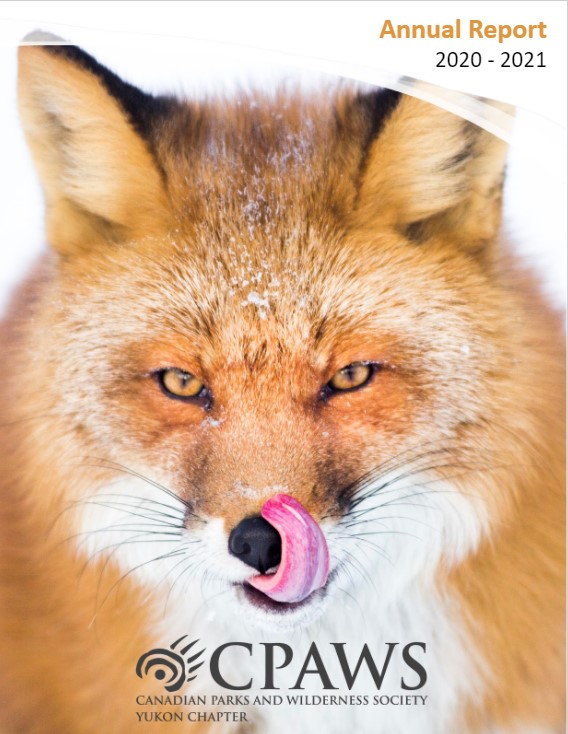
Annual Report 2020-21
Welcome to our first annual report! We’re excited to give you a glimpse of everything that’s been going on within CPAWS Yukon for the past year, and hope you find this a helpful resource.
Written by Maegan McCaw, Conservation Coordinator
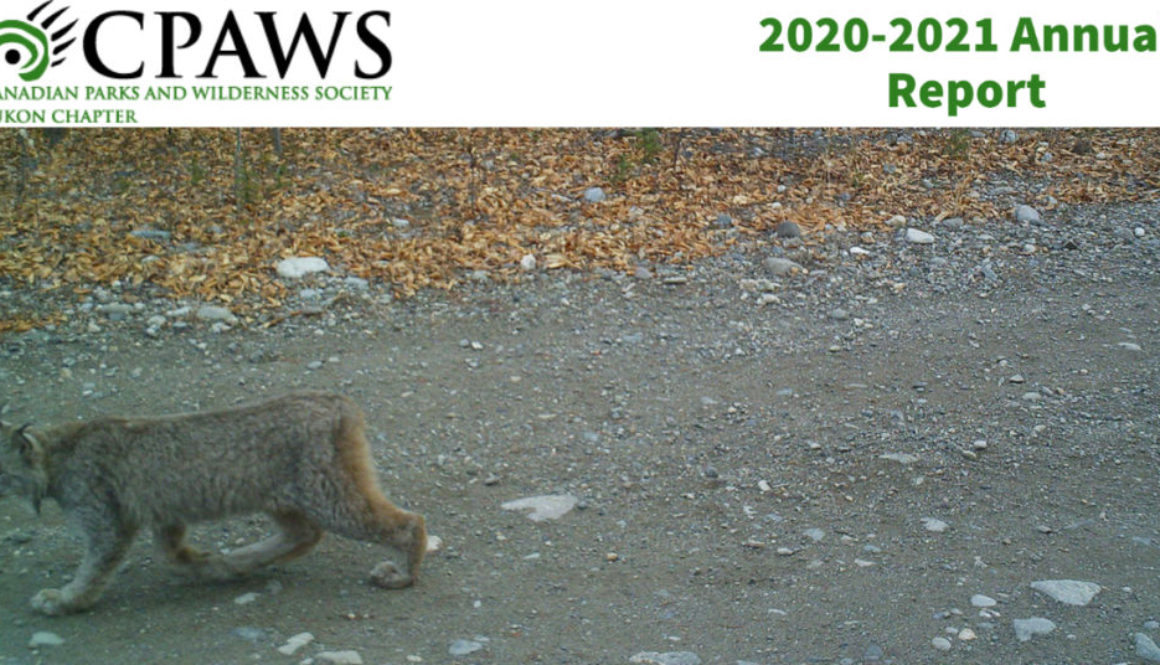
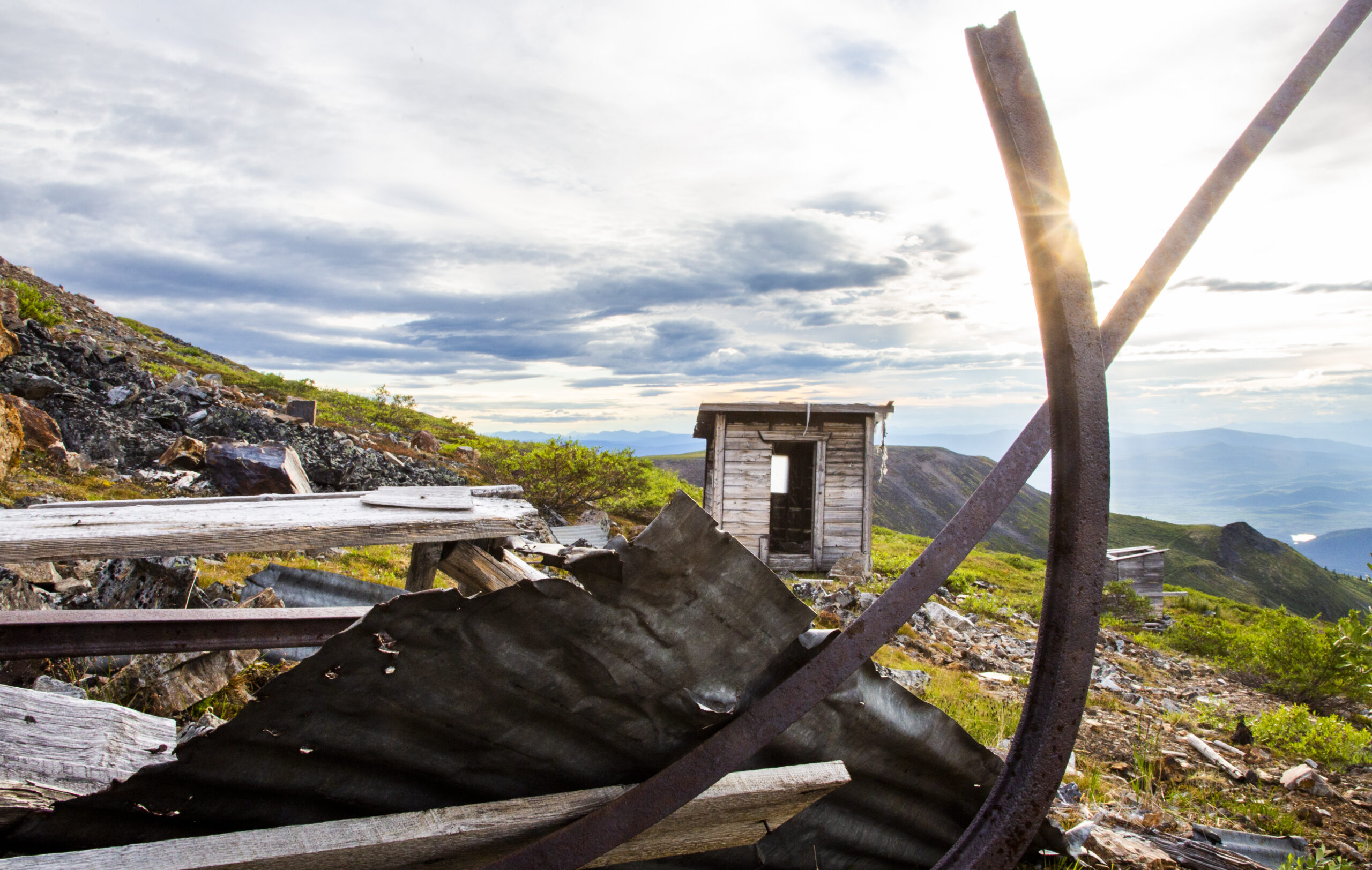
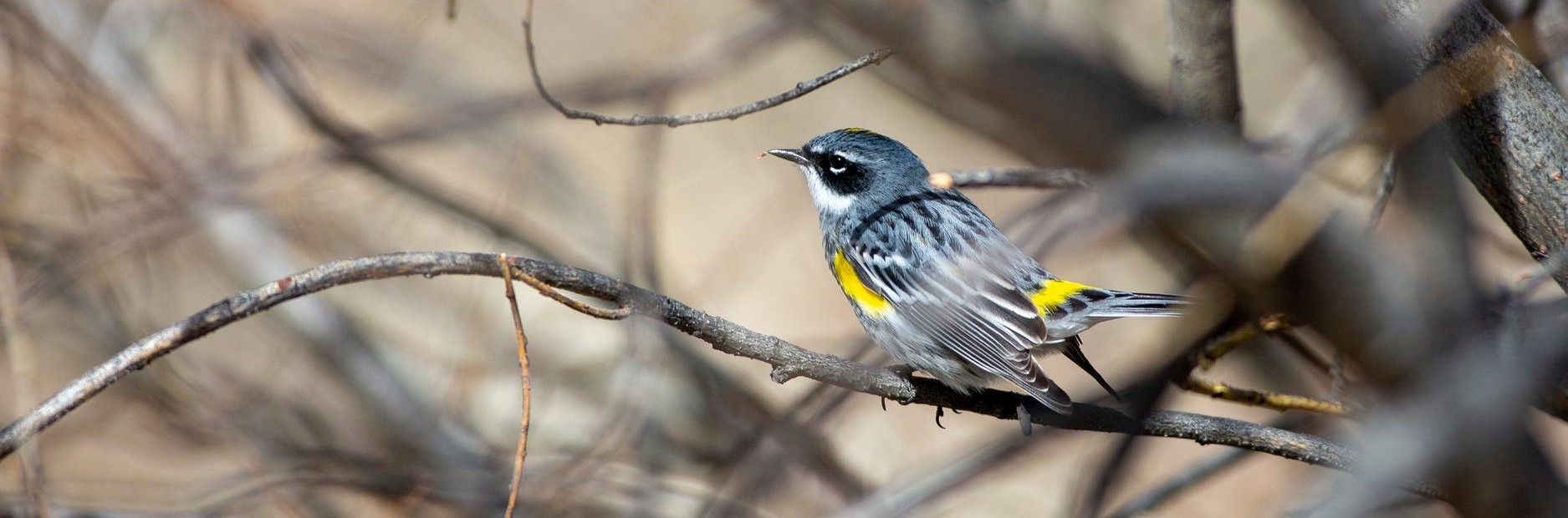
Header Image by Maegan McCaw
Friday, May 21st has been designated as Endangered Species Day. This is an important day to acknowledge the thousands of species around the world whose populations are in decline, and the efforts of those working to conserve and protect these species.
For this year’s Endangered Species Day, I’m going to take you on a deep dive into the world of bats.
Eight bat species have been recorded in the Yukon, including the Little Brown Myotis and the Northern Myotis, both live captured, and the Long-eared Myotis, Yuma Myotis, Long-legged Myotis, Silver-haired Bat, Eastern Red Bat and Hoary Bat, confidently identified from echolocation calls. All of these species, aside from the Little Brown Myotis, have been found only in southern Yukon and may be restricted to local areas in this region. To read more about Yukon bats, check out this pamphlet by Yukon Wildlife Viewing.
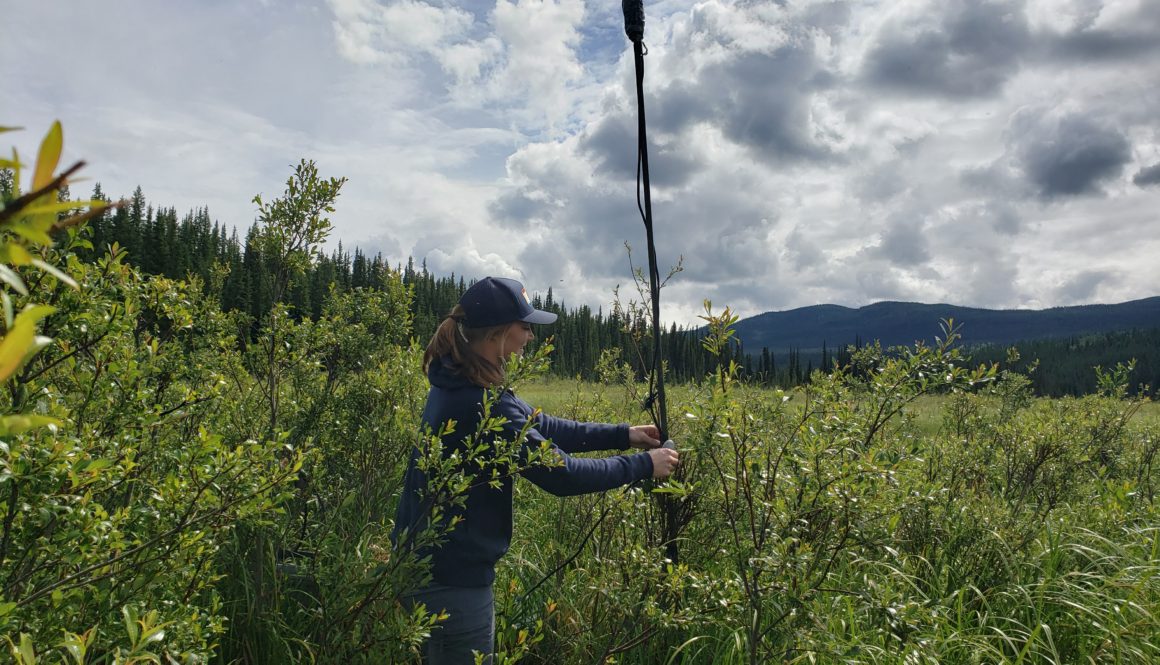
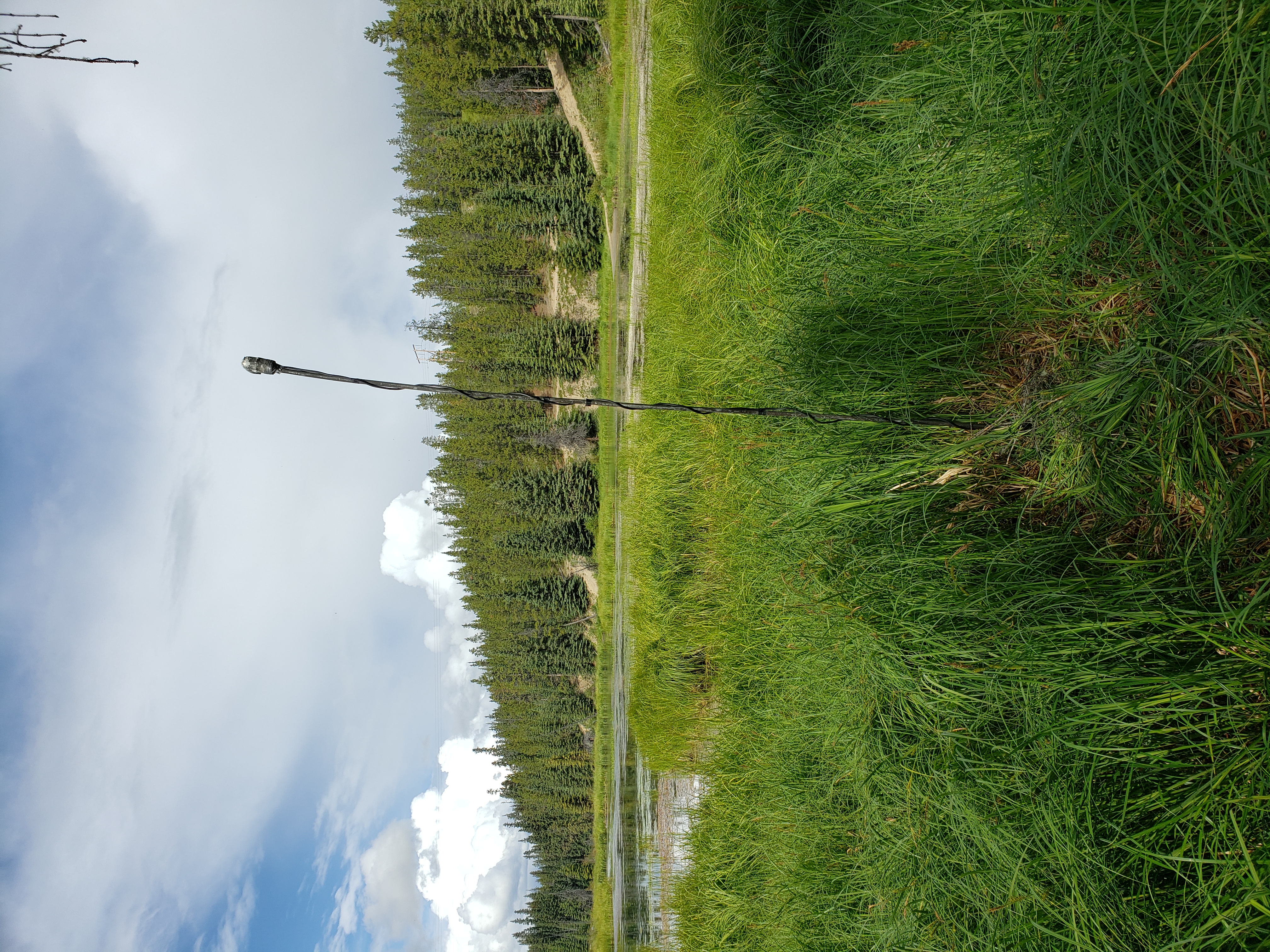
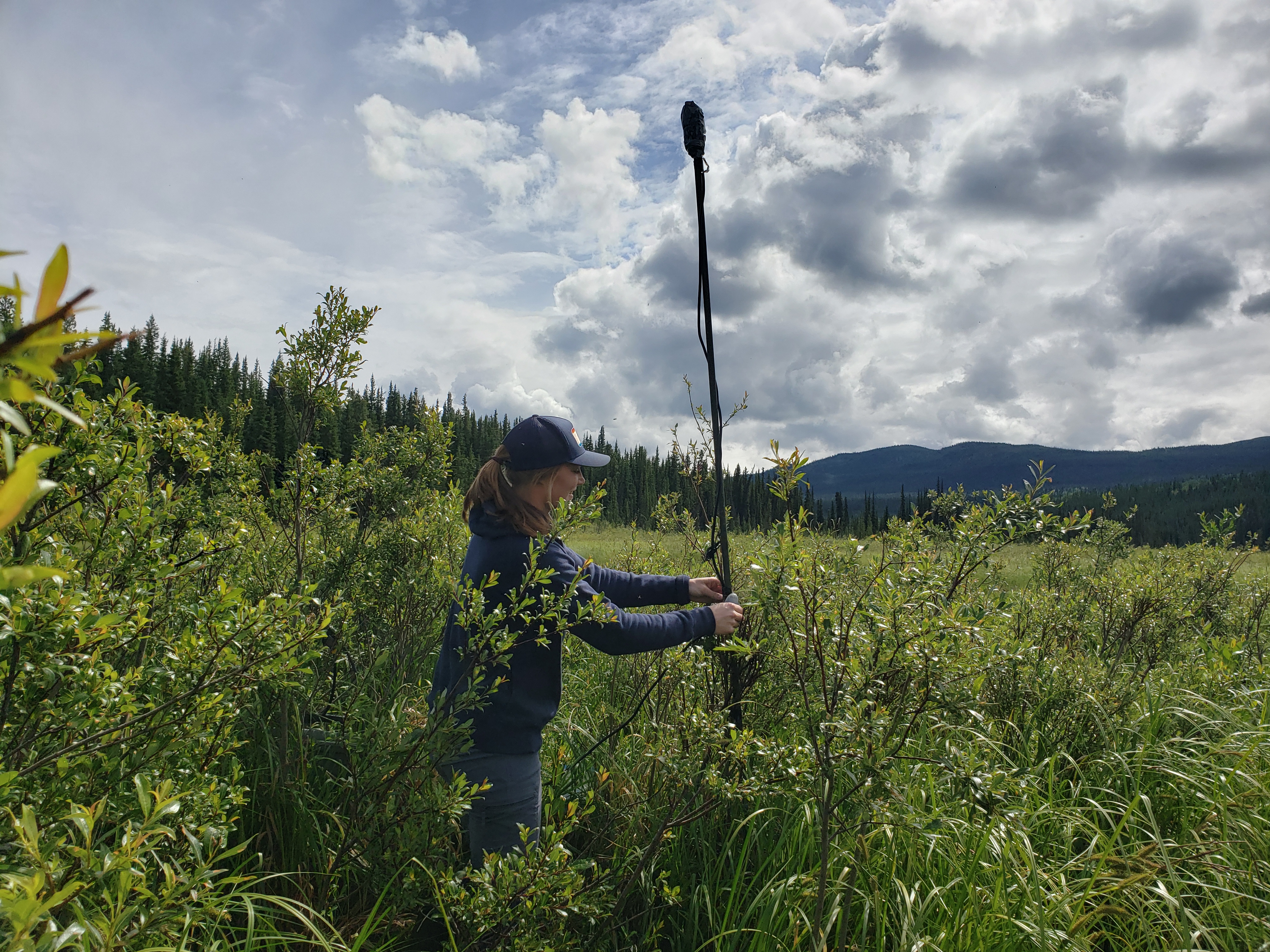
I’ve been fortunate to learn about bats through my work at McIntyre Creek and the opportunity to collaborate with local researchers. Last summer I used bat detectors to record the echolocation calls of bats at McIntyre Creek. These surveys only lasted for a few nights at a handful of sites, and to my amazement, they resulted in thousands of recordings of bat calls each night. I learned this means there is likely a maternal colony in the area. Julie Thomas, a Yukon Government biologist, and Brian Slough, an independent researcher, helped analyze the files and determined many of the calls were feeding calls, and the Little Brown Myotis and potentially the Long-legged Myotis were recorded. The only other acoustic recordings of Long-legged Myotis in the Yukon were at Wolf Creek, just south of Whitehorse, Carmacks, Teslin and Destruction Bay.
Canada has 622 species listed under the Species at Risk Act (SARA). Species listed here are nationally recognized to be locally extinct, endangered, threatened or of special concern. Of these 622, 91 are found in the Yukon. CPAWS and others have been advocating for the establishment of Territory-specific legislation to properly protect and manage species at risk for years to fill in the gaps that SARA leaves.
Across Canada, the Little Brown Myotis and the Northern Myotis are both listed as endangered due to white nose syndrome. This fungal disease has devastated bat populations in eastern Canada, leading to a 94% overall decline in hibernating populations in Nova Scotia, New Brunswick, Ontario and Quebec. It continues to advance northward and westward without containment. Local bat researchers are bracing themselves for the day that white nose syndrome is discovered in a Yukon bat.
Other issues threaten bats across Canada. Bats are sensitive to human disturbance during hibernation; each instance of disturbance is energetically costly to a hibernating bat, as their metabolic rate goes up and they are left to determine if there is an immediate threat or not. Enough disturbances can lead to starvation. Wind turbines can also be deadly to bats, especially to species that undergo long distance migrations. Loss of habitat or change to forest structure is another threat, as well as chemical contamination. Bat’s diet of insects makes them vulnerable to the effects of pesticides, though the impacts and extent of negative effects from pesticides are unknown.
Industrial projects, such as quarrying for the Site C dam in B.C., pose serious threats. The chosen quarry site at Portage Mountain for the Site C project encroaches on priceless bat hibernation sites and summer habitat for eight different species of bats. Bats require warm, humid areas to hibernate in the winter – a rare find in northern landscapes. Such sites usually have a long history of use by bats, and there might not be other suitable habitats available across the landscape. Important hibernation sites paired with summer roosting and feeding areas, such as wetlands (one of which was backfilled for the Site C quarrying project), are even more rare. In the case of this quarrying project, B.C. Hydro prioritized industrial interests and the convenience of the Portage Mountain site over its value as a critical habitat feature.
“So, what?”, you might think. How important are bats, really? The answer is, bats bring a number of benefits to our lives, but beyond that, they have their own intrinsic value that must be appreciated. It should also come as no surprise that the health of all living things and the land are connected in some way – also known as One Health – so the health of bats and their habitats have an effect on our health as well.
Bats provide an important ecosystem service by helping to manage insect populations, including agricultural and forestry insect pests, and some bat species are important pollinators. They are also a sign of ecosystem health. Multiple cases of One Health issues have arisen from humans interrupting the natural system and causing wildlife, such as bats, to relocate, sometimes leading to the transmission of disease. Sadly, myths and exaggerated messages of bats carrying disease have led to a fear of bats, and in some cases people have even exterminated entire colonies.
Bats are intelligent, social, long-lived creatures. The little brown myotis can live into their 30s! They also have a slow birth rate, and females raise one pup every one to two years. We still have a lot to learn about bats, especially populations in the Yukon, but they – and their habitats – are clearly worth working to conserve.
There is no doubt that more research needs to be done on Yukon bats to fill broad knowledge gaps. Canada’s bat populations are faced with serious threats, and time is of the essence. Thankfully, a handful of biologists, researchers, and bat enthusiasts including: Yukon Government biologists Tom Jung, Piia Kukka, and Julie Thomas; independent researcher Brian Slough; Wildlife Conservation Society Scientist Cori Lausen, and; University of Calgary Professor Robert Barclay, among others, actively continue to contribute to the body of knowledge about Yukon bats. Their work is immensely important, especially as white nose syndrome makes its way closer to the territory. Filling knowledge gaps about Yukon bats will allow us to identify critical habitat, monitor species and populations, and address threats.
This summer CPAWS is partnering with several researchers and biologists to study bats at McIntyre Creek and Wolf Creek. We hope to learn how bats use specific features and characteristics along these two urban creeks near Whitehorse. This work may also give more insight into which species of bats are present along these urban creek systems.
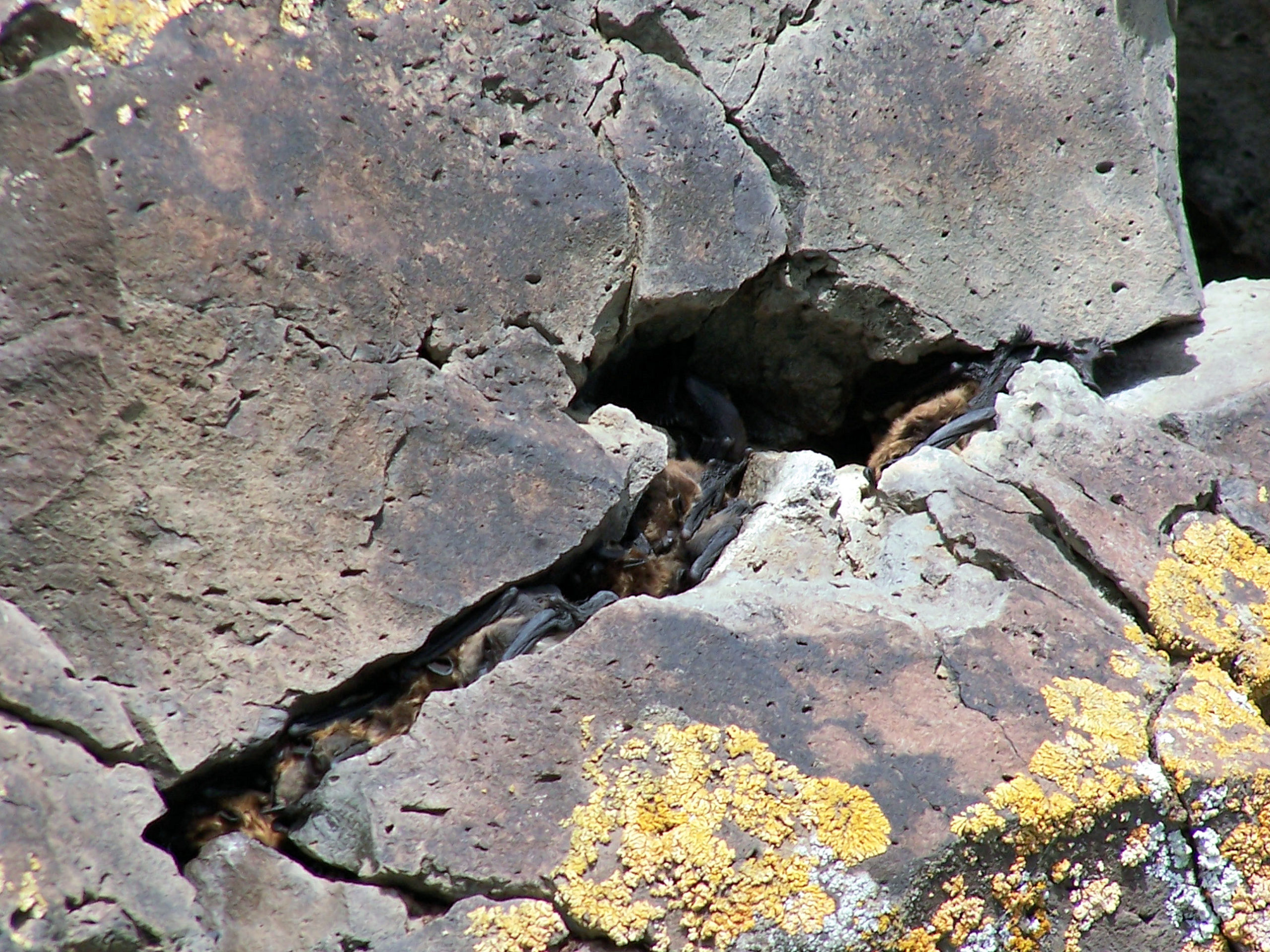
If you want to participate in projects like this or are interested in learning more about other local species, come join us out at McIntyre Creek this summer. You can also contribute to bat conservation efforts in other ways. Reporting potential maternal roosts to Yukon Government – indicated by large quantities of guano at the base of a roost, or seeing a group of bats entering/leaving a roost site at night – is an important step. You can also install a bat house, providing a place for bats to roost on your property (and enjoy the added benefit of fewer mosquitos around your yard). Contact Yukon Wildlife Viewing for more information on their bat house program. Finally, you can teach your friends and family about the importance of bats, and dispel outdated myths that may cause them to unnecessarily fear bats. Just like other things in nature, a little respect for their life history and important habitats goes a long way, and in the long run, this can lead to mutual benefits. Let’s keep bats around for the long haul.
Written by Randi Newton | May 13, 2021
Photo by Malkolm Boothroyd, mining in Keno.
The territory’s mining legislations need a substantial overhaul.
Read the full editorial as published in the Yukon News on May 13th, 2021.
—
The Yukon’s mining laws were enacted over a hundred years ago. Despite minor updates, they haven’t kept pace with the scale of mining seen today, or with the territory’s social, political, and legal landscape. I had hoped the development of the Mineral Development Strategy would provide a blueprint for bringing the territory’s mining laws into stride with 21st century expectations and realities.
While the final strategy, released this April, includes many progressive recommendations and is a big step forward, it isn’t enough to move past the mire of issues linked to the Yukon’s current mining regime.
True, it does include powerful mentions of reconciliation and honouring Aboriginal rights, respecting the wellbeing of people and the environment, and managing mining in a forward thinking way. But its recommendations fall short in fully and consistently advancing all of these ideas. First Nations and many others pointed out the shortcoming of the draft strategy but most of these flaws were not resolved in the final document.
Despite this, I remain optimistic that mining in the territory can be reshaped, to ensure that the health of the land, people and communities comes first, and that the benefits and opportunities that mining can bring are equitably shared. The Mineral Development Strategy is just one of multiple forces pushing the territory in that direction.
These forces include notable court cases, like the Supreme Court of Canada’s Peel Watershed ruling that upheld the right of First Nations to meaningfully participate in resource management in their traditional territories. It also includes the Yukon Court of Appeal’s 2012 ruling, which found the Yukon government had a duty to consult Ross River Dena Council before granting quartz mineral claims, and that the territory’s free entry mining system conflicted with this duty.
Despite these legal victories, policies and legislation can shift frustratingly slowly. If change was quicker to arrive, the First Nation of Na-Cho Nyäk Dun wouldn’t have had to launch legal action against the territorial government for failing to properly consult before they approved mineral exploration in the Tsé Tagé (Beaver River) Watershed. But this case also shows that people and First Nation governments will continue to stand up for meaningful reform.
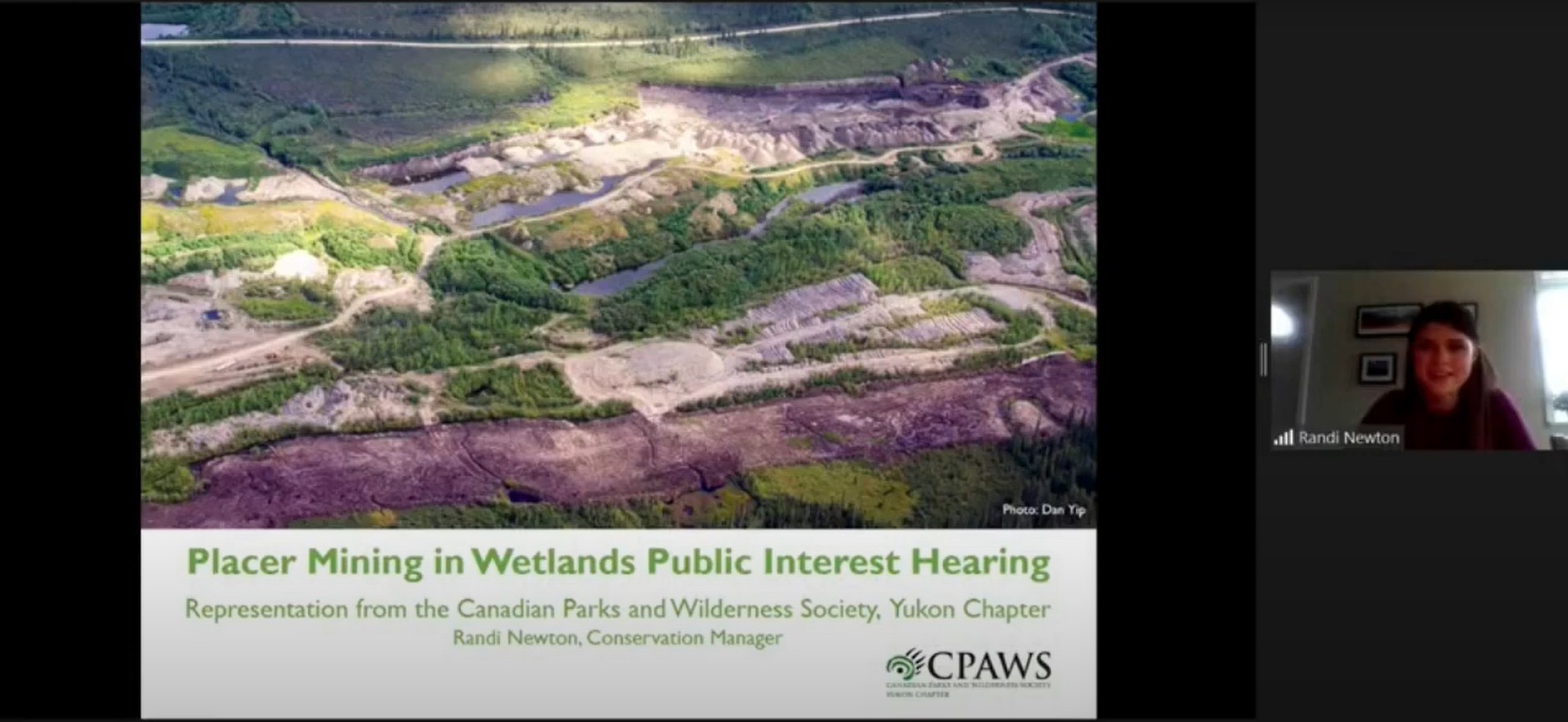
Momentum for mining reform was also on display at the Yukon Water Board’s October 2020 public hearing on placer mining in wetlands. While the board has not yet acted on that hearing, First Nations and environmental organizations sent a clear message that placer mining in undisturbed wetlands must be paused until a framework is in place to protect the ecological integrity of these habitats and to respect Aboriginal Rights.
Other signs of change include Yukon government’s rejection of Atac Resources’ 65 km mining exploration road through the pristine Tsé Tagé Watershed, a project that may have gone ahead had the government’s review been less thoughtful. Another recent example was the federal government directing the Yukon Environmental and Socio-Economic Review Board (YESAB) to revisit and better address the likely impacts of the Kudz ze Kyah mine, including the decline of the Finlayson caribou herd and resulting impacts on Kaska Dena rights. This shows it’s becoming less acceptable for projects to move forward with unproven plans to avoid and address impacts on wildlife, water and the land.
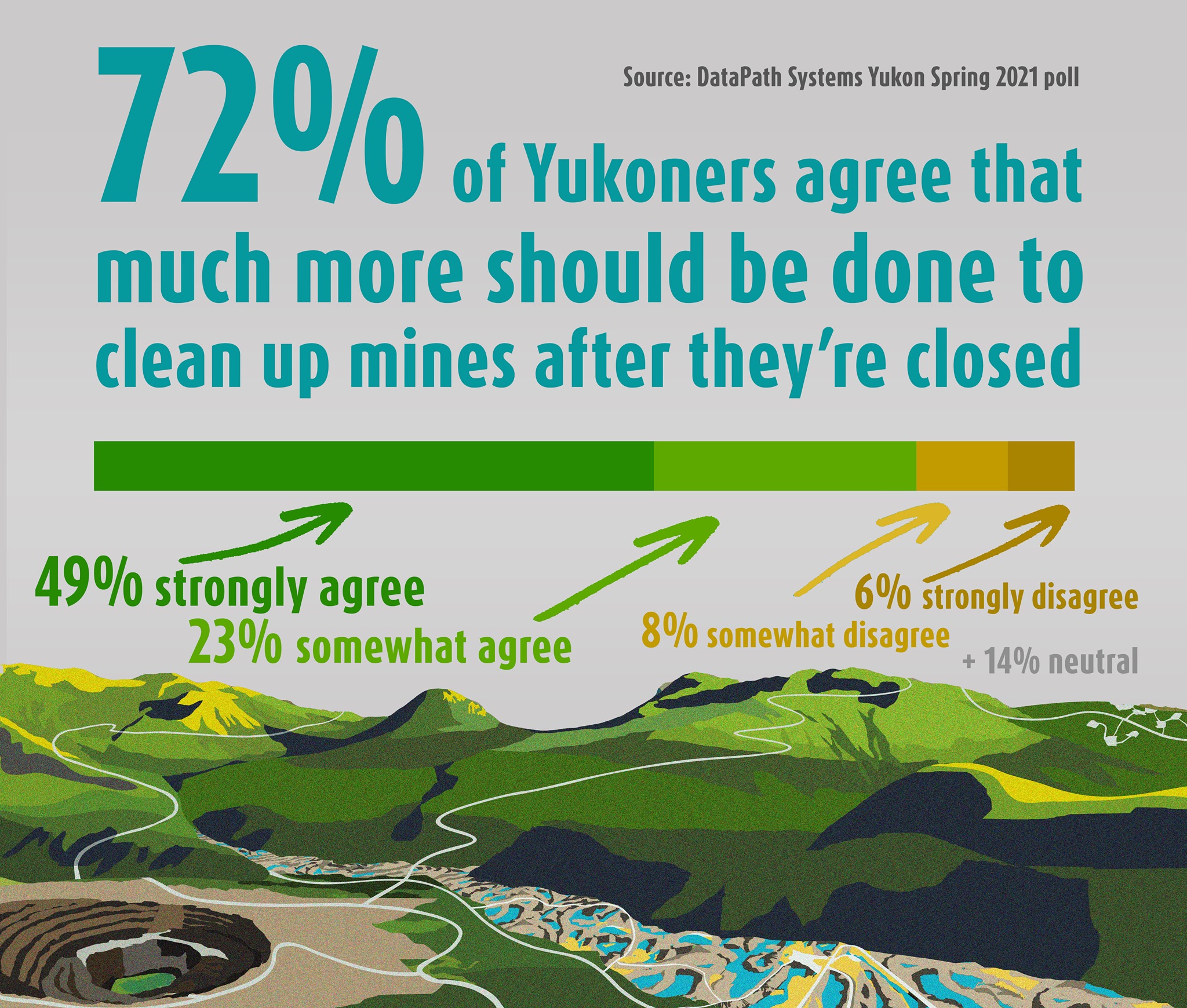
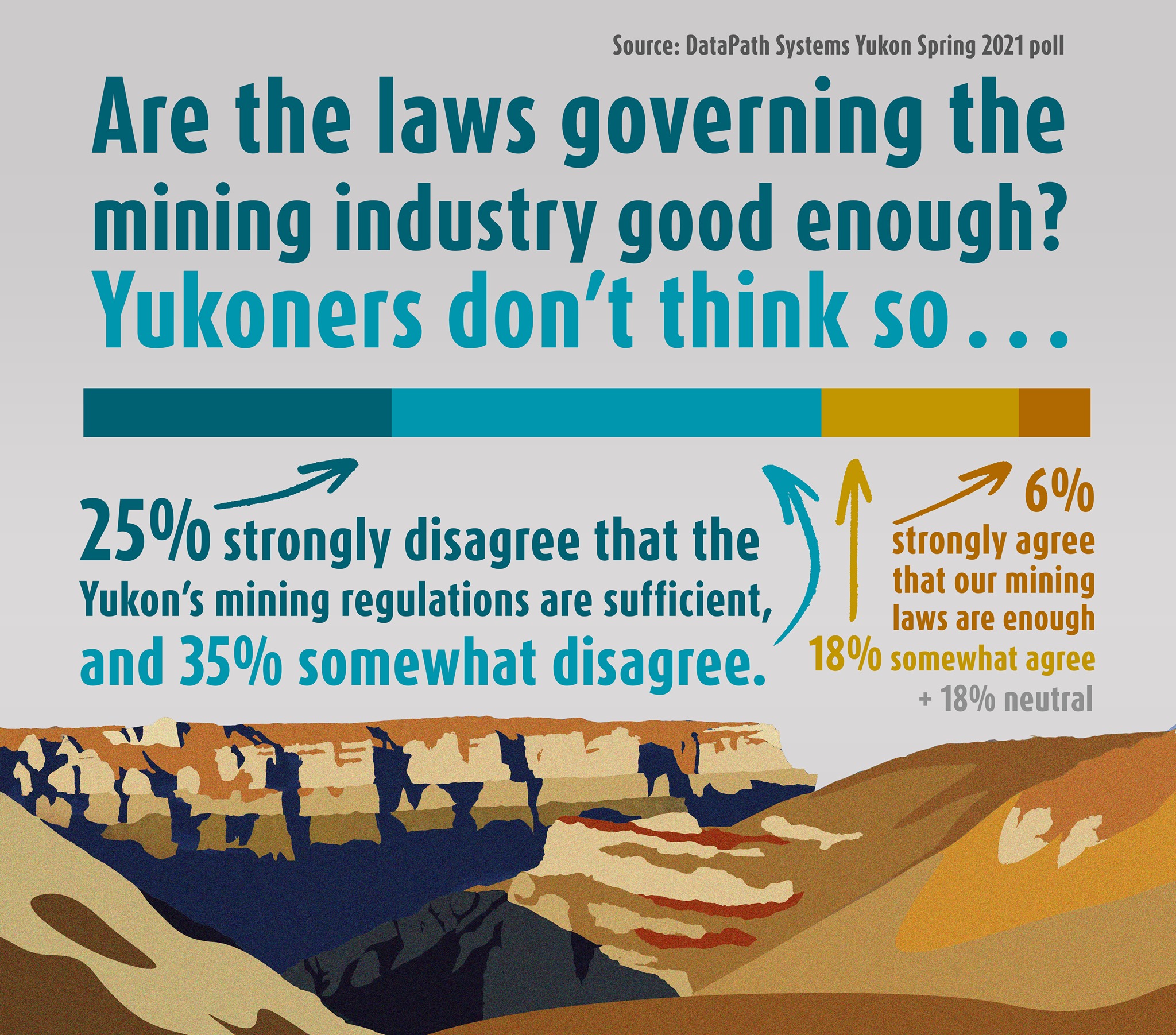
These forces of change are reflected in the attitudes of Yukoners. Recent independent polling commissioned by CPAWS Yukon and the Yukon Conservation Society shows that:
While many of the recommendations in the Yukon Mineral Development Strategy would improve the mining rules currently in place, the changes envisioned in the strategy will likely be outpaced by the forces mentioned above. The final strategy doesn’t resolve key issues, like mining and other development moving forward ahead of land use planning or attaining free, prior, and informed consent from First Nations. This leaves mineral development at odds with other values and uses of land, and in conflict with First Nation rights.
As another example, CPAWS Yukon and others had hoped the strategy would call for a pause on mineral staking and development at the start of land use planning. Otherwise, a steady stream of permits quickly reduces options to thoughtfully consider other uses of land and can introduce complicated wranglings for compensation. Unfortunately, the final strategy caps temporary staking withdrawals at 20 per cent of a planning region, a number that’s arbitrary and inadequate for preserving other land values while planning is ongoing.
We were also concerned by some of the recommendations to streamline the regulatory system. While this is an admiral goal on the surface, a number of the strategy’s recommendations would achieve it at the expense of accountability and transparency. One example is a recommendation to create a government liaison position to guide proponents through the mining regulatory system. Having the government act as both regulator and client advisor creates a conflict of interest and can impede the ability of regulators to act in the public interest.
Yet the strategy also includes recommendations that will bring about overdue and powerful changes. Most significantly, it calls on the Yukon to modernize its woefully outdated mining laws. Engagement submissions from First Nations, environmental organizations and many Yukoners show the expectation is for legislation to be brought fully in line with the Final Agreements and Aboriginal rights, as well as environmental and cultural sustainability.
The Mineral Development Strategy also places rightful priority on continuing land use planning across the territory, and on making sure there is funding available to do planning properly.
As with the draft, the strategy calls for a comprehensive review of our royalty system, so that more of the profits that are extracted out of the land flow back to Yukoners and First Nations, and future generations. It also includes progressive new mechanisms like a Heritage Fund and a payroll tax for fly-in workers. These policies would help deliver more consistent and fair financial, social and ecological returns to the Yukon.
Most meaningfully, the development of the Yukon Mineral Development Strategy sparked an important and lively public discussion about how to best reshape mining in the territory, for the betterment of the land, climate, wildlife, people, and communities. Even if the strategy itself didn’t fully capture all of the contributing voices, this conversation will continue as people work together to shape the future of the territory.
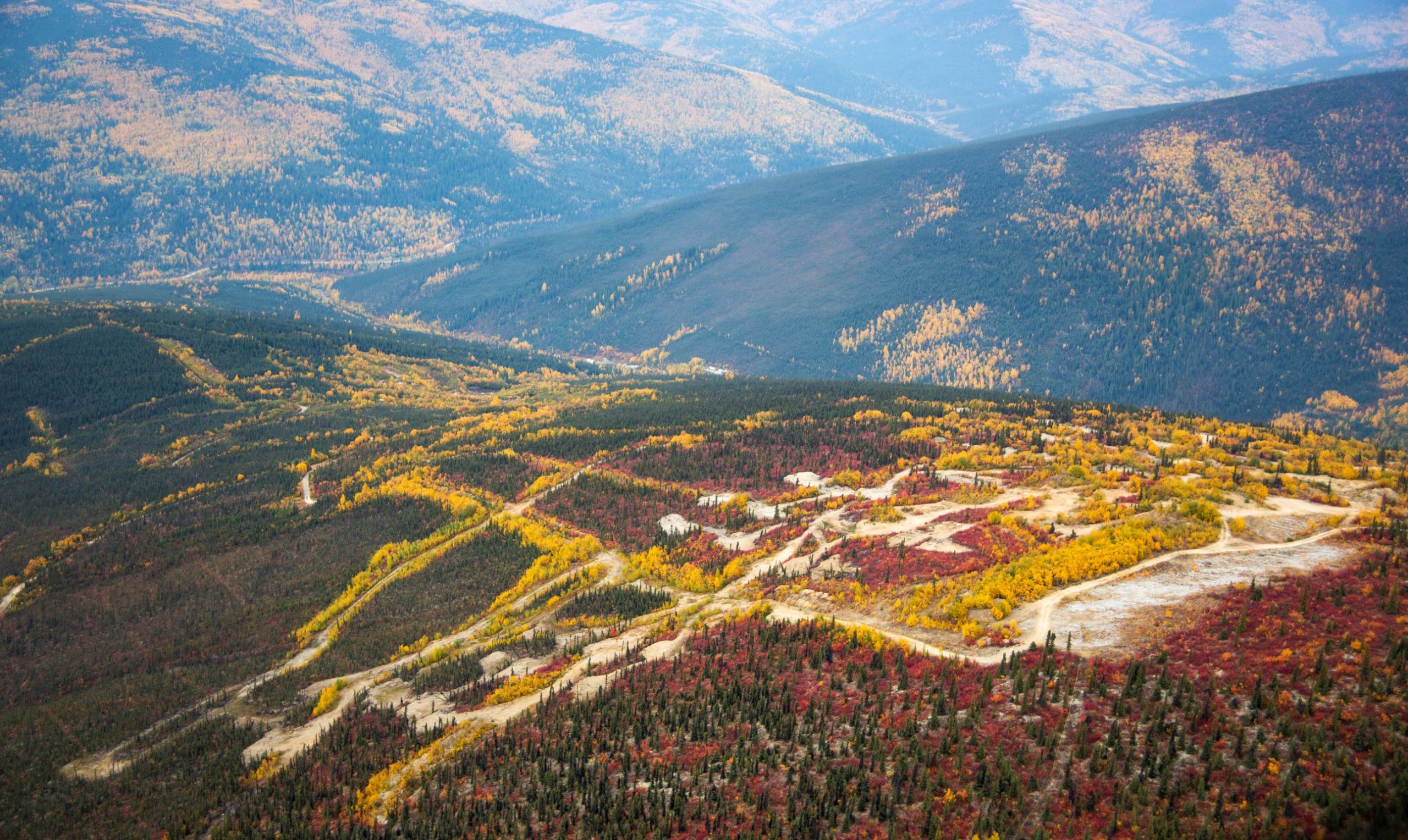
Header Image by Malkolm Boothroyd
Written by Randi Newton, Conservation Manager
I was optimistic that the final Yukon Mineral Development Strategy, released this April, would be stronger than the draft that came out in late 2020, providing a strong blueprint for reshaping mining in the territory. While the final version includes some tweaks and a few new recommendations, the documents are substantially the same, at least where the environment and honouring the Final Agreements and Aboriginal rights are concerned.
Before I dive into the final strategy, where does this leave the fate of mining reform in the territory? Well, the strategy, which includes many progressive and long overdue recommendations, is a big step forward. But that step isn’t big enough to move past the mire of issues linked to the Yukon’s current mining regime.
And yet, I remain optimistic that mining in the territory can be reshaped. The Mineral Development Strategy is just one of multiple forces pushing the territory’s mining regime in a direction where the health of the land, people and communities can come first, and where the benefits and opportunities that mining can bring are equitably shared.
These forces include notable court cases, like the Supreme Court of Canada’s Peel Watershed ruling that upheld the right of First Nations to meaningfully participate in resource management in their traditional territories, as embedded in the Final Agreements. It includes the Yukon Court of Appeal’s 2012 ruling, which found that the Yukon Government had a duty to consult Ross River Dena Council before granting quartz mineral claims, and that the territory’s free entry mining system conflicted with this duty.
Despite these legal victories, it is true that the pace of change for policies, legislation and attitudes to shift can be frustratingly slow. If change was quicker to arrive, the First Nation of Na-Cho Nyäk Dun wouldn’t have had to launch legal action against the territorial government for failing to properly consult ahead of approving mineral exploration in the Tsé Tagé (Beaver River) Watershed. But this case also shows that people and First Nation governments will continue to stand up for meaningful mining reform.
Momentum for mining reform was also on display at the Yukon Water Board’s October 2020 public hearing on placer mining in wetlands. While the Board has not yet released the outcomes from that hearing, First Nations and environmental organizations sent a clear message that placer mining in undisturbed wetlands must be paused until a framework is in place to protect the ecological integrity of these habitats and to respect Aboriginal Rights.
Other signs of change include Yukon Government’s rejection of Atac Resources’ 65 km mining exploration road through the pristine Tsé Tagé Watershed, a project that may have gone ahead had the government’s review been less thoughtful.
And as a final example, the federal government recently directed the Yukon Environmental and Socio-Economic Review Board to re-evaluate the Kudz ze Kyah mine, stating the original assessment didn’t properly consider the likely decline of the Finlayson caribou herd and resulting impacts on Kaska Dena rights. The Board was split on the fate of the mine after re-evaluation and the future of the project is back in the hands of the federal government. This situation signals it’s becoming less acceptable for projects to move forward in the face of serious risks and unproven mitigations.
These forces of change are reflected in the attitudes of Yukoners. Recent independent polling commissioned by CPAWS Yukon and the Yukon Conservation Society showed that:
While most of the recommendations in the Yukon Mineral Development Strategy are more progressive than the mining rules currently in place, the changes envisioned in the strategy will likely be outpaced by other forces of change.
True, the strategy includes powerful mentions of reconciliation and honouring Aboriginal rights, respecting the wellbeing of people and the environment, and managing mining in a forward thinking way, but it falls short in putting forth recommendations to advance all of these ideas. First Nations, environmental organizations and many Yukoners pointed out the draft strategy’s shortcomings and inconsistencies but disappointingly most of these flaws were not resolved in the final strategy.
Major weaknesses of the Mineral Development Strategy
We had hoped the final strategy would call for a region-wide, temporary withdrawal of land from mineral staking and development at the outset of land use planning. Instead, it limits withdrawals to areas with “specific high-value environmental, social and cultural attributes,” arbitrarily capped at 20% of a planning region. Since the point of planning is to identify ecologically and culturally valuable areas, these areas could be lost to development without a withdrawal in place.
As Trʼondëk Hwëchʼin Chief Roberta Joseph pointed out in a recent CBC article, this recommendation “is not really a balanced approach,” and that “There’s no fairness in a plan that’s already being dictated by all of the permits and licences that are being issued.”
The final strategy also didn’t resolve the issue of mining and other development moving forward ahead of land use planning or attaining free, prior, and informed consent from First Nations. This leaves mineral development at odds with other values and uses of land, and in conflict with First Nation rights.
We had hoped the strategy would strengthen its stance on addressing climate change and include recommendations for renewable energy use at mine sites, measures to reduce mine energy demands at times of peak demand, and industry targets to reduce greenhouse gas emissions in line with the Paris Agreement.
We were also concerned by recommendations to streamline the regulatory system at the expense of accountability, transparency, and alignment with the Final Agreements and Aboriginal rights. This includes bundling the currently independent Yukon Water Board into the environmental and socio-economic assessment process and creating industry liaison positions within Yukon Government, creating a risk for regulatory capture and compromising the ability of regulators to act in the public interest.
Strengths of the Mineral Development Strategy
The strategy also includes recommendations that will bring about overdue and powerful changes. As with the draft, the final strategy calls on the Yukon to modernize its woefully outdated mining laws. While we think the strategy places undue limits on what these changes should include, engagement submissions from First Nations, environmental organizations and many Yukoners show the expectation is for legislation to be brought fully in line with the Final Agreements and Aboriginal rights, as well as environmental and cultural sustainability.
The Mineral Development Strategy also places rightful priority on continuing land use planning across the territory, and ensuring the capacity and resources exist to do planning properly.
As with the draft, the strategy calls for a comprehensive review of our royalty system, so that more of the profits that are extracted out of the land flow back to Yukoners and First Nations, and future generations. It also includes progressive new mechanisms, including an Industrial Water Tax, payroll tax for fly-in workers, and establishing a Heritage Fund. These policies would help deliver fairer financial, social and ecological returns to the Yukon, and smooth out some of the bumps that come with boom and bust resource economies.
Most meaningfully, the development of the Yukon Mineral Development Strategy sparked an important and lively public discussion about how to best reshape mining in the territory, for the betterment of the land, climate, wildlife, people, and communities. Even if the strategy itself didn’t fully capture all of the contributing voices, this conversation will continue as people work together to shape the future of the territory.
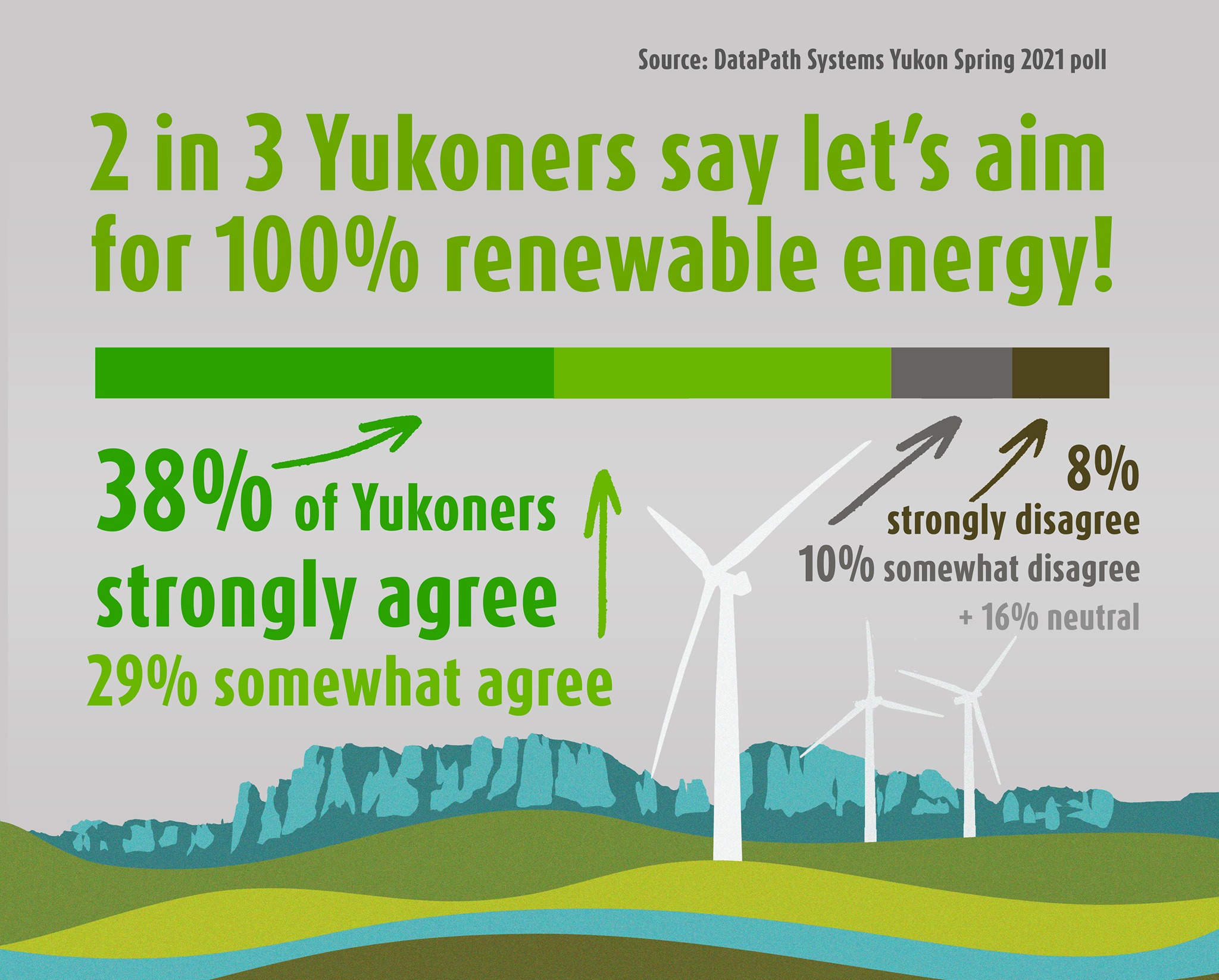
Yukoners overwhelmingly support ambitious conservation measures, according to a new DataPath poll. The results affirm Yukoners’ concern for the environment, and are a reminder to the territory’s next government that issues like climate change, conservation, and mining reform must be priorities.
In addition to these results, the federal government is also investing heavily in nature conservation and climate change mitigation strategies, giving the Yukon an opportunity to grow our green economy and achieve numerous conservation wins in the coming years.
Want to take a deep dive into the numbers? You can view the results from the poll below:
The poll was commissioned by CPAWS Yukon and the Yukon Conservation Society, and was conducted independently by DataPath Systems. The poll surveyed 425 Yukon adults, and is considered accurate to within 4.8 percent, 19 times out of 20.
Will the next government take on mining reform?
The Yukon’s Quartz Mining Act is 97 years old, and our Placer Mining Act is 115 years old. Unlike fine wine and Scotch, mining legislation does not improve with age.
Our mining laws provide few safeguards against mining companies going bankrupt, abandoning their mines, and leaving Yukoners with the bill. The royalty system is so outdated that the Yukon routinely gets more money from camping fees than mining. And under the Yukon’s free entry mining system, you can pound a stake into the earth and claim a series of land rights that can interfere with the realization of the First Nation rights and title.
Many Yukoners and First Nations have been calling for long-overdue changes to how mining happens in the Yukon. Will the territory’s next government have the courage to rewrite the Yukon’s mining laws so they recognize the realities of today’s society?
What lessons has the Yukon government learned from the Peel Land Use Planning saga, and what will happen when the Dawson Land Use Planning Commission presents its plan?
The Peel saga is thankfully mostly behind us, but there could be some drama in store now that land use planning is happening in the Dawson Region. The Dawson planning commission is facing some huge decisions, like whether to limit placer mining in wetlands along the Indian River, and whether to prevent resource roads from cutting into the expanse of roadless lands north of Dawson.
We’re likely to see the Final Recommended Land Use Plan for the Dawson Region within the term of the next government. This was the stage in the Peel land use planning saga when everything went off the rails. The Yukon government abandoned the Final Recommended Plan, and instead approved a land use plan that it had unilaterally created. The case wound its way through the courts for six years, before the Supreme Court of Canada ruled that the Yukon government had violated the Umbrella Final Agreement. How the Yukon government chooses to act when presented with the Final Recommended Plan for Dawson will be a test of what lessons the Yukon has learned from the Peel.
How will the Yukon respond to the climate emergency?
In 2019 the Yukon declared a climate emergency and last fall the Yukon released Our Clean Future, a plan that aims to reduce the Yukon’s greenhouse gas emissions by 30% by 2030. Emissions from the mining industry aren’t included in this target and the plan calls for the mining industry to meet as of yet undetermined “intensity targets.” Intensity targets are about efficiency, like reducing the amount of carbon used to produce an ounce of gold. Intensity targets aren’t absolute targets. That means that if more mines open up then the Yukon’s mining emissions—and overall emissions could still increase—even if individual mines are meeting their intensity targets.
Another challenge for the Yukon’s next government will be cutting the use of fossil fuels in power generation. Most of the Yukon’s electricity comes from hydro, but as more mines plug into the grid there’s a heavier burden on our electricity supply. The demand for power spikes even higher during winter cold snaps, forcing Yukon Energy to burn natural gas and diesel to make up for the shortfall. There are ways that the Yukon could address this problem, like increasing the Yukon’s clean energy generation, incentivizing energy efficiency, or investing in ways to store energy when there’s a surplus and using it during peak times. The Yukon could also require mines to go through a climate change assessment to better understand their impact on the Yukon’s greenhouse gas emissions.
CPAWS Yukon and the Yukon Conservation Society asked each party these questions, and many more. To see what they said, visit www.votewild.ca.
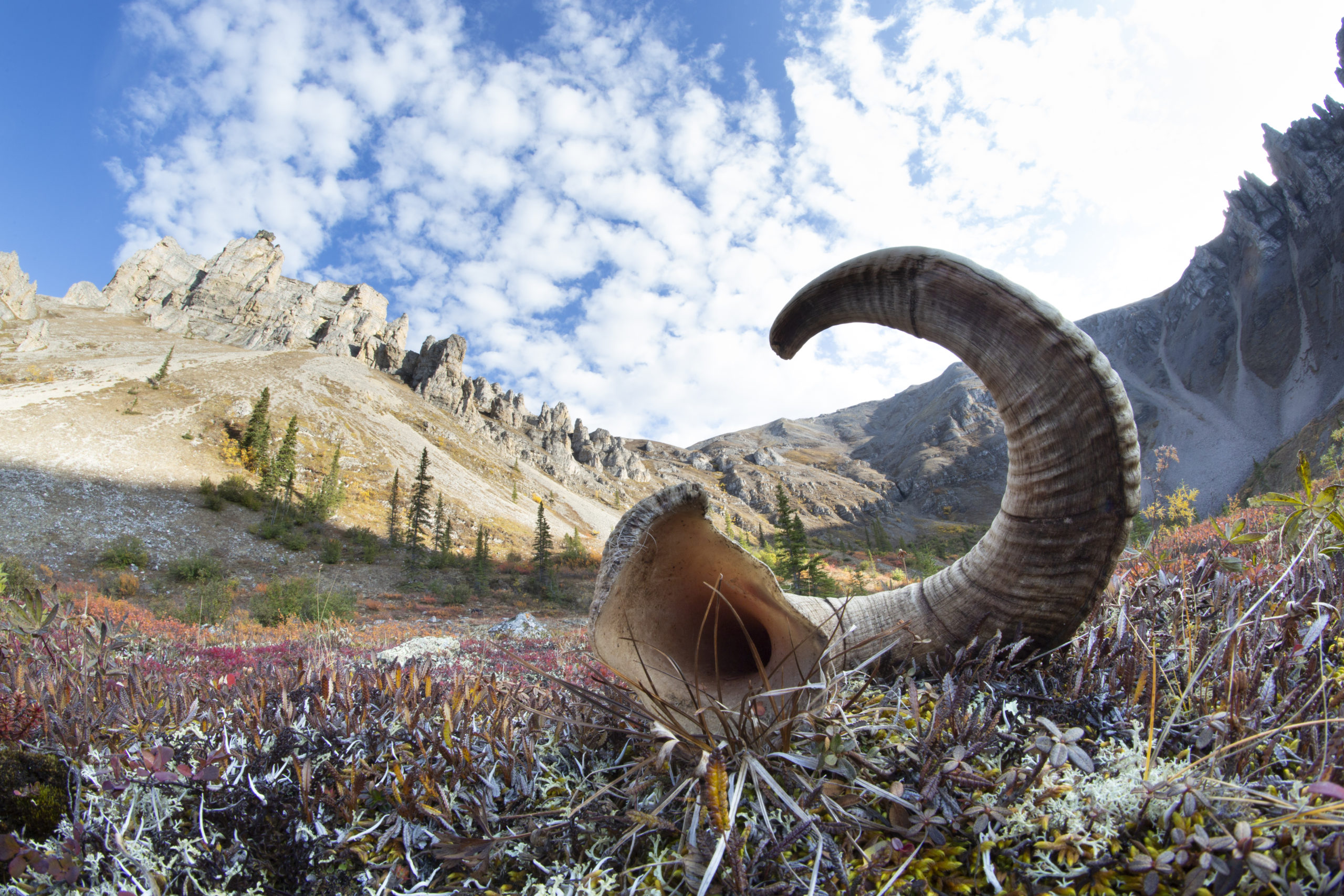
A ram’s horn, in a valley north of Dawson by: Malkolm Boothroyd
Written by: Maegan McCaw, Conservation Coordinator, and Randi Newton, Conservation Manager
While planning has been underway in the Dawson Region since 2019, hopes of protecting areas and setting thresholds on development have been pitted against a steady stream of staking and mineral development. The most recent example is the proposed Coal Creek quartz exploration project, which sits in Tr’ondek Hwech’in traditional territory, 85 km north of Dawson City in a large area of intact wilderness.
The Coal Creek project is just the latest in a slew of projects that threaten to undermine the promise of the Dawson Regional Land Use Plan and broader commitments to land use planning and co-management in the Umbrella Final Agreement. Because of this, CPAWS Yukon is asking the Yukon Environmental and Socio-economic Board to reject or pause its assessment of the project until the land use plan is complete. Just last month, CPAWS asked for a similar pause on the Antimony Creek quartz exploration project, perched only 2.5 km from Tombstone Territorial Park.
Land use planning is a powerful tool for bringing people together and creating a sustainable future for the territory’s land, waters, wildlife and people. Embedded in the Umbrella Final Agreement, regional land use planning provides a vision and a roadmap for Yukoners and First Nations to protect, use, and manage land and resources. Planning can protect areas that are ecologically or culturally important, and can also set out areas where development is allowed at certain thresholds.
The Coal Creek project involves a lot of air traffic (up to 700 helicopter and 60 fixed-wing aircraft flights annually), which is known to disturb sheep and caribou, ultimately lowering their weight and reproductive success. This is all to support quartz exploration activities targeting copper, cobalt, gold and silver across the 63 km2 Monster property. Exploration activities are proposed to occur over 10 years, and include drilling, trenching, soil sampling, trail construction and line cutting. ATVs and 4×4 vehicles will be used at first but, if exploration reveals a large deposit, an access road will likely be constructed. The proponent, Go Metals Corp, has revealed few details about future access roads but also estimates 15 km of new on-claim roads would need to be constructed.
These activities would cut into a large, undisturbed wilderness area that supports healthy wildlife populations and sustainable hunting, trapping, and outfitting activities. This area is important habitat for grizzly bears, moose, sheep, caribou, and raptors, and is a top candidate to be protected by the Dawson Land Use Plan. If this project is approved, it is likely to degrade this large wilderness area through habitat fragmentation, disturbance – both from ground and air-based activities – and access, which increases the feasibility for other mineral exploration programs and increased hunting pressure. What’s more, don’t forget that mineral exploration work has the potential to lead to an open pit or underground mine, depending on the quality of the mineral deposits detected. Is that what we want in one of the least disturbed areas of the Dawson region?
Questions like this are meant to be answered through the Dawson Land Use Planning process, in line with the intent of the Final Agreements, not by a race against the clock.
If you think development like this should be paused until the Dawson Regional Plan is complete, there are two things you can do:
Written by Malkolm Boothroyd, Campaigns Coordinator
The Trump administration did one big favour for the Arctic Refuge.
That felt really weird to write.
This is the same administration that we’re suing over their illegal environmental review in the Arctic Refuge, the same one that tried to approve seismic testing in critical caribou and polar bear habitat. The administration that fast tracked a lease sale in the Arctic Refuge in its final weeks in office. But this onslaught served an unintended purpose too—putting the Arctic Refuge top of mind, and making its protection a priority for President Biden.
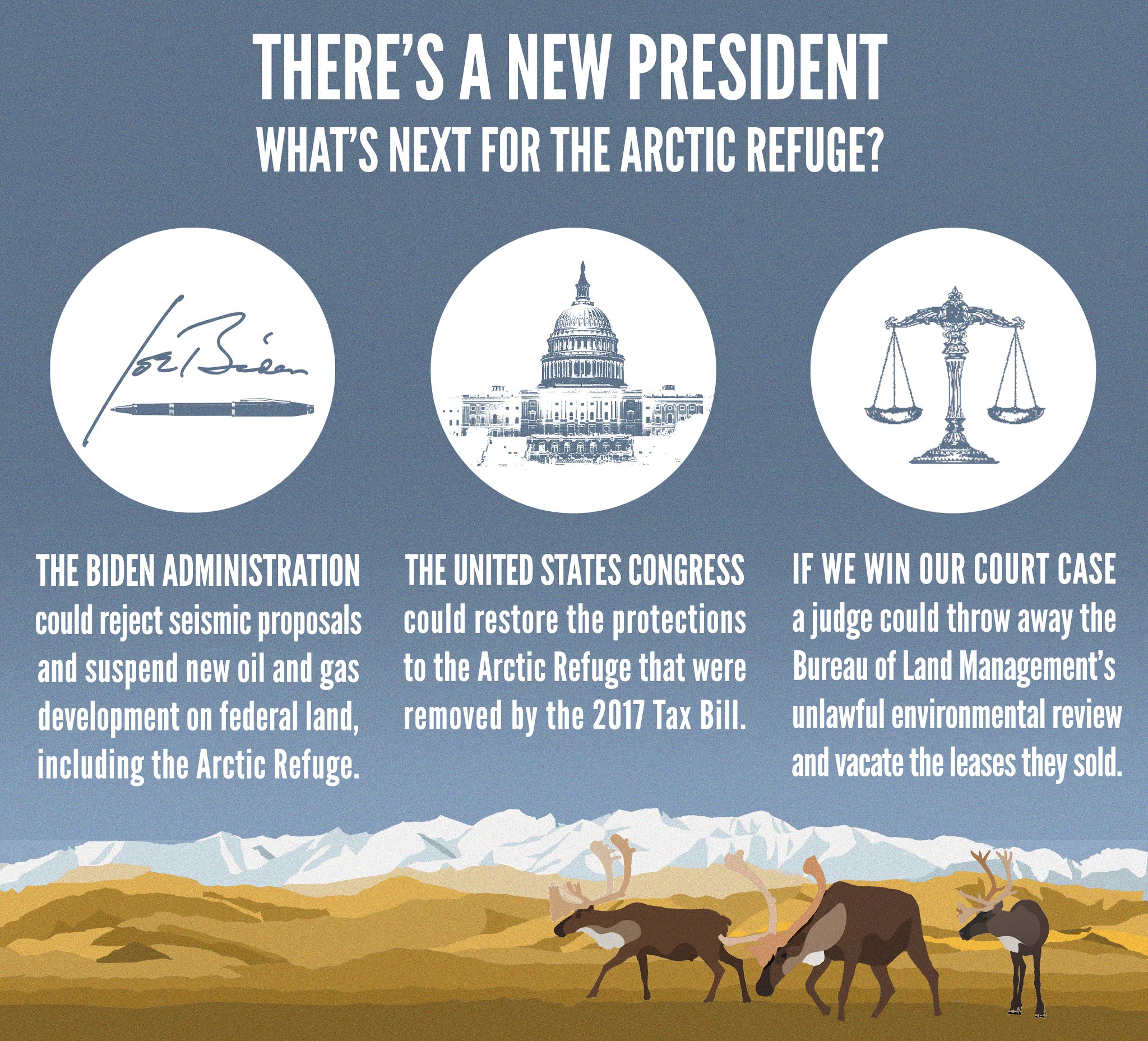
For the last four years everybody’s focus has been about defending the Arctic Refuge against a deluge of development, and it’s exciting that we can finally start working for protection. The new administration has already announced that it will place “a temporary moratorium on all oil and natural gas leasing activities in the Arctic National Wildlife Refuge.” Here some of the other paths towards protecting the Arctic Refuge.
President Biden’s Day One action to suspend leasing activities in the Arctic Refuge sets an example the new leadership at the Department of Interior can follow. The department could reject the applications to conduct seismic testing on the Coastal Plain. They could investigate impropriety in the issuance of leases following this month’s lease sale. The new administration could also conduct a review of the entire oil and gas leasing program in the Arctic Refuge and take a proper look at the ecological, human rights and climate issues that their predecessors ignored.
The results of the senate elections in Georgia mean that there’s now a pathway to repealing Section 20001 of the Tax Cuts and Jobs Act—the clause that opened the Coastal Plain of Arctic Refuge to leasing in 2017. This could happen through a process called budget reconciliation, since budget-related legislation only needs fifty one senate votes to pass, not sixty.
Scrapping Section 20001 would return the Coastal Plain to the state of semi-protection it occupied for decades, off-limits for leasing, but at the whim of future Congresses. Permanently protecting the Arctic Refuge would require sixty votes to clear the Senate, which remains a high bar.
Unfortunately repealing Section 20001 wouldn’t deal with the leases that have already been issued. However, the lawsuit that the Gwich’in Steering Committee, CPAWS Yukon and a dozen other groups launched last August could help with that. We’ve asked the court to invalidate the previous administration’s environmental review, and any leases or permits that stemmed from that review. If a judge sides with us, they could void the leases.
The Alaska Industrial Development and Export Authority is the largest leaseholder, but under the terms of the lease sale it must pay $4.8 million a year to hold onto its leases. It’s clear to pretty much everybody that drilling in the Arctic Refuge is terrible business (why no major banks in Canada or the U.S. will ever fund development there, and why only two private companies showed up to the lease sale). Having to pay millions of dollars a year to sit on leases that almost nobody wants developed might snap the State of Alaska back to reality.
The Arctic Refuge has been under an immense threat for the past four years, but together we’ve managed to hold the line. Now the work to build back the protections for the Arctic Refuge begins.
Header Image: Confluence of the Yukon and Indian River, by Malkolm Boothroyd
Written by Randi Newton, Conservation Manager
The Yukon’s mining regime hasn’t kept stride with 21st century realities and expectations. True, there’s been changes and improvements, through small steps and lurches, with the occasional stumble backwards. But our mining laws remain relics from the early 1900s: mineral rights stem from pounding stakes into the ground, and our placer royalty calculations pretend that gold is worth $15 an ounce (it’s around $1800 US today). Every mine opens with a promise of social and environmental sustainability, that this time will be different from previous messes. Yet major mines like Wolverine still go bust, and it’s Yukoners who have to pay for the cleanup. There’s no reason we can’t do better.
What would it take for mining to be truly sustainable?
How can the Yukon benefit from mining, without compromising the wellbeing of people, communities, and the land?
The Mineral Development Strategy has opened a wide door for Yukoners to grapple with these questions and reimagine mining for the better. Hundreds of people participated in public engagement this past summer, speaking to the good and the bad of mining, and how to reshape it. The CPAWS team took part and maybe you even saw our recommendations for a strong strategy, ‘Seven Steps for More Responsible Mining in the Yukon’. Engagement made it clear that people want mining reform, and are tired of waiting for it.
The draft strategy came out just after Christmas. This was a pivotal first step for making mining work better in the Yukon, and I couldn’t wait to curl up on my couch and crack open the document.
My take on the draft strategy and its 79 recommendations? It’s not perfect but it’s promising. Are there missing recommendations that need to be added? Yes. Are there recommendations that could be strengthened? Yep. Are there some recommendations that should be axed? Sure.
While the strategy could use some changes, it’s still jam packed with recommendations that are long overdue. It’s founded on ideas you can’t argue with: reconciliation and honouring Yukon First Nation Final Agreements and Aboriginal rights, development that respects the wellbeing of people and the environment, and managing mining in a forward thinking way. Not all of the strategy’s recommendations fully reflect these core ideas. But this is where you can step in to improve the draft and create a final strategy the Yukon can be proud to move forward with.
Right now, the CPAWS team is working on a deep dive document with our take on all 79 recommendations. In the meantime, here’s some ideas that caught our attention:
Like I said, the strategy has room for improvement too. For example, it sidesteps some questions about transformative projects reshaping landscapes by calling on land use planning to be completed across the Yukon in five years. We think this timeframe is very, very optimistic, and in the meantime we need policies in place so mining activities don’t reach unsustainable levels in unplanned regions.
We’re happy that the Mineral Development Panel made an effort to address the conflict between mineral staking and land use planning, but their recommendations don’t go nearly far enough. They recommend pausing staking at the start of land use planning but only for areas with “specific high-value environmental, social and cultural attributes”. The problem is that this information isn’t available before planning starts: First Nations and Yukoners identify ecologically and culturally important areas during planning. A recommendation to pause staking across the entire region, and consider allowing it in some areas after the draft plan stage, would fix this issue.
We’ve also flagged recommendations that could go further to deal with the impacts of new mining roads, curb mining’s contribution to GHG emissions, fix embarrassingly low placer royalties, and put sufficient limits on free entry staking to respect the modern treaties and the principle of free, prior and informed consent.
Even though the strategy isn’t perfect, I’m still optimistic. We have a real opportunity to build off the draft’s strong recommendations and ideas, and shape the weaker ones for the better. Sharing your thoughts on the draft means that you’re part of something big: bringing Yukon’s mining regime into the 21st century. With a territorial election slated for later this year, this conversation is even more pivotal.
Ready to have your say on what should stay and what should go in the draft? You can take the public survey or send in a letter at http://yukonmds.com/. Want more guidance? Add your email below to be notified when our in-depth comment guide is ready, and watch for updates on our social media.
The deadline to submit your comments on the draft is February 22. The final Mineral Development Strategy is expected to be out on March 29.
Baby muskox in the Arctic Refuge, by Malkolm Boothroyd
Written by Malkolm Boothroyd, Campaigns Coordinator
I feel like we’ve said this a thousand times.
The Arctic Refuge needs your voice.
We said it back in the spring of 2018, when the U.S. Government began working on its environmental review of oil and gas leasing in the Arctic Refuge.
We said it when the U.S. released a deeply flawed Draft Environmental Impact Statement at the beginning of 2019.
We said it when a company applied to conduct seismic testing in the Arctic Refuge, and again last month when another company came forward with a similar plan.
Again and again you’ve answered the call. Thousands of you have written to the U.S. Government about the importance of the Arctic Refuge to the Porcupine caribou herd and the Gwich’in. We’ve all poured our energy into these comment periods, even while knowing that the U.S. Government would disregard us.
You urged them to hold hearings in Canada. They ignored the invitation. You asked them to conduct a thorough environmental review. Instead they rushed through the process. You told them about the ecological and cultural importance of the Arctic Refuge. They chose the most aggressive leasing scenario imaginable, one which would offer up every single acre of the Coastal Plain to oil companies.
The most blatant example of this happened this month. In mid-November the U.S. Government issued its “Call for Nominations”—giving industry and the public a month to comment on land parcels and environmental mitigations ahead of a lease sale in the Arctic Refuge. The feedback received during the Call for Nominations period is meant to inform how lease sales are designed, but the U.S. Government went ahead and announced a lease sale with two weeks left in the comment period. They didn’t even give the pretense of listening.
The outgoing administration intends to hold a lease sale on January 6th, just two weeks before a new administration takes over.
But in spite of all this we’re going to say it again. The Arctic Refuge still needs your voice.
The U.S. Government isn’t acting in good faith, but we still have to. It’s critical we get our concerns on the public record. If and when this ends up before a judge, we need to be able to show that we did our job. We need to prove that the U.S. Government has consistently swept aside our concerns in its rush to auction the Arctic Refuge away to oil companies.
Still, it’s hard to keep pace with the deluge of terrible decisions coming out of Washington, D.C.. We’re in the midst of the Call for Nominations comment period, the comment period on an Environmental Assessment period for seismic testing in the Arctic Refuge, and a comment period on an Incidental Harassment Authorization for Polar Bears tied to the push for seismic testing. The latter two comment periods are happening in the midst of the holidays, in the midst of a pandemic. It’s exhausting.
In less than six weeks a new administration takes over, one that has committed to protecting the Arctic Refuge. But there’s a lot of damage the current one can do while they still control the U.S. Government. We’ve got to hold on a bit longer.
The Arctic Refuge needs your voice.
info@cpawsyukon.org
Tel.: (867) 393-8080
101-301 Hawkins St
Whitehorse, Yukon
Y1A1X5
© CPAWS Yukon 2026
CPAWS is a registered charity
# 10686 5272 RR0001
We acknowledge, recognize, and respect that much of our work takes place on the traditional territory of the Kwanlin Dün First Nation and the Ta’an Kwäch’än Council.